




 RADIO
RADIO










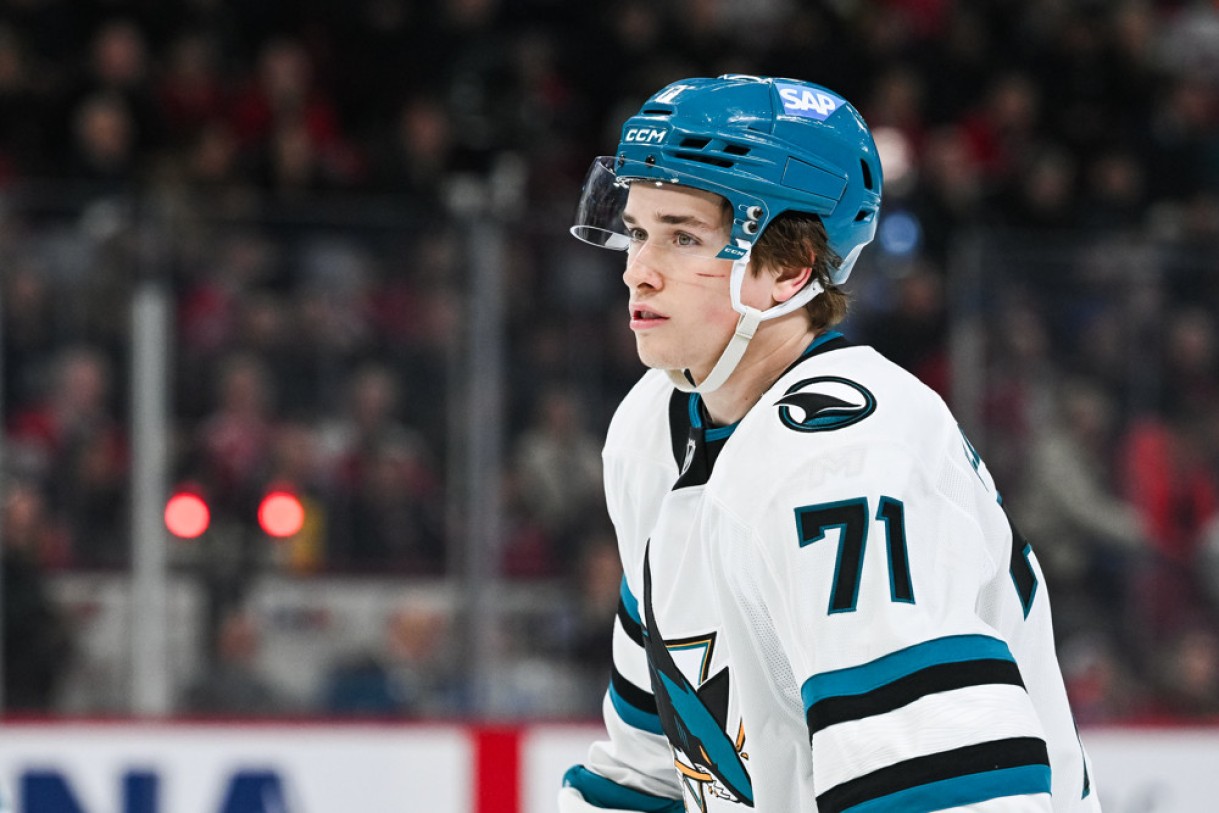
Matt Donnelly gives a reflective farewell to Hockey Night in Canada, the iconic Saturday night tradition that ended its historic run on CBC on June 14, 2026.
"Hello, Canada, and hockey fans in the United States and Newfoundland." For nearly a century, those words belonged not just to Foster Hewitt, but to all of us. Spoken for the first time on November 12, 1931, during the General Motors Hockey Broadcast, they became more than an introduction to a hockey game. They were an invitation into Canadian living rooms, a familiar knock at the door each Saturday evening. They echoed through generations until their final curtain call on June 14, 2026, carrying with them the voices, memories, and traditions of countless families.
Then came the unmistakable opening notes of Dolores Claman's The Hockey Theme, performed by the Jerry Toth Orchestra. For Canadians, it wasn't merely a television theme song. It was the sound of community gathering every Saturday night.
The music announced that the weekend had officially begun. Across the country, televisions flickered to life. Children were called in from backyard rinks. Parents adjusted rabbit-ear antennas in search of a clearer picture. Grandparents settled into their favorite chairs. For millions, the melody became our unofficial second national anthem—not because anyone declared it so, but because it found a permanent place in our hearts.
The End of Hockey Night in Canada
Before "cancel culture" entered our vocabulary, there was another Saturday ritual. Whether you cheered for the Canadiens, Maple Leafs, Bruins, or another club entirely, many Canadians lingered after the second intermission to hear what Don Cherry had to say during Coach's Corner. Love him or disagree with him, he sparked conversations that stretched from coast to coast.
On Monday mornings, his opinions filled coffee shops, classrooms, construction sites, and fire halls. Hockey wasn't simply entertainment.
Fighting in Hockey: Do you agree with Don Cherry in this 1992 #ThrowbackThursday interview?
Watch the full clip: https://t.co/XgodAmRe8A pic.twitter.com/60p4uVX5dF
— Hockey Night in Canada (@hockeynight) November 2, 2017
It was common ground.
While hockey has never commanded the worldwide attention of the NFL, NBA, or MLB, those who embrace it belong to something uniquely their own. It is a fraternity—and a family—bound together by frozen ponds, cold arenas, and stories passed from one generation to the next.
Remember this guy?
If you were a hockey fan in the late 70's we are certain you will know 'Peter Puck', who turns 50 in 2023 and is set to make a comeback 🙌
Watch: The Unknown History of hockey icon Peter Puckhttps://t.co/1U9vxbK4yu pic.twitter.com/nOJR20WMur
— Hockey Night in Canada (@hockeynight) February 14, 2023
The game itself has transformed dramatically. It evolved from Peter Puck teaching children the basics to the glowing FoxTrax puck streaking across television screens. It grew from bruising, almost primitive battles into today's breathtaking blend of speed, precision, and skill.
Yet for all its evolution, one thing has never changed.
Every child who has ever laced up skates on a frozen pond, a flooded backyard, or a community outdoor rink has scored the Stanley Cup-winning goal when no one else was watching.
Every one of us has heard the imaginary crowd roar.
Like so many Canadians, my own love affair with hockey didn't begin inside a modern arena.
It began outdoors.
Organized hockey wasn't something my family could comfortably afford, but winter offered something just as valuable. Every year, our neighborhood gathered around the outdoor rink as the local fire department flooded the ice with one of its trucks. Before long, the water froze beneath prairie skies, and children of every age rushed onto the fresh sheet.
Nobody wanted to leave until the streetlights came on.
Sticks were mismatched. Gloves rarely matched either. Goalposts were whatever happened to be available — a pair of old boots, a couple of snow piles, or whatever we could drag out from the garage. And all the while, Stompin’ Tom Connors’ “The Hockey Song” played in somebody’s truck with the door left open, the guitar riff cutting through the cold prairie air. "The good ol' hockey game..."
We’d sing along at the top of our lungs, voices cracking in the freezing night. The tension would build, the whistle would blow, and the puck would go down the ice like it was Game 7 of the Stanley Cup Final. In those moments, none of it mattered; our greatest talent was imagination.
For a few magical hours every evening, every child could become Orr. Howe. Gretzky. Crosby.
Or simply themselves.
Looking back now, I realize those rinks weren't merely places to play hockey.
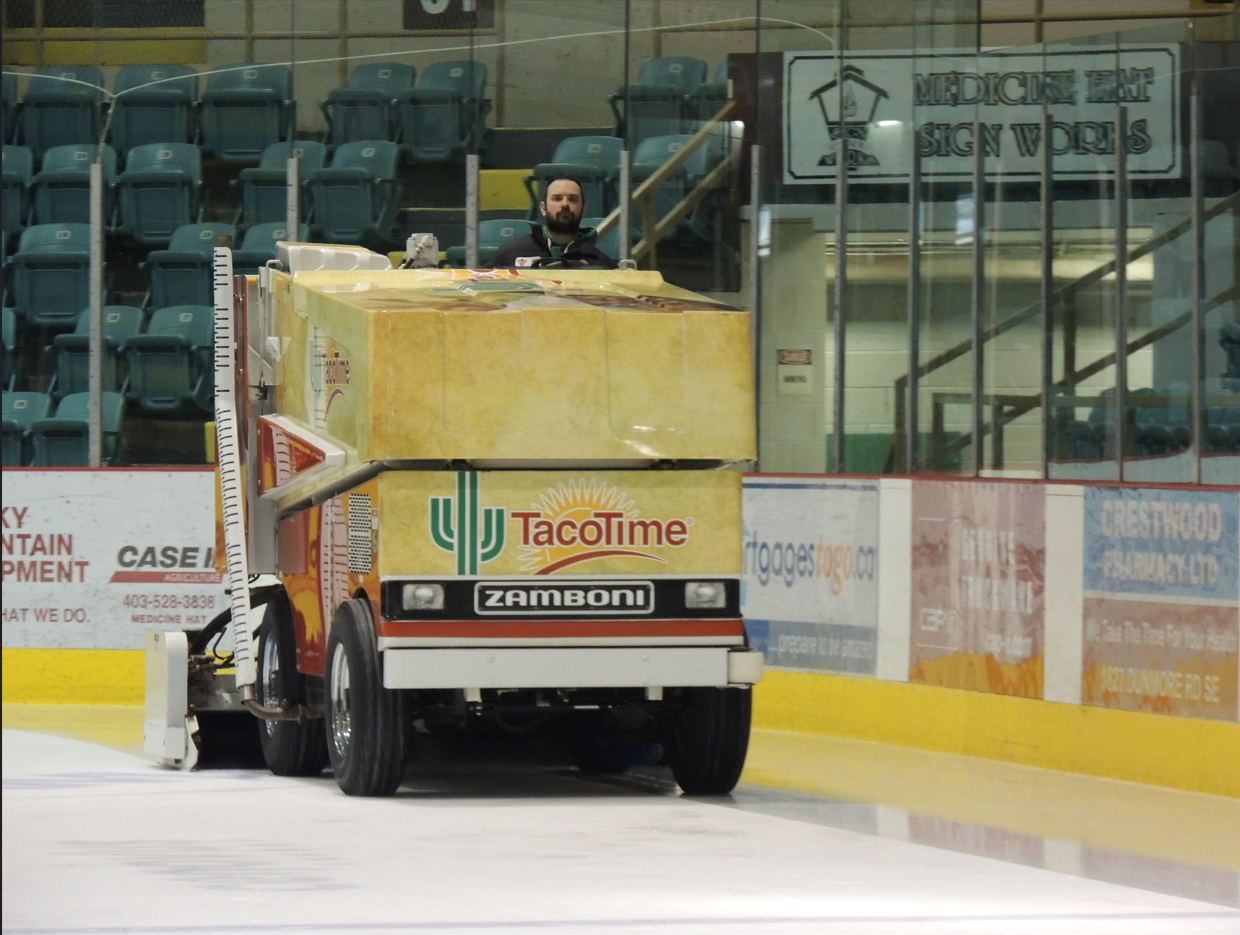
They were classrooms where friendships were built, confidence was earned, and communities quietly raised one another's children. Who knew all those freezing nights flooding the rink with the fire department would one day become my actual job?
Hockey has always been woven into Canada's cultural fabric, and Hockey Night in Canada became one of the strongest threads holding it together.
For my father and me, without knowing, that thread eventually stretched beyond two fuzzy channels and Saturday night broadcasts.
Long before fantasy sports became billion-dollar industries—before smartphones, websites, or live scoring—we had our own version of fantasy hockey.
We didn't know to call it that.
Every autumn, before the NHL season began, the firefighters at my father's hall gathered with their families for an evening of food, laughter, and relentless good-natured trash talk. Drafting players wasn't about statistics or analytics. It was another excuse to spend time together.
Once each week, someone volunteered to buy the local newspaper, and inside were every player's weekly statistics.
Armed with nothing more than a calculator, pencil, and plenty of patience, someone painstakingly added up the scores for 15 or 20 fantasy teams before releasing the updated standings.
Today, an app performs the same task in seconds. Back then, we waited an entire week for handwritten standings, and somehow that anticipation became part of the experience.
Looking back, I don't remember who won very often.
I remember sitting beside my father. I remember the laughter. I remember the conversations. I remember belonging.
Decades later, in a sense, I found myself sitting across another draft table.
This time, I wasn't the son; I was the father.
We spread out our rankings, debated first-round picks, laughed over questionable selections, and talked hockey for hours. My son wasn't just drafting a fantasy team—he was unknowingly stepping into a tradition that had started decades earlier in a fire hall with his grandfather.
We weren't debating whether to draft Gretzky or Lemieux anymore. Time had carried those names from active rosters into hockey history, just as it had carried my father from the other side of the draft table.
Instead, we sat shoulder to shoulder, eyes fixed on the screen, hoping Macklin Celebrini would somehow fall to us with the fourth pick. Connor McDavid was selected first. Then came Nikita Kucherov. Nathan MacKinnon followed.
The screen flashed:
"You're on the Clock."
Celebrini was still there.
My son looked at me with a grin that needed no words. In that moment, I caught a glimpse of myself sitting beside my own father all those years ago.
We didn't just make our first fantasy hockey selection together that night. We continued a family tradition.
As children, we rarely recognize the moments that become lifelong memories. Only years later do we understand that what seemed ordinary was quietly becoming extraordinary.
Perhaps one day, my son will look back on that evening the same way I look back on those nights beside my father.
The older I get, the more I realize that our lives are measured less by what we accomplish than by what we pass on. Long after people forget our jobs, our trophies, or the things we owned, they remember how we made them feel, the values we quietly lived, and the traditions we chose to protect. We leave pieces of ourselves behind in the ordinary moments—in conversations around a draft table, in drives to early morning practices, in lessons taught without ever speaking the words.
Character, like love, is rarely inherited through instruction. It is inherited through example. Now the generations have turned once again.
Hockey Night in Canada has taken its final bow, but the spirit it created has not disappeared. Traditions don't vanish because a broadcast ends. They simply find new voices and new homes.
Today, both of my sons and one of my daughters have played the game. Two of them still do. Every winter, my Dodge Ram becomes less of a truck and more of a traveling dressing room, carrying sticks, goalie gear, forgotten water bottles, and sleepy kids across the windswept highways of the Canadian Prairies.
While much of the country slows down through snowstorms and holidays, hockey rinks never seem to sleep.
Parents still arrive an hour before puck drop, and goalie parents still arrive ninety minutes early.
Some traditions refuse to change. This season, however, another tradition begins anew.
My son won't be the only one following fantasy hockey anymore. Several of his teammates now have teams of their own. As we travel from one prairie town to the next, they'll check player stats on their phones, celebrate hat tricks, agonize over injuries, and debate trades somewhere between roadside coffee stops and early morning puck drops.
They'll never know that their grandfathers once waited an entire week for a newspaper, a calculator, and handwritten standings.
The technology has changed.
The newspaper has become an app, and the calculator has become an algorithm.
Yet somehow, it all feels wonderfully familiar.
Because fantasy hockey was never really about winning.
Neither was Hockey Night in Canada.
Both were simply reasons to gather.
Reasons to laugh.
Reasons to argue over line combinations and questionable trades.
Reasons for fathers and sons, mothers and daughters, teammates and lifelong friends to spend just a little more time together.
Perhaps that has always been hockey's greatest gift.
Not the Stanley Cups.
Not the Hall of Famers.
Not even the games themselves.
Its greatest achievement has been giving ordinary people of every nationality extraordinary moments with the people they love.
The last of the "Original 6" cathedrals to close its doors was Maple Leaf Gardens on February 13th, 1999. For those fortunate enough to attend a game, what was it like? The sights, the sounds, the smells, the feels. #Leafs #LeafsForever
🔊Foster Hewitt, Conn Smythe, Paul Morris pic.twitter.com/Bap8tYTNIq
— The Hockey Samurai 侍 (@hockey_samurai) September 14, 2022
Long after the final whistle fades, after the last broadcast signs off, and after the Saturday night theme falls silent, those moments remain. Perhaps that's the quiet purpose of all traditions—not simply to preserve the past, but to shape the future. We spend our lives believing we're raising children, coaching teams, or sharing a game, when all along we're leaving fingerprints on hearts we'll never fully see.
One day, each of us will be gone. The question won't be how many games we watched, championships we celebrated, or fantasy leagues we won. It will be whether the people who come after us became a little kinder, a little stronger, a little more generous because they once walked beside us.
Some broadcasts end. The stories they gave us never do.
Somewhere, on a frozen pond beneath a prairie sky, another child is counting down the final seconds, stick in hand, dreaming of scoring the biggest goal of their life.
The crowd is imaginary. The memory is real.
And somewhere, a grandfather, a father, and a son are still sharing the game—each generation quietly passing it to the next.
And the next generation is already listening for its own version of,
"Hello, Canada, and hockey fans in the United States and Newfoundland."
More DFS Lineup Picks and Analysis