



 RADIO
RADIO








Index
- What is Fantasy Baseball Average Draft Position (ADP)?
- Why ADP Matters for Fantasy Baseball?
- ADP Trends and Market Shifts
- How to Use ADP in Different Fantasy Formats
- How to Use ADP From Different Fantasy Platforms
- What's the Difference Between ADP and Rankings?
- How to Use ADP to Find Undervalued Players
- How to Use ADP to Avoid Overvalued Players
- Expert Strategies for Leveraging ADP in Your Drafts
- ADP Strategies for Different Draft Phases: Early, Middle, and Late Rounds
- How Frequently Can ADP Change?
- Key ADP Tools and Resources
What is Fantasy Baseball Average Draft Position (ADP)?
Average Draft Position, or ADP, is an insightful data point that can be used by fantasy managers to acquire a baseline understanding of how the fantasy community values a player’s projected statistical contributions for the upcoming season.
The term is exactly what it sounds like. Every time a player is selected in a fantasy draft, the slot at which they are picked is recorded, then an average is calculated.
The calculated result is a number that describes an approximate place in drafts where fantasy managers can expect a player to be selected.
Managers will select players who will provide the most production across relevant statistical categories first, so the higher the ADP, the more production the player is anticipated to accumulate throughout the season.

Why ADP Matters for Fantasy Baseball?
While every draft for all fantasy sports comes with its own uniqueness, nuance, and obstacles, a fantasy baseball draft can be the most challenging of the bunch simply by the number of players who have a legitimate shot to make a fantasy impact throughout the season.
There are nine offensive starters, some worthy bats and category specialists sitting on major league benches, five or six-man pitching rotations, relief pitchers, and closers who have a varying degree of potential contributions, leading to a massive player pool to choose from.
Not only that, there are high-level prospects at Double or Triple-A that could make notable early-season impressions, or recently-signed international players who’ve played in the Korean Baseball League (KBO) or Nippon Professional Baseball (NPB) but have yet to make their MLB debut who are veritable unknowns to most fantasy managers.

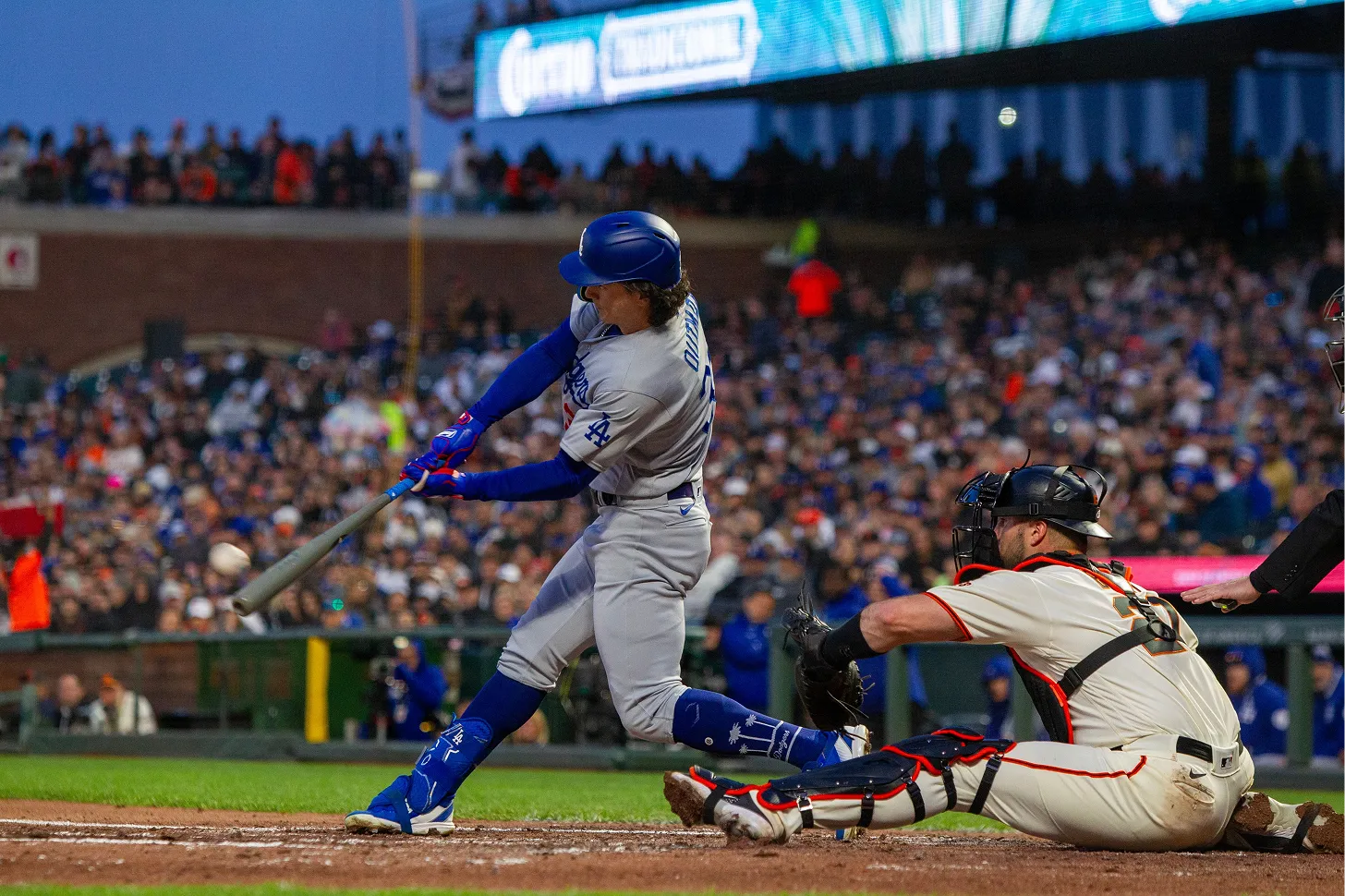
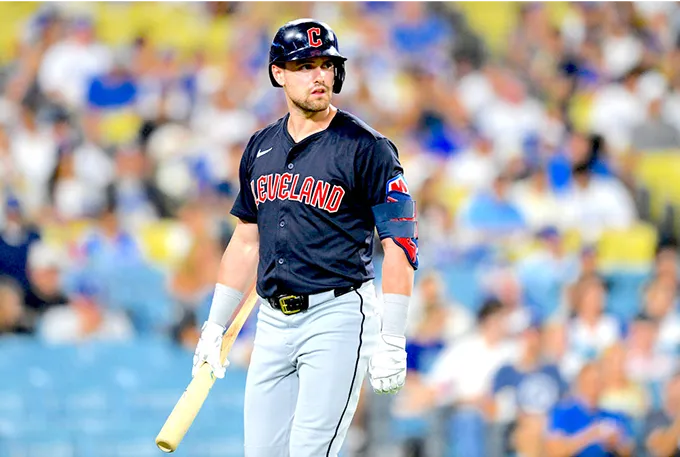
Players like Matt Olson (ATL), Freddie Freeman (LAD), and José Ramírez (CLE) are often high on draft boards due to their consistent performance.
Although most fantasy managers know who the top draft picks should be, after the first couple of rounds, it gets much more difficult to choose between Hitter A and Hitter B, and perhaps more so between Hitter A and Pitcher B. Similarly, players like Bobby Witt Jr. (KC), Tarik Skubal (DET), Julio Rodriguez (SEA), Paul Skenes (PIT), and Fernando Tatis Jr. (SD) are also highly valued.
That is where ADP comes in. Not only will this information provide managers with an idea of where other managers have drafted a particular player in relation to others, it also imparts a sense of how likely a player may or may not be available when the manager’s next pick comes around, or if they are over-drafting that player based on their projected output.


ADP Trends and Market Shifts
For the earliest drafters, a player’s ADP can shift dramatically over the first few weeks since the sample size is not large, but as more and more drafts take place, it should stabilize.
That doesn’t mean that it won’t change in the lead-up to the season. Even a minor injury during spring training could begin to depress it; conversely, an injured player’s assumed replacement could see a boost, while a trade to a more favorable environment or an expected increase in playing time could also lead to a boost. Hot prospects like Dylan Crews (WAS) and established stars like Vladimir Guerrero Jr. (TOR) can also have an impact.
ADPs across various sites that host fantasy drafts could also vary depending on league size, scoring, and roster construction. For example, if a site’s default format utilizes two starting catcher spots (a.k.a. a “two-catcher league”), then catchers would likely hold more value than they would in leagues with just one catcher spot, so they would likely tend to be drafted higher in the two-catcher format.
Perception or sentiment can be another dynamic that could influence where a player is drafted. For example, if there is a feeling among fantasy managers that there is an ample amount of quality starting pitchers (SP) available, that position could see a depressed draft slot compared to historical norms as a result of managers “waiting” on those players. Similarly, designated hitters (DH) like Nelson Cruz might see their draft position rise if they are perceived to have a favorable schedule or ballpark. Shortstops (SS) such as Fernando Tatis Jr. could experience fluctuations based on their performance trends or injury status.
How to Use ADP in Different Fantasy Formats
Knowing where a player is being drafted is predominantly helpful if it is based on drafts where the format is the same or similar to the league you are competing in. Some key attributes that could vary from league to league are:
- League Size (i.e. 10-team, 12-team, 14-team league)
-
Scoring
- Points vs. Category
- What statistics are being scored
- Draft Style (snake draft vs. auction)
- Roster Construction (how many spots per position, bench spots, Util spots, IL spots)
League Size
Knowing how many teams are in your league is a must, but it can also influence where managers select certain players.
If it is a shallow league, meaning there are fewer teams, then managers could draft a bit more aggressively, pushing certain players higher on draft boards than normal. In deeper leagues, managers will have to be more calculating in who they draft since there will be more players taken in between picks, leaving less talent to choose from after each round and with each pick.

Scoring
managers will need to consider whether the scoring is a standard 5×5 rotisserie (a.k.a. “roto” or “points” league) where statistical categories are scored and tallied up for an overall total. A different format that is familiar to fantasy football players is Head-to-Head (a.k.a. “categories” league) where one manager’s team goes up against another manager’s team, earning wins and losses in various statistical categories each week that goes toward a season-long W-L record.
A player like Luis Arraez is going to be more valuable in a points league than a category league, thus his ADP should be higher in points leagues. If you are competing in a points league but looking at draft data for category leagues, then you could be misled, running the risk of losing out on a player by mistakenly thinking he’ll be available later on based on erroneous figures.
Being aware of which categories will be scored is crucial to success as well.
For example, some leagues score on-base percentage (OBP) or total bases (TB), so players who walk a lot will have more value than they otherwise would.
For pitchers, if a league rewards hurlers that record Holds, then many more relievers who don’t necessarily record Saves would be in the mix for draft consideration.
Draft Style
Knowing approximately where a player is being taken in is pertinent to snake drafts, however, studying it in preparation for an auction-style draft could be misguided (although it could provide an awareness as to which players should cost more than others). Managers prepping for auction-style drafts would be wise to consider a player’s average auction value (AAV).

Roster Construction
Knowing how many spots are dedicated to each position can be an influencing factor as well. Citing a specific example, CBS’ default format includes two catcher spots, meaning that more catchers will be drafted and managers will place more emphasis on filling that position than they might on other platforms because they don’t want to wait on filling out the spot only to be left with two sub-optimal players in both slots. Thus, if viewing information on CBS, catchers’ draft stock could be inflated if compared to other sites.
The above-referenced situation ties into something called positional scarcity, which can be influential. If top-tier talent at a particular position is considered scarce, it could push up a player’s draft position. While Jose Ramirez (CLE) and William Contreras (STL) are both multi-category contributors, each could see slightly inflated values because Ramirez gives managers a true advantage by collecting 20-plus stolen bases at a 3B position that is typically devoid of them, while Contreras is the rare offensive weapon at C.
Somewhat related to scarcity, if a certain player is eligible at multiple positions, they could potentially fill a void (or scarcity), making them more valuable and pushing up their draft stock.
Finally, if playing in an AL-Only or NL-Only league, data points based on those types of drafts will vary wildly when compared to standard drafts. Other specialized leagues to be conscious of include dynasty/keeper, salary cap, and best ball leagues. However, this topic would not be applicable in daily fantasy (DFS) leagues.
How to Use ADP From Different Fantasy Platforms
Many sites that host fantasy drafts will provide a calculation based on the drafts that have taken place on their platform. These sites include ESPN, Yahoo, CBS, Fantrax, NFC, and others.
Yahoo and ESPN are some of the most well-known names in fantasy sports, which attract even the most casual fantasy players.
There are other sites that offer higher customization and even higher stakes. When the stakes are high, meaning more money is on the line, the more sophisticated the manager likely is, so more attention is paid to news, trends, injuries, and more.
Many of these managers will also have their own player projections in order to illuminate which players could be mispriced based on where they are being drafted, which helps reveal who could be a “bust” or a “sleeper.” Because of this, draft data from the NFC site is considered the most accurate reflection of a player’s value and will provide insight into how the most savvy fantasy managers expect a player to perform during the upcoming season.

Sites like RotoBaller offer all of the information you need to win your leagues, including draft preparation and strategy articles, articles that discuss overpriced or underpriced players, upside prospects to watch, bounceback candidates, potential breakout players, and much, much, more.
Additionally, RotoBaller provides users with draft information from five different sites, however, it doesn’t stop there.
Since various sites attract different types of fantasy managers and have different default formats, draft position can vary, especially for players being selected in the later rounds of drafts.
Because of this, RotoBaller provides users with a blended or composite number, which averages out the info from these sites into one figure. This blended ADP smoothes out some of the variance between sites in hopes of giving managers a better representation of each player’s individual value compared to other players.
All of the most well-known hosting sites will provide ADP information within the draft application itself.
It is important to sort this information when drafting to see which players the fantasy community expects to perform best, but drafting solely on this information alone is not advisable, it is just one piece of the puzzle.
Some sites also offer their own expert rankings and/or allow users to upload their own personal rankings, which can also be sorted during the draft. Sorting for comparative purposes can bestow managers with a more well-rounded view of which players are still available and which one to select.
What’s the Difference Between ADP and Rankings?
By now you understand what we’re talking about, but is it the same thing as rankings? The short answer is no, it is not. So how are rankings different? Well, rankings are more like a CDP – customized draft position. Some of the most cunning fantasy minds come up with their own rankings of players, typically based on projections that they’ve quantified using historical analysis, assumptions, and calculations to determine a player’s overall fantasy value.
How to Use ADP to Find Undervalued Players
Relying on ADP to assist in completing a draft is fine for beginners, but for those looking to get an edge and become more advanced fantasy managers, using the data in order to uncover draft values is one way to do so.
The simplest, most straightforward way to find a draft-day discount is to do a comparative analysis using both data sets. For example, when comparing the two, if you find that Mark Vientos’ (NYM) ranking is 73 overall, yet he’s typically selected around 85 overall, this means there’s a good chance you can get him near pick 85, but he’s expected to provide you with a production-level that exceeds that draft position.
How to Use ADP to Avoid Overvalued Players
On the other hand, when conducting comparative analysis, if you find that Pete Alonso (NYM) is going around pick 50, but his ranking stands at 75, this means he’ll likely cost you the 50th overall pick, but is only expected to provide the return of a 75th overall pick. As such, he costs too much for the amount of production he is expected to provide, so keen managers should avoid him at pick 50 in favor of another player that can provide a return more fitting to that of a 50th overall pick.
Expert Strategies for Leveraging ADP in Your Drafts
One way to leverage this and unearth values in your drafts is to come up with your own projections and/or rankings. Determining which players you want to target and seeing what their typical draft slot is will help identify at what point in the draft you’ll need to select that player so as to not miss out.
Taking that idea one step further is to identify multiple players within the same range that you’d be comfortable with selecting, that way there is less of a chance of missing out.
If you are unable or unwilling to dedicate the time it takes to produce your own projections/rankings, then leverage them from a source you trust, such as RotoBaller! RotoBaller boasts the industry’s #1 rankings and projections since 2018, formulated by Nick Mariano and Ariel Cohen.
Don’t be intimidated by the thought of creating your own rankings, though, the task can be simplified. After you’ve done all of your research, you’ve likely determined there are players you’d rather take over another player. Most sites will allow you to create your own pre-draft rankings, but will provide you with a default list of players that you can rearrange and save based on your preferences.

Typically your list is then sortable during the draft, as is ADP information, which can give you a quick comparison of a player’s value during the draft, making for streamlined decision-making.
Since many other managers will not take the time to set their own pre-draft rankings, they will be using ADP info as their only guide. This can provide you with valuable insight regarding what each manager’s next move likely will be, which in turn will allow you to execute more thoughtful decisions of your own.
If none of that is of interest to you, RotoBaller offers resources that can help guide your decision-making, namely their Team Sync tool. In brief, the Team Sync tool allows users to link their fantasy teams to the application and run it during a live draft. The tool will take each league’s specific scoring settings and roster construction into account in order to make recommended picks based on team need or overall value. The tool makes it easy to compare players who might contribute to different categories in different magnitudes by calculating a Z-score, allowing players to be compared evenly. The RotoBaller Team Sync tool can be plugged into the following fantasy baseball sites:
- ESPN
- Yahoo
- CBS
- Fantrax
- Real Time Fantasy Sports (RTSports)
- Ottoneu


ADP Strategies for Different Draft Phases: Early, Middle, and Late Rounds
Early Rounds (1-5): Building a Strong Foundation
The first few rounds of your draft are crucial, as they set the tone for your entire team. This is where you should focus on securing elite players who provide consistent production across multiple categories. Draft data can be particularly useful in this phase to ensure you’re not reaching too early or missing out on a top-tier talent.
Key Strategies:

- Follow Draft Position Closely but Wisely: The early rounds are where you want to draft the best available talent, but ADP should serve as a guide, not a rulebook. If a player ranked in the top 10 is still available at pick 15, you may have found early value.
- Avoid Over-Drafting Based on Personal Bias: Just because you favor a particular player doesn’t mean you should take them ahead of their typical draft slot. Instead, use your research to gauge when they are likely to be available.
- Secure Multi-Category Contributors: Players like Ronald Acuña Jr. (ATL) or Mookie Betts (LAD) provide elite contributions in multiple statistical categories, making them worth their high draft day price tag.
- Consider Positional Scarcity: If a position has limited elite talent (e.g., shortstop or catcher), you might prioritize those positions earlier, knowing that quality options will be scarce in later rounds.
Middle Rounds (6-15): Value Hunting and Filling Gaps
The middle rounds are where managers can make or break their teams. This is the phase where identifying value becomes essential.
Key Strategies:
- Identify Draft Day Fallers: Some players drop further than expected due to concerns like minor injuries, lineup uncertainty, or general market hesitation. If a player is typically taken at pick 70 but is still available at pick 90, consider drafting them. Players like Seiya Suzuki (CHC) and Luis Robert Jr. (CHW) might be potential fallers to watch.

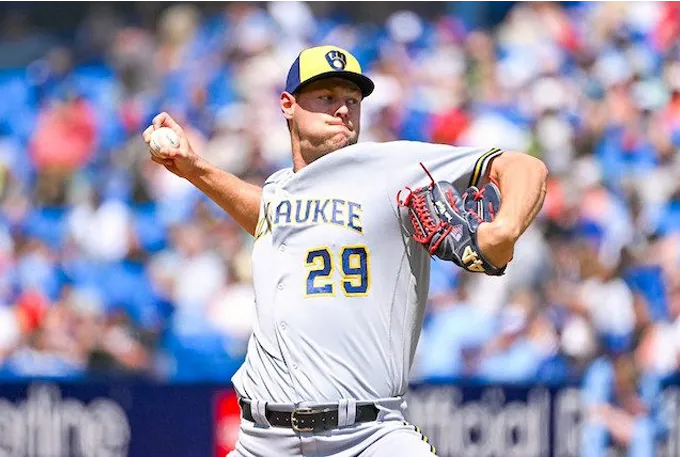
- Target Breakout Candidates: Players entering their prime years or with increased playing time opportunities often provide the best return on investment in this phase. Consider breakout candidates like Oneil Cruz (PIT) and Jackson Chourio (MIL).
- Address Team Needs: After the early rounds, evaluate your roster and ensure you’re filling statistical gaps. If you went heavy on power hitters early, consider targeting speedsters or high-OBP players. Julio Rodríguez (SEA) is a player to consider for filling statistical gaps.
- Leverage Site-Specific Differences: If you’re drafting on Yahoo but referencing draft data from NFC, you may notice discrepancies. If a player is being undervalued on your platform, you can use this to your advantage.
Late Rounds (16+): Finding Hidden Gems and High-Upside Players
The later rounds are where you take calculated risks, find sleepers, and draft depth. This phase is about maximizing upside and preparing for possible injuries or underperformance.
Key Strategies:
- Draft High-Upside Players: Look for young prospects, players returning from injury, or veterans who could have a resurgence. Even if they don’t pan out, the opportunity cost is low.
- Target Position Flexibility: Multi-position eligibility provides lineup flexibility, especially in leagues with daily roster changes.

- Monitor Spring Training and Injury Reports: Draft position can fluctuate due to spring performance and injury updates. Staying informed can help you identify undervalued late-round targets.
- Don’t Overvalue Name Recognition: Some aging veterans may still have name value but declining production. Instead, focus on players who have the potential to exceed expectations.
How Frequently Can ADP Change?
This can vary depending on the data source, but most sites will update the info on a weekly basis at a minimum. It is important to reference data that’s not only relevant to your league, but is also up to date. Using stale data could lead to missed opportunities.
Key ADP Tools and Resources
RotoBaller Rankings include info for comparison with NFBC and CBS
RotoBaller Comparisons NFBC, Yahoo, Fantrax, CBS, RT Sports (RTS), also AVG
Rotoballer Team Sync also offers a Mock Draft Simulator that includes Preseason Projections and customizable cheat sheets
NFBC Draft Data
Fangraphs Projections