



 RADIO
RADIO







Andrew Ball's risky fantasy football running back draft picks to target or avoid. Fantasy football running back (RB) sleepers and busts analysis for 2026.
What could go wrong?
That's the question we should ask ourselves before selecting any player in fantasy drafts. Those concerns become amplified in the middle rounds. With the safest bets already off the board, fantasy managers have to take calculated risks among an imperfect player pool.
In this series of articles, we'll weigh the pros and cons of some middle-to-late round players at each position and determine which are worth the risk on draft day. Below are four running backs who may carry more risk than reward, or vice versa.
Bookmark our updated and revamped fantasy football rankings portal for all league formats!PPR rankings | Half-PPR rankings | Standard rankings | Rookie rankings | Superflex rankings | Dynasty rankings | Who To Start? | Injuries | Matchup Ratings | Strength of Schedule
David Montgomery, Houston Texans
Often underappreciated and perpetually reliable, David Montgomery joins a third team and gets out of the shadow of one of the best running backs in football.
Pros: Great defenses create leads. Leads call for running out the clock.
The Texans surrendered the fewest yards and second-fewest points last season. With the major pieces still in H-Town and a returning system under DeMeco Ryans and Matt Burke, we expect Houston to be one of, if not the, best defenses in football.
David Montgomery is a quintessential kill-the-clock runner: a career average of 4.1 yards per carry with a strong yards-after-contact number. Given C.J. Stroud's recent turnover issues, the ball will often be in Montgomery's hands with a lead.
Houston made it a priority to upgrade the running back position, spending two day-three draft picks and an offensive lineman to acquire the veteran. The team owned the fourth-worst red zone touchdown conversion rate, largely due to the lack of a hammer inside the five-yard line. Woody Marks rushed nine times inside the five-yard line and scored once.
Cons: Is Montgomery a three-down, workhorse running back or in a time share with Marks? Depends on who you ask.
There are conflicting reports about projecting Monty's usage in his first season in Houston. I lean toward distinct early-down/third-down roles, whatever those percentages may end up being.
Marks was a prolific receiver in his collegiate days, and while he wasn't overly impressive in that department during his rookie season, he was even less productive as a rusher. 3.6 yards per carry was worse than the 4.0 the Texans got from a 30-year-old Nick Chubb, who was mostly phased out of the offense.
Montgomery, now 29 years old with nearly 1,500 professional carries, is peering over that age cliff, and he could fall at any moment. His efficiency hasn't waned as he's aged thus far. Granted, keeping efficiency is easier with a lighter workload. Thanks, Jahmyr Gibbs.
Speaking of Gibbs and the Detroit offense, Montgomery won in fantasy football thanks to his touchdown rate (33 scores in his three seasons up north) on one of the league's best offenses for the last few years. The Lions were complete with one of the best units up front. The Texans, however, don't have that luxury.
Houston fielded one of the worst offensive lines in the league last year. In fact, they notched the lowest run-block win rate, according to ESPN's metrics.
There's been some reshuffling, so at least the front office isn't running it back and praying for improvement. But the free-agent additions, guard Wyatt Teller and tackle Braden Smith, weren't exactly the best road graders. The team's first-round pick, center Keylan Rutledge, should help, but this is still a group unlikely to routinely open running lanes.
Verdict: Every draft season, there's a running back dead zone; the area, typically from round three until six or so, where running backs don't live up to their ADP related to their wide receiver counterparts. Montgomery fits that bill, especially if Marks is handling most of the receiving duties.
He's not off my draft list; I'd take him over Travis Etienne Jr. and D'Andre Swift. However, the upside of the younger running backs near his ADP, Cam Skattebo and Bhayshul Tuten, are more enticing.
Jadarian Price, Seattle Seahawks
It's a new era for the Seattle backfield. Reigning Super Bowl MVP Kenneth Walker III, who led the Seahawks in rushing yards each of the last four seasons, is now a Chief. Enter Jadarian Price.
Pros: First-round running backs don't often fail. You'd have to count back to the 2020 NFL Draft (Clyde Edwards-Helaire) to find one that didn't make an impact. Ironically, the two were drafted in the exact same spot.
While Price doesn't have the counting stats as some of his first-round talent counterparts, nobody else had collegiate backfield competition even remotely close to him. Price played second fiddle to third-overall pick Jeremiyah Love at Notre Dame, but the Fighting Irish only saw a slight drop-off when Price spelled Love.
| Jeremiyah Love | Jadarian Price | |
| Yards Per Carry | 6.9 | 6.0 |
| Yards After Contact Per Attempt | 4.5 | 3.92 |
| % of Rushes For 10+ Yards | 19.5% | 21.2% |
Similar to Montgomery's situation in Houston, the Seahawks allowed the fewest points on defense last year en route to 14 wins. In turn, Seattle called a run play at the third-highest rate. There's a new offensive coordinator in town, but the identity of the offense shouldn't change. It's a run-first approach to let Sam Darnold manage the game, with a heavy dosage of Jaxon Smith-Njigba targets mixed in.
Cons: How fast will the Seattle coaching staff trust the rookie? Because he earned it, or out of necessity?
Zach Charbonnet tore his ACL in January and has since opened training camp on the PUP list. The reports that say he could be ready for Week 1 also note the Seahawks will be "smart with him." Contradictory, don't you think? Whether it's Week 1 or Week 6, his impact will impact Price's usage.
Until he's back on the field, the rookie is seemingly only competing with third-year runner George Holani, who has 25 carries across his first two campaigns. Free-agent signee Emanuel Wilson has reportedly quickly fallen out of contention.
Where Holani may truly eat into Price's touches is through the passing game. Price had 10 catches, not in one game, not in one season, but across his sophomore and junior seasons. It wasn't because the Notre Dame offense didn't use running backs in that fashion. Love caught 27 and 28 balls, respectively, in the last two years. Then-freshman Aneyas Williams caught 18 passes compared to Price's four in 2024.
That's a lot of high-value opportunities missing for the rookie. If he doesn't secure the goal-line role, there could be a half-dozen games, or more, with 40 or 50 rushing yards and nothing else. Even if he wins the role initially, Charbonnet thrived inside the five-yard line (seven scores on 16 attempts). He'll take it back once he's back on the field.
Verdict: The scheme, the identity, and the draft capital all point to yes. The potential of a three-headed backfield, with the least fantasy-friendly role for the rookie, says no. I lean the latter. Give me Jaylen Warren with dump-off king Aaron Rodgers instead.
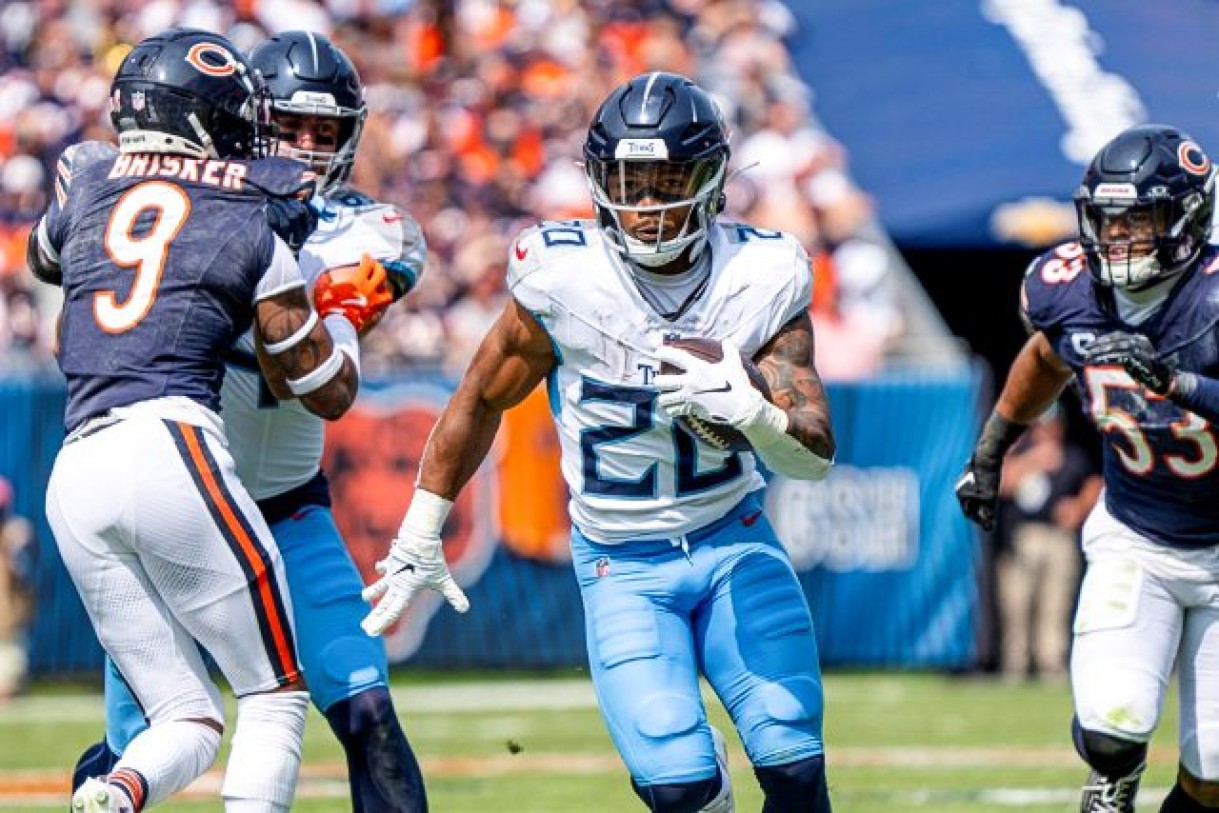
Tony Pollard, Tennessee Titans
There may not be a draft pick this summer that creates less league-wide chatter when selected than Tony Pollard. It's one of the most boring picks a manager can make; or is it?
Pros: Tony Pollard is a model of consistency, despite all the chaos around him. He's played 16 or 17 games in each of the last four seasons, notched over 1,000 rushing yards, and finished as an RB2 in half-PPR leagues in the last three (with an RB1 finish in his other season as a starter).
There's certain to be another drumbeat for Tyjae Spears' role, just as there has been for the previous two training camps. Pollard was a workhorse when Spears was off the field for the first four weeks last season. When he returned, the divide wasn't far from an even split: 54% of snaps for Pollard and 46% for Spears.
However, not all snaps are created equal. Pollard averaged 14.5 carries per game in the games that Spears played and ultimately handled 70% of the team's rushing attempts. Spears landed at 5.5 attempts and only exceeded double-digit touches twice, one of which came in the only game the Titans won by more than one score. Pollard also nearly doubled Spears' attempts in the red zone and did so inside the five. On the flip side...
Cons: The elder statesman of the Titans' backfield is a receiving threat, but the former Tennessee coaching staff opted to utilize Spears more on passing downs. Pollard overwhelmingly dominates touches, but loses on the ones that overwhelmingly produce more fantasy points.
The biggest reason why Pollard was nothing more than an uninspiring RB2 was due to Tennessee's offensive ineptitude. Name a statistic, and the Titans were likely in the bottom five: passing, rushing, and total yards, scoring, red-zone scoring attempts, and third-down conversion rate. It's honestly pretty impressive Pollard managed to score five times.
One semi-popular opinion (and my personal beliefs) is that the Titans make significant strides on that side of the football. All of the ingredients are in the bowl: a blossoming, former first-overall pick at quarterback, new wide receivers, including the fourth-overall rookie, and an offensive coordinator with a proven track record.
An interesting tendency that I noticed watching Daboll’s early season run scheme from 2025;
He LOVES some split zone with his sift blocker coming from the backfield. Daboll doesn’t utilize a ton of intricacies in his run game, but this is one variation he leans on a lot. I would… pic.twitter.com/OOleZCQQ6R
— Drew Beatty (@IronCityFilm) July 24, 2026
While they should be better (it's hard to be worse), do the Titans move into the top half of offensive production? They're one of seven teams with a win total line at 6.5 or worse and may still be a year or two away from being considered, at best, an average unit. Much of that is due to the state of the offensive line, which grades as a bottom-dweller on nearly every ranking list.
Verdict: Pollard is one of the last lead backs that you can draft, and that helps his case. Ultimately, he's a perfect roster fit for hero- or zero-RB builds, especially in non-PPR formats. Unlike other running backs in that range, he's not at risk of losing touches or his starting job. Just a handful of more scoring chances, which is expected, will lead to Pollard outplaying his ADP.
Rachaad White, Washington Commanders
Rachaad White left one ambiguous backfield this offseason only to land in another.
Pros: White's best attribute, at least from a fantasy football lens, is his pass-catching ability. The 27-year-old averages 51 catches per year in his four-year career. It just so happens that Washington needed a backfield pass game threat.
Mobile quarterbacks typically scramble out of trouble rather than dump off to a running back. It's somewhat true with Jayden Daniels. He finished third and first in carries per game by a quarterback in his two seasons, and led the league in escape rate in his limited time last year. Washington, as a team, had the fourth-lowest target rate to players lining up in the backfield in consecutive seasons.
Washington's 2025 offense was essentially a lost year with injuries to Daniels and Terry McLaurin. So, we're going to flash back to 2024, when Austin Ekeler was playing a role similar to the one we envision for White. Despite a 55.6% snap share, Ekeler finished 11th league-wide with an 11.4% target share and fourth in yards per route run (1.84).
When White and Daniels played together at Arizona State, the former caught 43 passes, second on the Sun Devils, in 11 appearances. There's a familiarity factor for the duo.
Right now, we're projecting tight end Chig Okonkwo to be the second target earner in Washington. There's a real chance that White finishes third in the target pecking order.
Cons: White's never been the most efficient rusher, even when he finished as the PPR RB4 in 2023. The number has trended up lately, but White is still under a four-yard-per-carry average in his career. While handling the bulk of the touches during Bucky Irving's absence last season, White posted a dismal breakaway rate and yards after contact total.
That may lend to some extra early-down playing time for incumbent Jacory Croskey-Merritt. The man they call "Bill" churned out 4.6 yards per carry in his rookie season. It seems inevitable that there's a one-two punch here, although the exact split is a big question mark in training camp.
The Washington offense, as we witnessed last year, is one injury away from completely falling apart. The Commanders averaged 28.5 points in Daniels' rookie season. Last year, the number dropped to 20.9. At times last season, there weren't any Commanders worthy of a starting spot in fantasy lineups.
Verdict: Ekeler averaged 11 PPR points in 2024, good for RB31. That's not an amazing number, but it's in the weekly flex conversation. Currently, White is being drafted as the PPR RB36. We expect White to be more involved as a rusher than late-career Ekeler was. I think he's a shoo-in for 10+ touches per game, with the majority being of the high-value variety.
Grab the veteran in the ninth or 10th round as a reliable, low-ceiling backup and swing for the fences with high-ceiling prospects later in the draft.
Who Should I Draft Fantasy Football Tool
Read more about the free Who Should I Draft tool here.
Compare up to four players and we'll tell you who to draft...

2026 Player Decisions. Today's focus is on specific players - David Montgomery, Jadarian Price, Tony Pollard, Rachaad White. These are some common searches for 2026 fantasy football drafts.
Using The Tool. This is a simple tool but very powerful. The first step is to enter the player names that you want to compare. In the first box, search for the first player's name. In the second box, search for the second player's name. Compare up to four NFL players at once, and then click the Who To Draft? button to see who the recommended draft picks are based on fantasy football rankings, projections, and more.
Improvements For Who Should I Draft? You may have noticed our Who Should I Draft? tool has gotten an overhaul. We've added lots of great features for you to give you as much information as possible to win your 2026 fantasy football drafts. You'll see NFL player tiles with headshots and bye weeks, stats and projections, ADPs, strength of schedule, enhanced search results with data to compare, and a slick interface. We hope you enjoy!
How It Works. Our RotoBaller staff puts together their preseason fantasy football rankings and projections based on their research and update them constantly throughout the preseason. That information is the core data that is powering the decision-making in this tool. When you search for player names, you will only see those players who are ranked.
Scoring Formats. Fantasy football managers play in various types of leagues, and this tool allows you to choose whether it's PPR scoring, Half-PPR scoring, or Standard (Non-PPR) scoring. The second thing you want to do is to select the scoring format. There are three small radio buttons (small circles), so click on the scoring format you prefer. The results may vary based on the scoring format you select.
Popular Draft Searches. Curious to see some tough draft decisions for 2026? Below you will find a list of some popular Who Should I Draft? searches that RotoBaller readers are looking at. Click any of the links to see the result and recommendation.
Popular Player Comparison Searches - Who To Draft
Below are some popular searches and comparisons from our Who To Draft tool for 2026 drafts for David Montgomery, Jadarian Price, Tony Pollard, Rachaad White:
More Fantasy Football Analysis
Download Our Free News & Alerts Mobile App
Like what you see? Download our updated fantasy football app for iPhone and Android with 24x7 player news, injury alerts, rankings, starts/sits & more. All free!