RADIO
RADIO










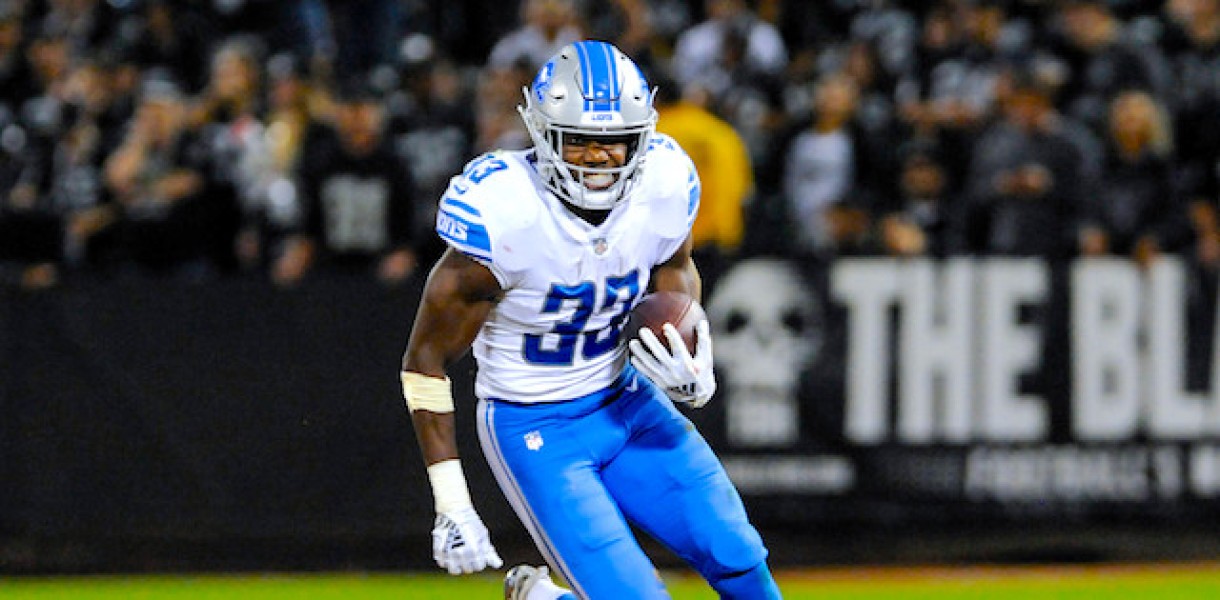
Antonio Losada introduces you to his weekly series, as he looks into NFL NextGen stats and other statistical measures to provide helpful analysis for fantasy football leagues.
At this point in time, there is no excuse for you to not get the statistics being used in every sport you follow and their importance. Back in the day, it was all about wins and losses, passing yards, and touchdowns scored. It is not that those stats are worthless, but they don't offer much to the savvy analysts. While football is yet in its infancy in terms of analytics compared to baseball, the evolution the sport has seen lately in those terms is notable.
One interesting advancement in the NFL world is related to player tracking. The league calls it Next Gen Stats, and it boils down to capturing and crunching location data. This allows getting information about the players' position in the field, their speed, how they move, etc. I know you're a busy individual looking for a shortcut to get the best possible fantasy football results without spending tons of time researching, so I decided to launch this series for the 2019 season.
I will be writing weekly about NFL's Next Gen Stats and how they can be used in fantasy leagues. Watch this space every Wednesday for a new take on some fancy metrics. I will be working on a rolling basis, discussing different stats each week to keep things fresh and cover as many information and players as possible. As you might not be familiar with some of the stats I will talk about in here, I thought it could be interesting to run an introductory post in which I will hand out some definitions and show data from 2018. You can use it to get familiar with some names and acronyms, to start understanding where they can help you with your fantasy decisions, and also to attach some players' names already to the different stats so you get a quick idea of what we're talking about and what you can expect going forward. Let's get started!
Bookmark our updated and revamped fantasy football rankings portal for all league formats!PPR rankings | Half-PPR rankings | Standard rankings | Rookie rankings | Superflex rankings | Dynasty rankings | Who To Start? | Injuries | Matchup Ratings | Strength of Schedule
It's All About Air Yards
If you are still not aware of them, Air Yards are the new cool kid in town. They are mostly used for both quarterbacks and wide receivers/tight ends, and I will focus on that latter. Basically, Air Yards tells us the vertical yards on a pass attempt from the line of scrimmage to the point where the ball was caught by the receiver (or the catch failed to be completed.)
I will be using mainly two metrics here: Average Targeted Air Yards (TAY), and %Share of Team's Air Yards (TAY%).
TAY tells us how many air yards a receiver is thrown per target. This is the number of yards the passes he's thrown fly from the line of scrimmage to the point where he attempts the catch. It allows knowing how far down the field a receiver is targeted on average, or how much of a deep/short threat he is.
I have charted the five-best and five-worst receivers in YAC from the 2018 season. As you can see, plenty of names you probably expected here appear at the top of the list as they are mainly deep threats, while tight ends crowd the bottom as they normally run shorter routes.
| Player | Position | Team | TAY |
|---|---|---|---|
| Robert Foster | WR | BUF | 20.6 |
| DeSean Jackson | WR | TB | 19.1 |
| Robby Anderson | WR | NYJ | 16.5 |
| Kenny Stills | WR | MIA | 16.4 |
| David Moore | WR | SEA | 16.4 |
| Jarius Wright | WR | CAR | 5.7 |
| Jeff Heuerman | TE | DEN | 5.7 |
| Vance McDonald | TE | PIT | 5.7 |
| Evan Engram | TE | NYG | 5.1 |
| Ryan Switzer | WR | PIT | 3.2 |
Let's move on to TAY%. In this case, we're looking at the broad picture. Instead of focusing on the passes thrown exclusively to a certain player, we are analyzing his opportunities among all the receivers of a team. TAY% measures the percentage of Air Yards a receiver was thrown at over the sum of his team's total Air Yards.
Here are the 2018 leaders and trailers:
| Player | Team | Position | TAY% |
|---|---|---|---|
| Julio Jones | ATL | WR | 45.64 |
| DeAndre Hopkins | HOU | WR | 44.04 |
| Tyreek Hill | KC | WR | 38.16 |
| Kenny Golladay | DET | WR | 37.56 |
| Antonio Brown | PIT | WR | 36.07 |
| Nick Vannett | SEA | TE | 6.78 |
| Gerald Everett | LAR | TE | 6.56 |
| Cameron Brate | TB | TE | 6.46 |
| Jeff Heuerman | DEN | TE | 6.24 |
| Ryan Switzer | PIT | WR | 2.67 |
As you can see, this is much more telling of the true level of a player than the raw TAY metric. We find elite receivers at the top of the list (the players that are actually trusted by their quarterbacks and therefore thrown the ball more), and not-so-great ones at the bottom (including, again, our beloved tight ends). A player doesn't need to have a huge TAY to be the most productive guy if he's getting thrown the most times even if he's running shorter routes. Remember: you should always focus on volume over everything.
Ballcarriers, Head North!
This is an old debate. Do you prefer a patient running back with great instincts, or would you rather bet on your typical smashmouth, head-first beast that just relies on brute force to make a way for himself?
We can define runners in terms of how they move, and how quickly they do so. Two advanced stats allow us to measure these things: Efficiency (EFF) and Time Behind the Line of Scrimmage (TLOS).
With EFF, we look at the total number of yards (both vertical and horizontal) the rusher traveled in comparison to the vertical yards he gained. If he gains 10 yards traveling another 10, we know he ran a straight line forward for an Efficiency of 1.0. If he gained 10 yards but traveled 20 total yards, he had an 0.5 Efficiency as 10 of those 20 yards didn't give his offense any real advancement up the field. Here are the five most and least efficient runners of 2018:
| Player | Team | EFF |
|---|---|---|
| Gus Edwards | BAL | 2.78 |
| Frank Gore | MIA | 3.13 |
| Phillip Lindsay | DEN | 3.39 |
| Kerryon Johnson | DET | 3.41 |
| Christian McCaffrey | CAR | 3.44 |
| Alex Collins | BAL | 4.91 |
| Tarik Cohen | CHI | 4.96 |
| LeSean McCoy | BUF | 5.07 |
| LeGarrette Blount | DET | 5.1 |
| Elijah McGuire | NYJ | 5.2 |
Any Efficiency mark under 3.15 is almost unheard of. What Gus Edwards did in 2018 was just ridiculous. No player ran less and gained more than he did when he rushed the ball. Other great RBs appear on the list, making it clear they're not in for the waisting of their legs and yards in vain. On the other hand, Blount and McCoy covered much more space laterally than they ultimately gained forward as their high EFF numbers show.
As for TLOS, we're getting just what it stands for: the amount of time a rusher spends before crossing the Line of Scrimmage, no matter if the RB uses that time standing still in the back of a lineman waiting for an opening, or just moving east/west trying to break through some hole. High or low TLOS values don't correlate with better or worse efficiency, mind you. Le'Veon Bell is a patient runner (3.11 TLOS in 2017), and one of the most efficient rushers. On the other hand, Carlos Hyde averaged the second-highest TLOS last year but only logged a paltry 3.3 yards per attempt. Here are the slowest and fastest RBs to cross the LOS in 2018:
| Player | Team | TLOS |
|---|---|---|
| Gus Edwards | BAL | 2.43 |
| Frank Gore | MIA | 2.53 |
| Jordan Howard | CHI | 2.55 |
| Mark Ingram | NO | 2.58 |
| Leonard Fournette | JAX | 2.63 |
| Nick Chubb | CLE | 3.01 |
| Rashaad Penny | SEA | 3.01 |
| Alex Collins | BAL | 3.01 |
| Carlos Hyde | JAX | 3.02 |
| Tarik Cohen | CHI | 3.34 |
Receiving DIYers
I have already introduced you to the Air Yards concept. While both TAY and TAY% give us a good idea of how deep down the field receivers are used, and how important they are for their attacks in terms of intended usage, we still don't know much about what they do once they get the ball in their hands. Enter Yards After Catch (YAC).
Nothing hard to understand here. YAC measures the yards gained by a receiver after he catches the ball. A deep threat that is able to catch the ball way down the field is a good receiver. A deep threat that does that and then adds another extra five-to-ten yards is a great one.
Look at the top and the bottom of the 2018 leaderboard:
| Player | Position | Team | YAC/R |
|---|---|---|---|
| George Kittle | TE | SF | 10.2 |
| Evan Engram | TE | NYG | 9 |
| D.J. Moore | WR | CAR | 7.9 |
| Vance McDonald | TE | PIT | 7.9 |
| Quincy Enunwa | WR | NYJ | 7.7 |
| Zay Jones | WR | BUF | 2.6 |
| Daesean Hamilton | WR | DEN | 2.4 |
| Cameron Brate | TE | TB | 2.1 |
| Devin Funchess | WR | CAR | 1.8 |
| Chad Williams | WR | ARI | 0.9 |
Although not as important or impactful as the other Air Yards concepts, YAC are also valuable for both the receivers and their quarterbacks. Air Yards alone award points to the QB as they are strictly linked to the pass (if it is completed). YAC are good for both the receiver and the QB. The receiver gaining more yards means he gets more points. The quarterback, but virtue of the receiver extending the offensive gain, also gets more yards assigned to his pass and more points by extension. Although not game-breaking, always look for high YAC values when assessing WR/TE ability and consider it when stacking QB/WR/TE groups in your lineups.
Expected (and Unexpected) Outcomes
Thank you for still being with me. If you have made it to this point, nothing will keep you from understanding this last bit of information! After touching slightly on them in the last section, we're looking deeper at quarterbacks here to close this introduction.
A key metric for passers is their Completion Percentage (COMP%). This is nothing new. Just take all the completed passes from a quarterback and divide them by the total number of passes he has thrown. Keep in mind, though, that it takes two to complete a pass. The quarterback can be as good as the best one, but if the receiver he's throwing the ball to has buttery hands and always drops the ball, the QB's COMP% will be always dragged down.
Take a look at the best and worst passers in terms of COMP% in 2018:
| Player | Team | COMP% |
|---|---|---|
| Drew Brees | NO | 74.4 |
| Nick Foles | PHI | 72.3 |
| Kirk Cousins | MIN | 70.1 |
| Carson Wentz | PHI | 69.6 |
| Matt Ryan | ATL | 69.4 |
| Jeff Driskel | CIN | 59.7 |
| Lamar Jackson | BAL | 58.2 |
| Sam Darnold | NYJ | 57.7 |
| Josh Rosen | ARI | 55.2 |
| Josh Allen | BUF | 52.8 |
As I already mentioned, COMP% is linked to both the quarterback ability and his group of receivers. Take Drew Brees. He is one of the best QB to ever play, and he also had otherworldly receivers in Michael Thomas and Alvin Kamara (in terms of Catch%). Nick Foles, though? I'm sure you didn't expect to find his name as high as it is, but his receivers and league-low tendency to look for short completions helped him make the most out of his throws.
At the bottom of the table, the five names to appear there were all rookies. It takes time to get the grips of the NFL, and things get even harder if the guys at the other end of the field are not very good at catching the ball or you just throw bombs downfield.
The final thing to keep in consideration is that not every pass has a unique outcome depending on the situation. Not every throw from Matt Ryan to Julio Jones from Atlanta's five-yard line that flies 15 yards through the air until it reaches Jones is caught exactly 85% of the times. But NFL Next Gen Stats have built a model that uses completion probability (based on thing slike the receiver's separation from the defenders, its position on the field, the time took by the passer to throw, etc) to give each pass an Expected Completion Percentage (xCOMP).
For us, xCOMP is important because it can be directly compared with COMP% to see whether a quarterback is over or underachieving. By looking at the difference between COMP% minus xCOMP% we get the quarterback's Completion Percentage Above Expectation (+/-).
It will be easier to get the idea under that concept looking at the leaders and trailers of the metric in 2018:
| Player | Team | COMP% | xCOMP% | +/- |
|---|---|---|---|---|
| Drew Brees | NO | 74.4 | 67.6 | 6.9 |
| Nick Foles | PHI | 72.3 | 67.4 | 4.9 |
| Russell Wilson | SEA | 65.6 | 61.4 | 4.2 |
| Kirk Cousins | MIN | 70.1 | 66 | 4.1 |
| Matt Ryan | ATL | 69.4 | 65.3 | 4.1 |
| Josh Rosen | ARI | 55.2 | 59.7 | -4.5 |
| Lamar Jackson | BAL | 58.2 | 63.5 | -5.3 |
| Blake Bortles | JAX | 60.3 | 67.8 | -7.5 |
| Josh Allen | BUF | 52.8 | 60.5 | -7.7 |
| C.J. Beathard | SF | 60.4 | 68.4 | -8.1 |
You shouldn't misjudge the +/- values as just plain luck if positive, bad luck if negative. Keep in mind that the model for xCOMP% gives an average estimation to the rate a given pass/situation should end on a completed pass for the average quarterback and throw withing those parameters. This means great quarterbacks are probably going to surpass expectations (that is what makes them great), poor quarterbacks will fall short of expectations (negative +/-), and the rest of the field will be just there floating around the neutral-zero +/- value.
Drew Brees is a living legend. It is normal he is playing above what we could expect from the average thrower. C.J. Beathard, on the other hand, was a backup forced into San Francisco's lineup in 2018 and he did what he could. Not saying he wasn't unlucky here and there in some plays, but he still fell way short of expectations and that also exposed his below-average level at the position.
Nick Foles appears here again as the first-best human to make the list behind alien-ish Brees. We should take his COMP% with a grain of salt given the rest of his stats (never use a single number as the be-all and end-all when assessing a player's ability!) In this case, we would discover he probably finished the year a little over where he should have truly ended. For those at the bottom of the list, it took time to Josh Allen to get how the NFL works, but such a mediocre COMP% should positively regress at least a bit to what he showed in college (56 COMP%) and his last game of the season (65.4%)
Conclusion
That is all I will be bringing to you this upcoming season. Don't close your research to just the classic statistics that have been out there for ages. Dig deeper. Move to new ways of analyzing players. Gain an edge over your league mates. Use all of the data you can and field the best lineup each week if you really want to win.
And don't worry if you don't have much time to study all of this stuff by yourself. I will be here to help you each week!
More Fantasy Football Analysis