



 RADIO
RADIO








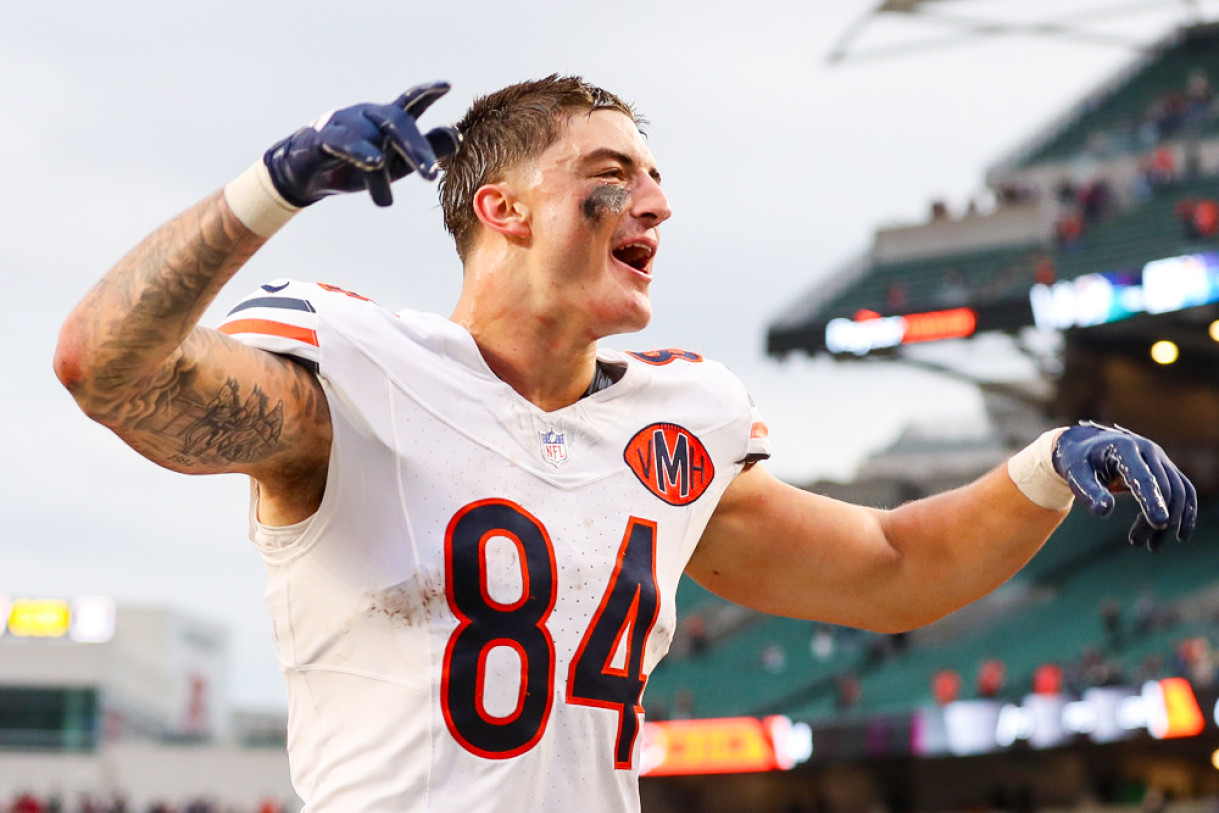
Rob breaks down the fantasy football tight end landscape in 2026 by looking at snaps played, routes run, and targets earned to provide you with in-depth information about who to trust in Week 6.
As good as some tight ends have been this season, more than a handful have been semi-to-massive disappointments. Unfortunately, disappointment only happens when expectations are high. Looking back at preseason ADP (average draft position), five tight ends have been a negative investment so far.
This week, we're focusing on these five early-season disappointments. Call this our "Tight End Fear Index". We'll break down each one, looking at their role and usage to see if there's reason to be optimistic.
While plenty of tight ends have outplayed their ADP, these five are causing plenty of panic across fantasy leagues. Do you bench them? Drop them? Keep starting them? Should you buy low? We'll discuss all of that here and get to my Week 6 rankings.
Bookmark our updated and revamped fantasy football rankings portal for all league formats!PPR rankings | Half-PPR rankings | Standard rankings | Rookie rankings | Superflex rankings | Dynasty rankings | Who To Start? | Injuries | Matchup Ratings | Strength of Schedule
The Loveland Let-Down
Colston Loveland has been nothing short of horrific. However, fantasy managers should take Loveland and all Chicago pass-catchers with a grain of salt. Caleb Williams has really only played one "normal" game. In Week 2, Chicago faced Minnesota in a torrential downpour and high winds, against Brian Flores' blitz-happy defense. That's not a great predictor of what's to come.
After that, fantasy managers had one start by Case Keenum and two by Tyson Bagent. The quarterback changes and the weather in Week 2 are certainly going to have a negative effect on the team's pass-catchers. We already knew that, though; Loveland's box scores show it. Is there hope?
Loveland's usage raises a few red flags. He didn't post an 80% snap share until Week 8 of last season. If we include his two playoff games, we have a 13-game sample. During this stretch, his per-game averages put him on pace for 123 targets, 81 receptions, 1,083 yards, and 8 touchdowns. Through five games this season, he's on pace for 75 targets, 44 receptions, 374 yards, and zero touchdowns. So, what's changed?
Let's start with a few of the good things. In his 13-game sample last year, he had a 72.0% snap share and a 67.2% route share. Both numbers are higher this season, at 85.2% and 70.2%, respectively. His snap share has climbed significantly, but his route share has increased less. As for positives, that's it.
Now, for the negatives, with Loveland, some of these efficiency metrics are directly tied to his quarterback. Not surprisingly, the better the quarterback plays, the more efficient a pass-catcher will be. Last year, on 91 targets, Loveland averaged 9.1 yards per target. This year, that number is just 5.0.
Loveland has been inefficient across the board, though this is based on a sample of just 22 targets across three tight ends. His yards-per-route average is currently 0.79, down from 2.34 in last year's sample. These stats are certainly driven by his quarterback's play.
Last season, Loveland was used much further downfield, a big change in his usage. He averaged 9.7 yards downfield last year, but that's fallen to just 6.3 this year. He currently commands 12.0% of his team's air yards, down from 22.8% last year.
It's somewhat surprising that despite an average depth of target of just 5.0, his target rate is so low. He's currently earning a target on just 16% of his routes. Last year, he was averaging a target on 26% of his routes. It's hard to fathom how little Chicago has used their supposedly superstar tight end.
Now, for the big question: what's our fear index for Loveland on a scale of 1-5? Given his production, or rather lack thereof, it'd be much higher if William had started all year. If he had been, Loveland's fear index might be a lot higher. Instead, we're going to set it at a 2.5. If you can buy low, I'd throw out a few offers, but I wouldn't go crazy.
There's little reason to think Loveland will match his lofty preseason ADP of TE3, but I believe he can be a low-end TE1. Based on his performance so far, you might be able to pay that price, but I wouldn't pay more.
Tucker Kraft Dropping the Ball
Kraft was downright dominant last year. He averaged 2.57 yards per route run, 11.9 yards per target, 10.6 yards after contact per reception, 11.6% first downs per route run, 0.53 fantasy points per route run, and 12.65 half-PPR PPG. These numbers are elite. Some of the best of the best. He also had a 16.4% target share and 22% target rate.
Coming off a torn ACL, Kraft's early-season struggles shouldn't have surprised anyone. He's struggled with drops early, something that is fairly uncharacteristic. This is far more noise than anything fantasy managers need to worry about. If anything, the bad optics present a buying opportunity.
Outside of the drops, however, Kraft has struggled to get going. The good news is that he seems to be finding his footing lately. Kraft's play and efficiency have changed dramatically in the first three weeks of the season compared to the last two.
| Time | TS% | TR% | YPRR | YPT | YAC/Rec | 1D/RR | FP/RR | Half-PPR PPG |
| Weeks 1-3 | 13.7% | 20.0% | 1.28 | 6.24 | 5.67 | 4.8% | 0.18 | 5.0 |
| Weeks 4-5 | 19.7% | 27.0% | 2.41 | 8.83 | 7.45 | 13.6% | 0.50 | 11.3 |
Kraft's numbers over the last two weeks are approaching last year's. Jordan Love is unconscious right now. The Packers' offense is almost entirely dependent on its passing attack.
They currently are fifth in pass attempts per game, fourth in yards per game, and eighth in passing touchdowns per game. Even better, the offense is highly concentrated, with Kraft, Matthew Golden, and Christian Watson accounting for almost 60% of Love's attempts.
Kraft's Fear Index is currently 0.0. Kraft is definitely a buy right now, and if there's a fantasy manager who thinks now is the time to "sell high", I'd be all over that. If they have Juwan Johnson or George Kittle, I'd be aggressive about acquiring Kraft if I need a tight end.
Rookie Receivers Taking Over in Cleveland
Last year, Harold Fannin Jr. led Cleveland in targets with 107. Second on the team was Jerry Jeudy with 106. David Njoku was third with 48. Njoku is now with the Chargers. The additions of Denzel Boston and KC Concepcion have greatly changed how Cleveland distributes targets.
But they aren't the only changes. This year brought a new head coach and a new quarterback. These changes, along with increased target competition, are negatively impacting Fannin and his production.
Let's look at Jeudy, the other primary carryover from last year. Jeudy averaged 6.2 targets per game in 2025 but is averaging only 2.6 this season. That's because Boston and Concepcion are both averaging 5.4 targets per game.
Fannin's profile has some positives, including his snap share, which was 76.2% and is now 87.0% this year. This has been matched by a significant increase in his route share, which jumped from 66.0% to 78.7%. Unfortunately, that's where the positives end.
Fannin's target share has decreased from 19.4% to 17.6%. That isn't a significant decline, and for the most part, Fannin is scoring about the same as last season. He averaged 9.46 half-PPR PPG last year and is at 8.54 PPG this year. Chalk up the difference to variance. However, given the increase in snaps and route share, it's disappointing we haven't seen a similar increase in his PPG.
We've unfortunately seen massive decreases in efficiency in Fannin's game this season. Last year, he averaged a very encouraging 1.81 yards per route run. This year, just 1.09. Last year, Fannin averaged 6.5 targets per game, and despite the significant increase in route share, Fannin's targets per game are actually down, sitting at 5.2.
That's because his target rate is a pedestrian 18%, down from the elite 26% he posted last season. In 2025, Cleveland's passing attack was centered on just two players. On top of that, they finished 15th in the league in pass attempts. Now, there are three mouths to feed, and Cleveland ranks just 21st in pass attempts per game.
The Fear Index on Fannin is high, sitting at 4.0. Fannin has become a touchdown-dependent tight end. He hasn't yet eclipsed 8.0 half-PPR points without scoring. He has never had more than 55 yards in a game and has finished with under 30 yards three times.
Given the struggles Cleveland has on offense and the inconsistencies in their passing game, there's virtually no reason to expect him to reach his preseason expectations. Based on the numbers, I'm not convinced Fannin will even finish as a TE1.
Kyle Pitts-Fall
Kyle Pitts Sr. is coming off his best game of the season. He finished with 12.7 half-PPR points, largely because he found the end zone. Before Week 5, Pitts had scored 9.2 half-PPR points total. In four games. He scored 0.0, 2.0, 1.0, and 6.2 half-PPR points in the first four games of the season.
Pitts's Week 5 usage offered some reason for optimism. He posted a 70% route share, up from 55.0% in the first four weeks. He played 76.6% of snaps, up from 52.8% in Weeks 1-4. The question is how much you trust that utilization to hold.
Plenty of concerns remain when you compare his current usage to last year, when he finished as the TE6. In 2025, he had an 87.5% snap share. This year, just 57.7%. Last year, his route share was an elite 86.2%. That has significantly decreased to 58.9% this year. That includes Week 5, when he was at 70%.
Pitts is coming off the field extensively when the team goes into 12-personnel, something that didn't happen last year. Unfortunately for Pitts, it's not just his utilization that is plummeting his fantasy value; his play and production are, too.
Last year, he had a 23% target rate. This year, it's at 17.0%. He's not giving his coaches a reason to do anything differently, because playing in 12-personnel and running their offense through Bijan Robinson and Brian Robinson Jr. is the best way to be effective. Pitts has just a 1.22 yards-per-route run average, down from 1.84 last year.
Despite his strong Week 5 performance, Pitts's Fear Index still sits at 5.0. If you can sell high, or even sell low after his "big" Week 5 performance, I recommend doing so. Nothing about his utilization suggests optimism.
Will the Real Dalton Kincaid, Please Stand Up?
Talk about your Dr. Jekyll and Mr. Hyde. In the first two weeks of the season, Kincaid looked like he might have a little Brock Bowers in him. Then, in Weeks 3-5, he started looking like Greg Dulcich. So, who are you, Kincaid?
The reality is, he's both. Unfortunately, this is the same old Kincaid. We've seen this story before. He can be extremely effective when the team features him. Other times, he fades into the background as the team shifts away from him. While Kincaid deserves some of the blame, it centers on how he's used.
| Time | Snap % | Route % | TS% | TR% | YPRR | YPT | FP/RR | Half-PPR PPG |
| Weeks 1-2 | 71.9% | 65.7% | 23.3% | 30% | 4.89 | 16.07 | 0.75 | 17.25 |
| Weeks 3-5 | 65.5% | 58.5% | 9.0% | 13% | 0.95 | 7.43 | 0.13 | 2.73 |
We've also seen decreases in Josh Allen's production during this period. In the first two weeks of the season, Allen averaged 291 passing yards per game and 9.7 yards per attempt. In Weeks 3-5, Allen's yards-per-game average dropped to 222, and his yards-per-attempt fell to 8.5. This offense needs Kincaid. He doesn't have to be Superman, like he was in Weeks 1-2, but he can't be absent from the game plan, and head coach Joe Brady has admitted as such.
Joe Brady says “it’s a combination of a lot of things” in terms of #Bills TE Dalton Kincaid not getting the ball recently.
Says he hasn’t done a good enough job of getting Kincaid involved, especially early, in the last two games.
— Jonathan Acosta (@JAcostaTV) October 13, 2026
So where does that leave fantasy managers? Kincaid was drafted as the TE12, and after five weeks, he's now the TE10. He's boomed twice and busted thrice. This is what fantasy managers should expect from Kincaid. Buffalo spreads the ball around in the passing attack. That'll especially be true once D.J. Moore is back on the field.
They also want to run the football with James Cook, and Allen is a threat on the ground, too. Their offensive structure will create games where the ball simply doesn't find Kincaid. There will be other games, though, where he'll eat. The question is whether you're willing to ride the waves.
Kincaid's Fear Index is just 1.0 based on preseason expectations. He's playing more snaps and running more routes than he did last year; that's a great sign! He's healthy! Buffalo is passing the ball more. These are all good things. Now, if you're basing his Fear Index based on what the expectations became after the first two weeks, that number would be a lot higher.
Right now, Kincaid has been largely what you wanted when you drafted him. If I need a tight end and can buy Kincaid cheap after three poor performances, I'm doing it. As long as he's healthy, Kincaid will finish first or second on the team in targets, depending on Moore's health.
Being Josh Allen's first- or second-most-targeted tight end will have plenty of fantasy football value. Unfortunately, the road won't be smooth. It'll have its highs and lows, but with a player as talented as Kincaid catching passes from an insanely talented Josh Allen, I'm willing to jump in and ride the waves.
Week 6 Rankings
- Brock Bowers, Las Vegas Raiders vs Buffalo Bills
- George Kittle, San Francisco 49ers vs Washington Commanders
- Trey McBride, Arizona Cardinals at Los Angeles Rams
- Tucker Kraft, Green Bay Packers vs Dallas Cowboys
- Tyler Warren, Indianapolis Colts vs Tennessee Titans
- Isaiah Likely, New York Giants vs New Orleans Saints
- Juwan Johnson, New Orleans Saints at New York Giants
- Dalton Kincaid, Buffalo Bills at Las Vegas Raiders
- Travis Kelce, Kansas City Chiefs vs Los Angeles Chargers
- Colston Loveland, Chicago Bears at Atlanta Falcons
- Brenton Strange, Jacksonville Jaguars vs Houston Texans
- Dallas Goedert, Philadelphia Eagles vs Carolina Panthers
- Pat Freiermuth, Pittsburgh Steelers at Tampa Bay Buccaneers
- Tyler Higbee, Los Angeles Rams vs Arizona Cardinals
- Harold Fannin Jr., Cleveland Browns vs Baltimore Ravens
- Mark Andrews, Baltimore Ravens at Cleveland Browns
- Chig Okonkwo, Washington Commanders at San Francisco 49ers
- Hunter Henry, New England Patriots vs New York Jets
- Jake Ferguson, Dallas Cowboys at Green Bay Packers
- Kyle Pitts, Atlanta Falcons vs Chicago Bears
- Michael Mayer, Las Vegas Raiders vs Buffalo Bills
- Darren Waller, Carolina Panthers at Philadelphia Eagles
- Dalton Schultz, Houston Texans at Jacksonville Jaguars
- Oronde Gadsden, Los Angeles Chargers at Kansas City Chiefs
- A.J. Barner, Seattle Seahawks at Denver Broncos
More Fantasy Football Analysis
Download Our Free News & Alerts Mobile App
Like what you see? Download our updated fantasy football app for iPhone and Android with 24x7 player news, injury alerts, rankings, starts/sits & more. All free!