RADIO
RADIO







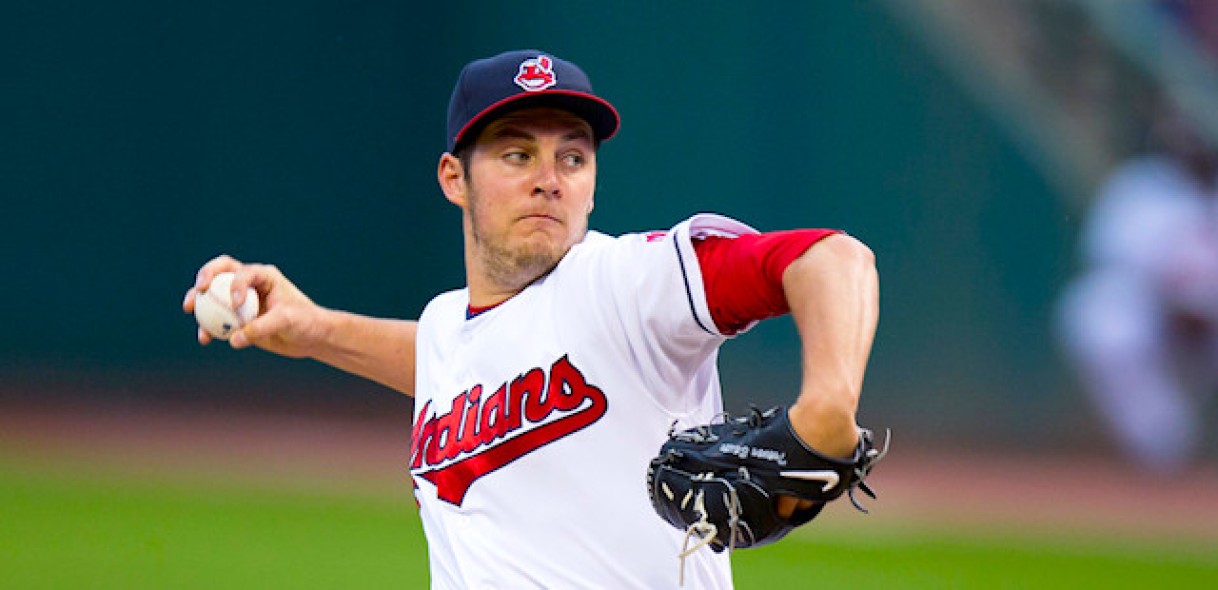
Jon Denzler breaks down the two-start performances from six starting pitchers during week 13 to see what changes in approach are apparent, and what trends should help owners better plan their rotations.
What do Chris Sale, Ian Kennedy, and Wilmer Font all have in common? These three were pitchers scheduled to make two starts in Week 13 of the fantasy baseball season. In fact, in Week 13, there were 38 pitchers set to make two-start weeks. Taking advantage of two-start pitchers is critical to maximizing week to week results, but knowing when and who to add makes a big difference. A bad two-start week can tank an entire week, but a good two-step can push a team over the top.
Building from last week’s focus on trends in two-start pitchers, this week’s piece takes a deep dive into six pitchers from Week 13 in the fantasy season. After ranking the starting pitchers from that week, the pitchers were divided into three tiers, and then two pitchers were selected at random from each of the tiers.
While diving into the results below, the primary focus was comparing pitching results to the changing pitch mixes used in each start. The critical question is: are pitchers who mix up approaches more effective in the two-start week, or at pitchers who remain consistent no matter the opponent, and therefore which set owners should target.
Featured Promo: Save 50% off the regular price with discount code CHAMP, for a limited time. Exclusive access to our Team Sync platform, DFS cheat sheets, Lineup Optimizers, betting/prop picks, and exclusive content from Nick Mariano and Eric Cross! GAIN ACCESS NOW
Pitch Mix and Matchups
Tier 1: Gerrit Cole (HOU) and Trevor Bauer (CLE)
The first two pitchers in the evaluation happen to know each other quite well, as both pitched at UCLA and have established themselves as the next wave of aces in the league. At the same time, their approach to pitching is different with Cole throwing five pitches, and Bauer anywhere from six to eight. Both pitchers also made two starts during week 13 of the fantasy season, and both were pitching against opponents that should be good matchups.
Cole - vs. TB, and vs. KC
In his first start against Tampa Bay, Cole did not have his best outing of the season, allowing four earned over seven innings on the mound. The primary culprit was the walks, as he gave a total of five free passes compared to only three hits. His stuff was working though as he struck out eight which is right in line with his season numbers. The second start was much better concerning the stat line, and Cole went five allowing only one earned, and striking out eight again. The walks were still a bit high at three, but the hits were still low at two. In both starts, Cole allowed a homer which is not uncommon this season.
The significant difference between the two starts was his curveball usage as in the Tampa start he threw 23% of his pitches as curveballs, and in the second start, only 14%. The second game did see a six-point increase in the change-up. Other than that, most of the pitches were used the same, and only showed a small variance in approach. While both starts were not elite, overall this would have been a good two-start week to play with and would help most teams.
Bauer - vs. CHW, and vs. DET
Bauer dominated in both of his starts in this week but offered different profiles that still make this an exciting week to check the approach. In his first start, against Chicago, Bauer went seven innings, allowing no earned runs, striking out eight, and walking two total. The hits were also low with only three total allowed over the strong start. In his second start, against Detroit, Bauer was better in some aspects but also allowed an earned run in his six innings of work. Even with allowing that run he was able to post 11 strikeouts while still walking two, and allowing five total hits.
Unlike Cole, Bauer offered little change in his pitch mix with his six main pitches being used within four points of each other. The most significant gap was that four-point spike which came on the slider, but the fastball stayed steady at 44%, and the cutter only moving from 10% to 11%.
Tier 2: Sonny Gray (NYY) and Luke Weaver (STL)
Tier two features two pitchers who came into the season with high expectations and so far have not lived up to those projections. Even with that, both are pitchers most fantasy owners would have liked to have on draft day, although they haven't been in nearly the same class as Cole and Bauer so far.
Gray - at WAS, vs. TB
Week 13 was one of Gray’s best so far this season with two strong starts in which he was able to minimize the overall damage while keeping a good counting line for his owners. First, against Washington, Gray was able to go five innings allowing two earned and striking out seven total. The walks were low (only one that start), and the hits were right in line with a good start (six over the five innings). In the second start, vs. Tampa, the results were not the same, but again the overall line is something owners can work with and support their team overall. In 6 2/3 innings Gray allowed four earned runs but struck out seven, with only one walk. The hits stayed the same at six from the Washington start, but Gray did allow a homer.
Gray’s approach looked much different in his second start as opposed to his first, with only one pitch being used with five percent of the Washington start. Gray threw five percent fewer fastballs, all the way down to 16 percent, but also saw a spike in his changeup from 20% to 35%. The slider dropped 13 percent, but the sinker increased 16 percent. What is unusual is to a see a pitcher change this much, and still keep the same success concerning strikeouts, but see such a difference in runs allowed.
Weaver - at PHI, and at MIL
Two starts with two different results, but both offer different lines for fantasy owners. In his first, versus Philadelphia, Weaver went five innings allowing four earned runs while striking out only four. At the same time, he walked four and allowed two homers. Not a great start, but with only six total hits, those homers changed the feel of the match. In his second start, against Milwaukee, Weaver improved to go 5 2/3 innings with only two earned runs allowed. The Ks were up to nine total and the walks dropped to two in this appearance. While he still did allow a homer, it was one of only five hits and did not change the overall feel of the game.
Regarding pitch mix, there is only one pitch that changed a ton between the two starts as the fastball was used 61% in the first and 67% in the second. The most significant change was the curveball as it was thrown only 4% versus Philly, but up to 17% versus the Brewers. The slider was within six points and even the cutter was only eight points different. While there were some gaps when the fastball stayed much the same, it would appear that Weaver was using different breaking balls, but the same rate of them. The pitching line means that the overall the approach was much the same, with some variations as opposed to the other changes documented in this article.
Tier 3: Andrew Suarez (SFG) and Paul Blackburn (OAK)
For the final tier, two starters who are either spot starters or young enough to still be figuring out the bigs. Both starters had decent matchups, but Blackburn pitched both of his on the road whereas Suarez pitched both of his at home.
Suarez - vs. MIA, and vs. SD
Taking both of his appearances with a grain of salt, due to the park factors and opponents, Suarez pitched well enough in both starts to keep him in this tier for this article. In the first appearance against the Marlins, he went 6 1/3 innings allowing only two earned runs. To add to this he added seven strikeouts, just one walk, and five hits for an overall excellent performance. In the second start, the numbers lined up much the same with 5 2/3 innings, and only one earned run. The strikeouts went down to four, but the walks stayed at one. The most significant difference was the spike in hits up to eight, with one homer.
The pitch mix was impressive and either showed a drastic change in approach, or some mislabeling of the pitches. The fastball jumped from 30% to 45% over the two starts, whereas the slider went from 15% to zero against the Padres. The pitch that stayed mostly the same over the two starts was the changeup with a 16% in the first start and 12% in the second start. The stats were all over the place, but both games provided good results for Suarez.
Blackburn - at SD, and at CWS
Keeping it in the third tier, these were two additional good matchups for a starter recovering from injury last season. Both were on the road in good parks as well, which made this helpful for a comparison to Suarez. In the first start versus San Diego, Blackburn went five innings allowing two earned runs, while striking out four. The hits were low at four, and only two walks. In the second start, against Chicago, Blackburn pitched five innings but this time allowed six total runs. Blackburn's strikeouts stayed the same with a total of four, and the walks dropped to zero. The most significant difference was the spike in hits from four to eight, with one homer in the second start.
Blackburn mixed in five pitches over his two starts. Much of the pitches were the same, but he also offered some variance between the two appearances. The most exciting piece is how little he threw the fastball with only 8% reported in the first start and 3% in the second. Some of the off-speed pitches stayed similar with the slider jumping from 19% to 25%, but the sinker dropping from 33% to 22%. The changeup trended up (when the fastball usage was down), thrown 11% of the time in the first start but up to 17% in the second start.
Takeaways
Concerning the six pitchers evaluated in this piece, the most consistent results came from pitchers who approached the games much the same regarding the pitch mix. While two of the six, Bauer and Cole, were the best on this list, they also showed the fewest variance concerning pitch mix, and therefore had the best results in back-to-back starts. Suarez had the most significant difference concerning pitches but also took advantage of the park and opposing teams to perform well in both starts. Sonny Gray had a significant variance between two starts, and had mixed results with similar K:BB ratios, but gave up more runs and a home run in the second start.
From the sample size provided, it would seem that owners should target two-start pitchers that do not change their approach in a second start but keep to the same plan with the pitches they use to approach hitters. Targeting these pitchers would support Cole and Bauer - besides being the best pitchers on the list, they are able to keep their same approach moving into a start. With the best stuff, and ability to mix pitches, they do not need to change to deal with hitters. Pitchers with these skills can make smaller adjustments to hitters, as opposed to needing to break habits to find ways to "fool" hitters.
On the other hand, pitchers like Gray and Blackburn attempted to change things up to deal with different hitters. Suarez was the most successful of this group, in terms of large changes in approach for different teams, and had good results.
When approaching two-start weeks owners should prioritize pitchers who maintain similar pitch mixes week to week to maximize results. In most cases, this will mean starting those pitchers who are must-starts, but in other cases, when looking at streaming options, Brooks Baseball is your friend. If the elite pitchers are not available, it might be worth a try to find pitchers that mix their pitches up a ton. I would avoid non-elite pitchers who show small variances between starts, and prefer pitchers with either very large or no variance between starts.