



 RADIO
RADIO






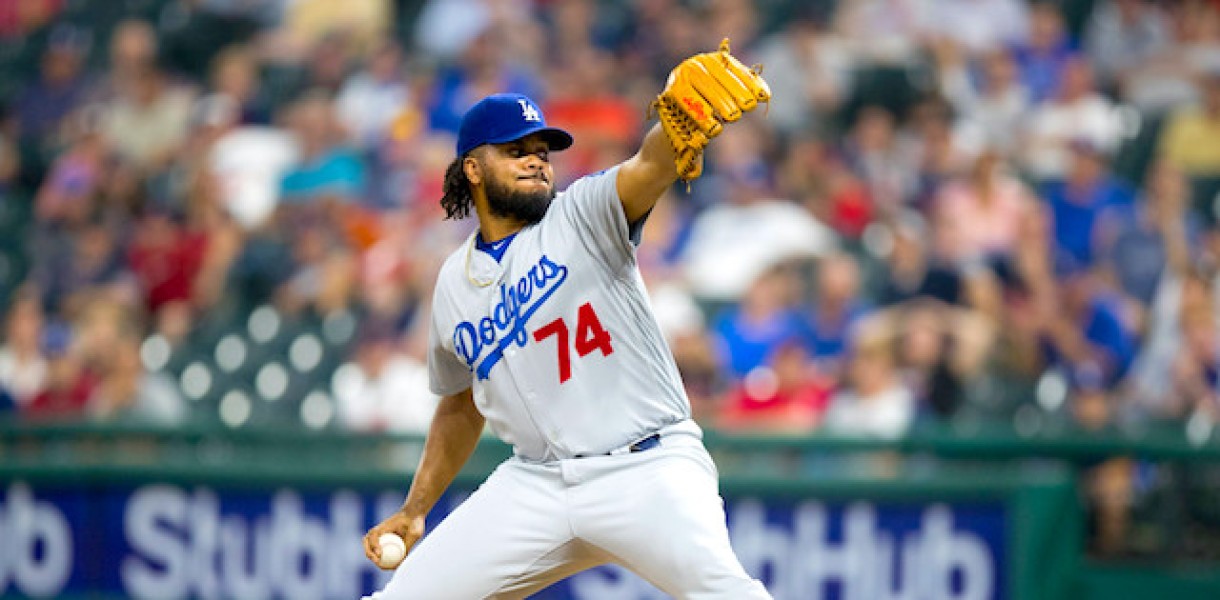
Eric Samulski analyzes how to draft closers in the shortened 2020 MLB season. He recommends which relief pitchers to target and avoid in your 2020 fantasy baseball drafts.
Now that Major League Baseball and the MLBPA have finally come to an agreement and locked in a plan for the upcoming season, the RotoBaller staff is churning out content to try and get you ready for the 2020 fantasy baseball season. A lot of us have questions about how the shortened season, new league rules, and new division-focused schedule will impact fantasy leagues. There are frankly too many questions to focus on in one article, so we'll take it one topic at a time. For today, let's discuss how we're approaching closers and saves in the 2020 baseball season.
For the last two years, Alex Fast from PitcherList has made the argument that we're drafting saves wrong. The overall number of saves is dropping, and more relievers are getting saves, so it's harder to pinpoint exactly who will get saves. As a result, he concludes, we're drafting save assets too high in fantasy leagues. However, this year may be different.
While I think his piece is a tremendous read and great for planning for the 2021 season, I'm going to respectfully pivot a little bit from that in regards to the shortened 2020 season. In this article, I'll walk you through a few details we know about the new season and explain how those impact my thinking in regards to drafting for saves. Then, I'll tell you the strategy that I will personally be using in my fantasy drafts this year. Hopefully, by explaining the thinking that leads up to the decision, you can find some interesting takeaways or even solidify your own approach, even if it differs from mine.
Featured Promo: Save 50% off the regular price with discount code CHAMP, for a limited time. Exclusive access to our Team Sync platform, DFS cheat sheets, Lineup Optimizers, betting/prop picks, and exclusive content from Nick Mariano and Eric Cross! GAIN ACCESS NOW
Things We Know About the 2020 Season
1. Relievers Will Be More Ready Than Most
While games begin on July 24th, it's safe to say that relief pitchers will be perhaps the closest to the ever-alluring "mid-season form." Most pitchers have been throwing during the quarantine, and they really don't need anything to stay on their throwing regiment other than one other person who can catch a bullpen. Additionally, relievers require less ramp-up time than starting pitchers because they throw fewer pitches.
While throwing a baseball for any amount of time is taxing on your arm, relievers have always been able to bounce back quicker because they throw fewer pitches. They may also not need as many rest days as hitters who may have been working out but will still need to adjust to the toll of nine-inning games day after day.
All of which means that relievers may be the readiest to go out of the gate and can be treated by their managers as if it was the middle of the season.
2. Every Game Matters = Use Your Best Arms
With only 60 games on the schedule, every single game matters to a team's hopes of making the playoffs. One losing streak could cost a team five or more games in the standings and end their postseason hopes. As a result, I expect managers to be managing every game as if it has those kinds of stakes. If you're in a close game in the ninth inning and you need to win to make the playoffs, are you going to try and play the matchup - especially now that whatever reliever you bring in needs to face three batters - or are you going to turn to your best arm for three outs?
To me, the answer is obviously that you turn to your best arm. If you bring in a lefty specialist to face two lefties and one of those gets pinch hit for, you now have a lefty in for one left-handed batter and two right-handed ones while your best reliever sits in the bullpen. I can't imagine it would sit well with the Phillies if Adam Morgan comes in to face lefties instead of Hector Neris, and he blows the save.
In my opinion, managers are not likely to screw around with untested pitchers at the end of games and are going to rely on their best arms to seal the deal.
3. Rosters Aren't Being Expanded As We Thought
At one point in time, we thought that rosters could be upwards of 40 or 50 players, which would have given managers incredible bullpen flexibility. Now we know that rosters will actually be whittled down to 26 after just a few weeks. That means bullpens will be operating at relatively the same size, which restricts wide-sweeping strategy changes.
It may be likely that managers use those bullpen arms more often as openers or in the fifth and sixth innings to help manage the innings of starters or prevent a big inning. However, that would mean that teams would need to have less of a revolving door at the end of games in order to free up the other relievers for such versatility.
For example, if the Giants use Drew Pomeranz's multi-inning ability to open some games or come in to relieve a shaky starter before the game gets out of hand, then it's far less likely he's also able to be held back to close out many games. I think this is going to be true for a lot of multi-inning relievers this year, who will likely be valuable pieces on your roster for ratios and wins, but unlikely to also be used regularly for saves. That could give extra security to guys like Edwin Diaz or Raisel Iglesias if Seth Lugo and Michael Lorenzen are used in more versatile roles. It might also be a reason the Diamondbacks turn away from Archie Bradley as their closer. Just thinking out loud here.
4. Schedule Has Less Variance This Year
With teams playing 40 games against their own division and 20 games against their geographic rivals in interleague play, there is much less variance in the schedule. This means we have a better idea than most years about which teams will likely be seeing the most save opportunities. Now, nothing is certain. Injuries or poor performance could derail a team's season in a hurry. However, the talent level of each team hasn't changed much from where it was in March before Spring Training was shut down.
For example, we knew the Red Sox were going to struggle a little bit without Chris Sale and Mookie Betts. They were unlikely to be the title contender they've been in recent years. Now we also know that their games will be almost entirely composed of matchups against the Yankees, Rays, Blue Jays, and Orioles. Plus, they'll get additional games against the Phillies, Nationals, and Mets. The only teams on there I feel comfortable that the Red Sox are better than (and I say this as a Red Sox fan) are the Orioles and Mets. This makes me less inclined to want to take a chance on Brandon Workman since his overall number of save chances is likely to be lower than, say Alex Colome, who not only gets the Royals and Tigers in his own division but the Pirates and Reds in interleague competition.
5. Teams Don't Have Time To Try New Things
With only a 60-game season, managers will have less time to evaluate the season-specific performances of their players, try guys out in different roles, and mix-and-match to find the best fit. I believe that managers will naturally play to what they consider to be their strengths. If an organization or manager likes to use multiple closers, they'll likely do that now. If a manager or organization sticks with one closer, they'll be more inclined to do that now.
What that means is that organizations like the Blue Jays, Pirates, Mets, White Sox, Tigers, Indians, Cubs, Reds are more likely to stick with their guy. In contrast, organizations like the Rays, Twins, Cardinals, Diamondbacks, Giants, and Phillies (now under Girardi) are more likely to keep their committee approach.
6. Reliever Committees Will Shrink
OK, so this one isn't a fact, but I wanted to end on this because I think it might be the point where I stray the most from common fantasy belief and the area where you can capitalize the most on the competition.
In that great article by Alex Fast, the threshold for team's reliance on multiple pitchers at the end of the game was if they didn't have a closer with more than 70% of the team's saves. A pitcher getting 70% of saves is still a clear suggestion that the manager trusts him.
So here is where I think you'll see the biggest difference this year: those near-70% save guys from year's past will get more saves at the expense of the relievers at the small end of the committee.
For example, last year the Rays had 11 pitchers get saves. However, only three of those 11 pitchers had more than three saves. It's clear that the Rays trusted three relievers - Emilio Pagan, Diego Castillo, and Jose Alvarado - considerably more than the rest of their bullpen. In a 60 game season, I don't believe you'll see the Rays turn to Peter Fairbanks, Colin Poche, Oliver Drake, and the others to close out games much. That means 11 saves are being redistributed to the most reliable arms. If that becomes two to five extra saves for a specific reliever in this short season, that could be a crucial difference in the standings.
If you look at the graphic below, also from Fast's article, you'll see that the teams that used the largest committees last year still had two preferred options for saves. The only teams with more than two closers getting over five saves were the Rays, Cubs (who signed Kimbrel mid-way through the year), and the Cardinals (who lost Jordan Hicks mid-way through the year).

What this means is that I think you're going to see every team tighten up their closer committee, if they had one to begin with, to two or three main arms. That means fewer chances to take saves away from Craig Kimbrel, Taylor Rogers, Aroldis Chapman, etc.
It also means that, at the end of drafts, it might be a good idea to take advantage of some of the Closer Committee stigmas on some of these relievers and draft guys like Mark Melancon, Will Smith, Giovanny Gallegos, Andrew Miller, Corey Knebel, and others and assume that the smaller committees will give them a higher percentage of their team's save chances than they would have gotten in a normal season.
Sidenote: Knebel may be sneaky valuable this year if the Brewers decide to use Josh Hader in the highest leverage moment of any game, regardless of inning. They did this before last year and perhaps would go back to that strategy now that Knebel is healthy again.
So What Does That Mean For Strategy?
1. Perennially strong closers are safer this year than in year's past.
I use the word "perenially" here because I think it's a crucial distinction. If a pitcher has proven for a few years that they are a reliable end-of-game option, then I imagine the trust he's built up will cause a team to go back to him with games on the line. This is especially true since, as I mentioned before, each game is crucial and other relievers won't have the time to build up the trust of their manager for these crucial situations.
On the other hand, with each game being so crucial, closers without a track record of success will be far more likely to lose their job after a bad stretch. However, and this is important, I can only see this happening if a team has a clear back-up option. For example, Ian Kennedy doesn't have a long track record of success. If he struggles for a stretch, the Royals could look to another option. But who would that be? Scott Barlow? Will they be the next team to bank on a Greg Holland resurgence? As a result, I'd imagine Kennedy gets a little more of a rope than, say, Gallegos since the Cardinals have ample options with experience behind him.
Some consistent closers that I would feel confident in drafting are:
- Kirby Yates, Roberto Osuna, Kenley Jansen, Aroldis Chapman, Hector Neris, Raisel Iglesias, Ken Giles, Alex Colome, Will Smith, and Edwin Diaz (if I speak it into the world it will exist. He will be safe.)
- I will also add Brad Hand to this, even though I was confident he would lose his job this year. With a short season and the options behind him having so little MLB experience, I think it will be less likely.
- Josh Hader will also absolutely remain valuable all year, but his save totals may drop for the reason I mentioned earlier - punished by his own unique skillset.
2. After you grab a perennial strong closer, wait...and wait... and wait.
I want to make clear that I'm not suggesting waiting because I think teams will be actively trying to spread out saves. As I said above, I believe the opposite is true. However, with only 60 total games, the number of saves that will separate the middle of the leaderboard should be negligible. I believe there will be some clear separation at the top, but you're going to also see a lot of closers with somewhere between 6-10 saves because they're either on mediocre teams, in committees, or pitched inconsistently enough to lose their job for a stretch.
I'd much rather pass on the volatility of Nick Anderson, Wade Davis, or Archie Bradley to draft other positions at that spot and then roster guys like Seth Lugo, Joe Jimenez, Corey Knebel, Jose Alvarado, and Daniel Hudson who may not wind up with many saves but will cost me much less draft capital.
3. Don't Spend As Much Time Speculating on Saves
With a shorter season, there is less time for players to earn their way into roles. We may see the impact of that more at the back-end of a bullpen than anywhere else. It will take a few good weeks for a pitcher to come out of nowhere and earn his manager's trust at the end of games if he didn't have it at the start of a season. Those weeks are crucial in such a short fantasy season, so if you're rostering a pitcher only in hopes that he eventually takes over a closer's job, you're likely wasting a roster spot.
If a player is not a team's closer or part of a committee at the start of the season, I won't be drafting him. I'd rather use that roster spot on a middle reliever who I know will pitch well and help my ratios than hope I luck into saves while rostering a pitcher that could just as easily get blown up and kill my ratios. I can always use my FAAB when a closer change becomes apparent if that seems to be the best course of action for my team at the time.
This goes double for pitchers on bad teams. I'm not going to wait around for Sam Tuivalala to maybe take over the Mariners' closer job or Scott Oberg to possibly beat out Wade Davis again. If those guys aren't pitching consistent innings that help my ratios, they are of no use to my fantasy team in a short season.
You'll likely have a lot of reliever turnover on your teams as you try to locate the guys getting the most consistent, highest leverage innings, and that's OK. Just don't hold onto mediocrity in hopes of a few saves.
4. Don't Shy Away From Committee Closers on Good Teams
If we accept my earlier points that managers are more likely to consistently turn to their best arms to close out games, and we feel a sense of security in knowing who those players are, then it follows that closers who share a job on a good team are likely to see more opportunities than closers who are atop the depth chart on a bad team.
For example, many people believe Sean Doolittle could find himself in a committee since he is a left-handed pitcher in a deep bullpen. However, he pitches for a strong team that could win 40+ games. If he is one of the primary closing options on a team that figures to see more save opportunities than average, I'd rather take him than a player like Jose Leclerc or Joe Jimenez who have inconsistent track records and are on teams that are liable to see fewer opportunities overall.
If Doolittle were to remain in the committee, he'd likely see a near similar amount of save opportunities as Leclerc. However, if Doolittle pitches well or Leclerc struggles, the difference in opportunities could be tremendous, while I would find it hard to imagine Doolittle flat out losing his job.
So, to summarize, my strategy will be to identify a reliable closer on a solid team and get him to lead my bullpen. I'll then try to add two options that are clearly entrenched in the backend of a team's bullpen, even if they're in a committee (preferably on good teams, of course). Lastly, I'd round out my bullpen with ratio-aiding relievers that should be used consistently in any role out of the bullpen. I think this setup gives me a good chance to remain in the mix to win saves, with the upside to win the category if one of my committee options hits, and also gives me the safest floor to avoid a bullpen that will crush my ratios in a short season.
More 2020 Fantasy Baseball Advice