




 RADIO
RADIO










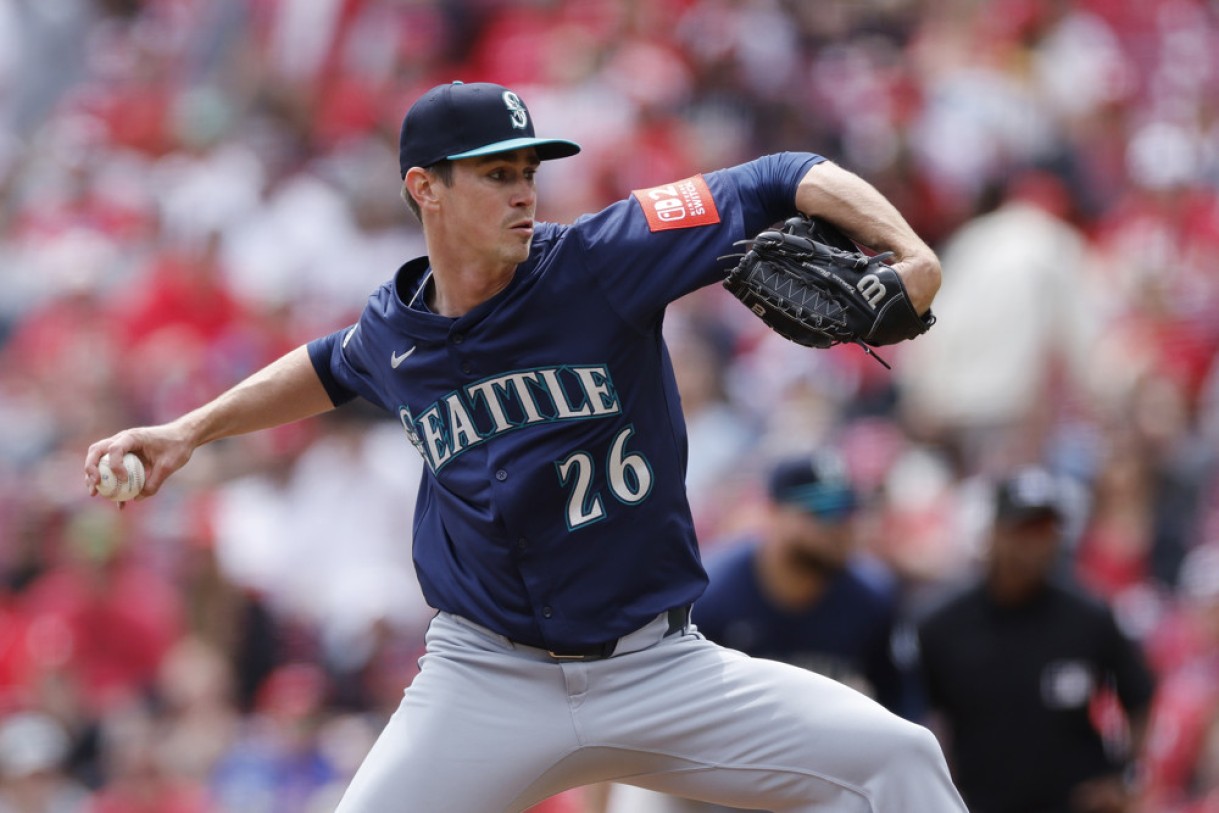
Elliott looks at pitchers with surprising starts recently. These SPs could emerge as fantasy baseball waiver wire targets for Week 1 in 2026, or just mirages.
Welcome back to the "Are You For Real?" series as we dive into Week 1 of the 2026 fantasy baseball season. We are so back! For those unfamiliar, this is a weekly column where we examine starting pitchers who had surprisingly strong starts over the past week and put them under the microscope to determine whether they're legitimate or just smoke and mirrors.
We are back for 2026, and boy, was it an exciting opening weekend! We had lots of great performances on the mound, and it was difficult to pick just three pitchers to examine. That's why I chose three that put up similar performances. Each one of these pitchers threw six scoreless innings in their season debut, and two of them no-hit the opponent. This week, we'll be looking at Emerson Hancock's Sunday Night Baseball dominance, Randy Vasquez's eight-strikeout performance against the Tigers, and Michael McGreevy's six no-hit innings against Tampa Bay.
Roster percentages are taken from Yahoo! and are accurate as of March 30.
Featured Promo: Save 50% off the regular price with discount code CHAMP, for a limited time. Exclusive access to our Team Sync platform, DFS cheat sheets, Lineup Optimizers, betting/prop picks, and exclusive content from Nick Mariano and Eric Cross! GAIN ACCESS NOW
Emerson Hancock, Seattle Mariners – 29% Rostered
2025 Stats: 90 IP, 4.90 ERA, 5.08 FIP, 8.6% K-BB%
03/29 vs. CLE: 6 IP, 0 H, 0 ER, 1 BB, 9 K
Hancock impressed the baseball world on Sunday Night Baseball this week, firing six no-hit innings against Cleveland in his first start of the season. He also had a career-high nine strikeouts, and it was only the third start of Hancock’s career where he did not allow a run. Hancock has a rotation spot for now while Bryce Miller is on the mend. Can he be an early-season difference maker?
Originally the sixth overall pick by Seattle back in 2020, Hancock was one of many hyped Seattle pitching prospects of the last few years. He hasn’t found the same success as other names such as Bryan Woo and Logan Gilbert, and in fact, Hancock has struggled to a 4.64 ERA in 168.2 career innings. He works with a five-pitch mix, consisting of a four-seam fastball, sinker, slider, changeup, and a new cutter.
Hancock may have five pitches, but he really focused on two in this start, which were the four-seamer and the slider. He threw them a combined 79% of the time, and got all 12 of his whiffs with these two pitches as well. Let’s start with the four-seamer, which he threw 53% of the time against Cleveland. A 93.5 mph offering, Hancock doesn’t blow hitters away with his velocity. Nor does he have exceptional rise, with an average of just 14 inches of induced vertical break (IVB) in this start.
Where Hancock does stand out a little is with his horizontal movement and spin. He averaged 2538 RPM with an 81% active spin rate on his four-seamer in this start, which is an improvement on his 2389 RPM with the four-seamer last season. It’s just one start, but this raises him from average to above average in terms of fastball spin rate. He also averaged 13.5 inches of arm-side movement with the four-seamer in this start, which gives the pitch unique movement and can make it hard to read.
It might be tough for Hancock to sustain this big of a strikeout rate with the four-seamer (he had just a 16.6% raw K rate last year), but one thing he’s always done well with the fastball is induce flyballs. Flyball pitchers can be scary at times, but flyballs are also the least likely batted ball type to land for a hit.
Hancock is fortunate enough to pitch his home games in Seattle, plus he had an 85.9 mph average exit velocity against his four-seamer last season, along with a 21-degree average launch angle and a 47.2% fly-ball rate. Weak flyballs are most often outs, and Hancock could find success with this flyball-heavy approach. Batters hit .197 against his four-seamer last season, thanks in big part to the batted ball distribution.
The other pitch Hancock relied on heavily was his slider, which he threw 26% of the time. A 77.7 mph offering, it’s a soft slider with lots of horizontal movement and a high spin rate of 2646 RPM. Here’s an example from this most recent start.
— Elliott Baas (@ElliottBaasBB) March 31, 2026
It sort of just zips in there, and Hancock earned three whiffs on seven swings with the slider in this start. The pitch was incredibly effective for him in this start, but I am a little skeptical of how it will perform long-term. Batters hit .357 with a .500 SLG off this pitch in 2025, though Hancock did have a 36.8% whiff rate with it last year.
He had an extra 1.7 inches of horizontal movement with the pitch in this start compared to last season, so perhaps there’s a little extra oomph on his stuff in 2026. Hancock isn’t really a stuff guy, but the extra spin and movement could help him turn a corner.
After the four-seamer and slider, Hancock’s next most used pitch was the sinker, which he threw 11% of the time in this start. The sinker was his most used pitch last season at 38%, but opponents hit .297 with a .441 SLG and a .365 wOBA off the pitch.
Perhaps Hancock is trying a new approach for 2026, which would probably be for the best considering his struggles in previous years at the major league level. He does have a 52.9% ground-ball rate with the sinker all-time, so it could be a good pitch situationally, but maybe Hancock can find success with his four-seamer as the primary fastball.
He rounded out the start with five changeups and five cutters, all to lefties. The changeup was a much bigger part of Hancock’s game last season, but opponents hit .288 off the pitch with a .545 SLG and .376 wOBA. He also had just a 26.7% whiff rate with the change, despite it being his most-used secondary offering.
The changeup has decent horizontal movement, but hasn’t really lived up to the hype as Hancock’s best pitch from his prospect days. It has consistently underwhelmed in terms of strikeouts and run suppression, so again, this could be a change in approach from Hancock to deemphasize the changeup in favor of the slider.
Verdict: Hancock will likely be a hot waiver add following this start, which happened on a national stage for all to see. But I’m not so sure I’d be ready to drop a significant portion of my FAAB for him. Yes, this was impressive, but he did it in the best pitcher’s park in the majors against a lineup with the fourth-lowest wOBA against right-handed pitching last season.
Outside of Jose Ramirez and Steven Kwan, Cleveland’s lineup is mostly made up of unproven youngsters. Hancock is doing some interesting things with his pitch mix and is seemingly trying a new approach, but I need to see more than one start against a weak lineup at home before I can trust him. I think he’s a fine add if you’ve got an open roster spot or someone you’re eager to drop, but I wouldn’t give up on my draft day late-round lottery tickets for him just yet.
Randy Vasquez, San Diego Padres – 21% Rostered
2025 Stats: 133.2 IP, 3.84 ERA, 4.85 FIP, 4.6% K-BB%
03/28 vs. DET: 6 IP, 2 H, 0 ER, 3 BB, 8 K
Vasquez had one of the best starts of his career on Saturday, blanking the Tigers for six shutout innings en route to the victory. Vasquez came out of the gate hot after a strange 2025. His 3.84 ERA was respectable, but it came with a pitiful 13.7% K rate and a 5.43 SIERA, both suggesting that Vasquez vastly overperformed to reach a sub-4 ERA. That’s why he went virtually undrafted in standard leagues, with Vasquez seemingly offering very little upside with a whole lot of risk. Was this start a sign that he turned a corner, or was it merely a good day on the bump?
Originally an international free agent acquisition by the Yankees in 2018, Vasquez was one of many pieces that came to San Diego in the Juan Soto trade. Vasquez works with a deep seven-pitch arsenal, consisting of a four-seam fastball, cutter, curveball, sinker, sweeper, changeup, and slider. He mixes all of the pitches in with some degree of regularity, throwing five pitches more than 12% of the time last season. His slider is the only seldom-used pitch, having thrown it just 2.1% of the time in 2025.
His most used pitch in this start was the four-seam fastball, which he threw 30% of the time against Detroit. That does represent a 9% jump from his 2025 usage, but even more noteworthy was the velocity spike. Vasquez averaged 95 mph with his heater in this start after averaging just 93.5 mph last season. This puts him from middling to above average in terms of fastball velocity, and he also gained nearly an inch of IVB, averaging 16.3 inches of IVB in this start.
More velo and more movement? It’s only one start, but that’s what we like to see in possible breakout candidates. Vasquez even had a 35% whiff rate with the fastball in this start, earning six of his 13 swinging strikes with the pitch. That’s more than double his 2025 four-seam whiff rate, which was a paltry 16%. Vasquez probably won’t sustain this high a strikeout rate all season, but he could have serious gains if he can sustain this velocity increase.
Randy Vásquez's 2Ks in the 5th.
8Ks thru 5 pic.twitter.com/wz2PM2fDzA
— Rob Friedman (@PitchingNinja) March 29, 2026
Vasquez’s next most used pitch in this start was his cutter, which he threw 23% of the time. An 89.5 mph offering, Vasquez’s cutter velocity stayed roughly the same as it was last year. He did gain some movement with the pitch, with 3.8 inches of glove-side movement in this start, compared to 1.4 inches last season. Cutters aren’t generally big strikeout pitches for most pitchers (there are exceptions, of course, such as Kenley Jansen), and the reliance on the cutter may have contributed to Vasquez’s poor strikeout rate last year.
The cutter was his most used pitch and had just a 17.7% whiff rate. It was 42.9% in this start, with Vasquez earning three whiffs on seven swings. We will definitely need to see more before we can conclude that this is now a plus strikeout offering. I’m not sure the increased movement warrants such a big spike in whiffs. The Tigers did have the third-highest strikeout rate against righties last season, so this could’ve been Vasquez taking advantage of a vulnerable opponent. Detroit isn’t a bad offense, but they are susceptible to strikeouts.
Vasquez also mixed in his curveball quite a bit on Saturday, throwing it 17.6% of the time. His velocity was up on this pitch as well, going from 81.2 mph in 2025 to 83.9 mph in this start. A high spin offering (he averaged 3151 RPM in this start), Vasquez’s curveball is best at inducing groundballs.
He had a 52.1% ground-ball rate with the pitch last season, compared to just a 15.8% whiff rate. His whiff rate was at 28.6% in this start, but like with his other pitches, I need to see him do it over multiple starts before I can buy into Vasquez’s new strikeout potential. This start was a big deviation from how he normally performed last season, and was only the second time in his career that Vasquez had more than six strikeouts.
Vasquez threw his sinker 14.3% of the time, which was down from his 19% usage last season. Though, like with his four-seamer, the velocity on the sinker was way up. He averaged 95.5 mph with the pitch in this start after averaging 93.1 mph in 2025. Like the curveball, the sinker has proven to be an effective groundball pitch in years past.
He has a 52.2% ground-ball rate with the pitch all-time and had a 52.4% ground-ball rate with it last season. Vasquez wouldn’t be described as a groundball pitcher thanks to how much hitters can elevate his other pitches, but the curveball and sinker are both solid groundball offerings.
Verdict: I’m very skeptical of Vasquez’s ability to get even an average strikeout rate, but if the velocity gains are real, he may turn a corner into a viable back-end fantasy starter. He pitches for a good team in a great home ballpark and has a deep arsenal. If you’ve got an open spot due to injury or are ready to give up on a different dart throw, I wouldn’t mind adding Vasquez on the cheap.
While their pitching styles are different, he’s sort of similar to Hancock. Both pitch in ideal situations, both have underwhelmed in the past (especially in terms of strikeouts), and both seem to be making some tweaks to their game. I’d prefer Vasquez over Hancock, both because of the velocity gains for Vasquez and a more secure role for Vasquez.
If he’s healthy and performing, he will be in San Diego’s rotation. We’re talking about a team with Walker Buehler and German Marquez in the rotation, with Marco Gonzales and Triston McKenzie waiting in the wings. If he’s healthy and at least league average, he’ll have a rotation spot.
Michael McGreevy, St. Louis Cardinals – 7% Rostered
2025 Stats: 95.2 IP, 4.42 ERA, 4.27 FIP, 9.5% K-BB%
03/28 vs. TB: 6 IP, 0 H, 0 ER, 2 BB, 5 K
McGreevy was dominant on Saturday, tossing six no-hit innings against Tampa Bay in a tough luck no-decision. It was an excellent start to the season for the young right-hander, who is expected to be one of the anchor pieces in a rebuilding St. Louis rotation. Is McGreevy ready to be the Cardinal no one saw coming, or is he best left on waivers?
Originally a first-round pick by the Cardinals in 2021, McGreevy was a somewhat big pitching prospect coming up. He wasn’t viewed as a future frontline starter, but rather a reliable mid-rotation arm with excellent command. McGreevy has a deep seven-pitch repertoire consisting of a four-seam fastball, sinker, changeup, cutter, slider, sweeper, and curveball.
McGreevy’s most used pitch was a tie between the sinker and the changeup. We’ll start with the sinker, as this was a much bigger part of McGreevy’s game last season. He threw the pitch 22% of the time in this start and threw it 22.2% of the time last season. His velocity was way down in this start, with McGreevy averaging just 89.6 mph, compared to 91.7 mph last season. 91.7 mph is already slow in today’s game, but a sub-90 mph heater is practically unheard of.
Michael McGreevy twirls seven scoreless innings in a @Cardinals shutout victory! pic.twitter.com/Mu4K2fk7qS
— MLB (@MLB) September 17, 2025
Even when we do see sub-90 mph fastballs, it’s usually on older players/lefties who have diminished over time, but McGreevy is just 25 and right-handed. The sinker also didn’t have as much movement in this start compared to last year, with McGreevy losing 3.5 inches of horizontal break with the pitch. He somehow got three whiffs on 11 swings in this start for a 27% whiff rate, compared to a 7.4% whiff rate with the pitch last season.
The results on the pitch were good, but the measurables suggest that it may not be the most effective offering. To be fair, it was McGreevy’s best pitch last season with a .234 AVG against and a 63.5% ground-ball rate, but I’m just not that impressed by a soft sinker like this. It’s walking a tightrope every time he takes the mound, because this pitch could be crushed on a bad day.
He also threw the changeup 22% of the time in this start, after throwing it just 10% of the time last season. This may have been a game-specific strategy, as the Rays started six left-handed batters in this one. The velocity was also down on the changeup by two mph, and he lost about three inches of horizontal break with the pitch compared to last season.
McGreevy also managed just one whiff with the pitch in this start, good for an 11% whiff rate. McGreevy’s strikeout upside is quite low, as he had a meager 14.5% strikeout rate last season. He never even had good strikeout rates in the minors, and it would be surprising to see him even maintain a 20% K rate over a full MLB season. Not exactly an enticing fantasy option.
McGreevy’s next most used pitch was the four-seam fastball, which he threw 18.8% of the time in this start. This was down from last year, when he threw the four-seamer 25.5% of the time. Also down was his fastball velocity, going from 93 mph last season to 91 mph in this start. He was also down 1.3 inches of IVB and 2.7 inches of horizontal break.
This fastball doesn’t have a lot of heat or rise, and it would be difficult to imagine McGreevy earning a lot of whiffs or even outs with the pitch. Batters hit .311 off the four-seamer last season with a .514 SLG and .398 wOBA. In this start, he had a .318 xBA against the pitch despite allowing zero hits. The four-seamer is a weak offering, only made weaker by diminishing measurables.
So, McGreevy isn’t really a stuff guy anyway. His best attribute has to be his control and command. McGreevy was lauded as a prospect for his exceptional command, and he had just a 1.88 BB/9 last season. That’s a great real baseball skill to have, but it doesn’t do much in fantasy when the pitcher is still allowing lots of hits and runs.
He had a 1.25 WHIP last year despite such an incredible walk rate. The best thing he has going for him from a fantasy perspective may be volume. McGreevy threw 170.2 innings between the majors and minors last season, and the rebuilding (and pitching-starved) Cardinals may need to rely on him to eat some innings this season. He’s probably best in deep leagues where volume is scarce, but even then, he really isn’t all that exciting.
Verdict: This was a great start from McGreevy, but it came with lowered velocity and lost movement on his pitches. He was already toeing the line in terms of stuff, and any setback only hurts his ability to succeed. He could be a good volume/groundball/no walks kind of pitcher, but it will likely come with a sub-20% strikeout rate and an ERA higher than four. In standard leagues, that just doesn’t cut it. In deeper leagues, he’s fine as an innings eater, but there is virtually no upside here. Throw in the fact that he pitches for a bad team, and I’m even less interested.
More Fantasy Baseball Advice
Download Our Free News & Alerts Mobile App
Like what you see? Download our updated fantasy baseball app for iPhone and Android with 24x7 player news, injury alerts, sleepers, prospects & more. All free!