RADIO
RADIO





Rick Lucks breaks down how to use spin rate to identify pitching sleepers and busts as his series on making sabermetrics more accessible to fantasy managers continues.
Spin rate has become one of the most recognizable Statcast metrics, with supporters of a given pitcher highlighting his spin rates to make their case. It has also become controversial as of late due to allegations of pitchers using foreign substances to increase their spin.
Unfortunately, the baseball world has done a lousy job conveying what spin rate really means. The result has been a ton of fantasy managers who know that spin rate exists, but very few who use it to improve their rosters. This article will teach you everything you need to know to fold spin rate into your pitcher evaluations. We'll also illustrate the efficacy of spin rate using Pitch Info data from actual pitchers.
The best way to look for spin rate is to go to the Baseball Savant Leaderboard and select "Pitch Arsenals." It defaults to pitch velocity, but you can click on it to select "Average Spin" to get the information you want. If you want to look up a specific pitcher, you can instead type their name into the search bar at the top-right of the page. Active Spin is its own Leaderboard category, and we look at it below as well. Let's get started!
How to Interpret Spin Rate
Spin rate is measured in RPMs, or Rotations Per Minute. Each pitch type has its own baseline numbers, so a high-spin fastball might have an average spin rate for a curve. Comparing different types of pitches by spin rate is pointless, so try to focus on how any given pitcher's offering compares to the same pitch type thrown by other arms.
So, are higher or lower spin rates better? The answer is that it depends on the type of pitch you're looking at. Let's start with fastballs.
Interpreting a Fastball's Spin Rate
The average spin rate for fastballs ranges from 2,100 RPM to 2,400 RPM. Heaters with spin rates above this range tend to have "late-life" and induce more whiffs than your average heater. They usually have backspin, or spin against gravity, that guides the ball weakly into the air if contact is made. This allows them to post elevated pop-up rates to complement their whiffs. It's worth noting that fastball spin rate is positively correlated with velocity, meaning that a pitcher with a velocity spike may also experience a spin rate jump.
For example, Corbin Burnes's four-seam fastball averaged 2,608 RPM in 2021 to lead all MLB starters excluding Trevor Bauer. That's a bit misleading though as Burnes reached a Cy Young level by reducing his reliance on his fastball, throwing it just 1.4% of the time last season. The reason why Burnes's fastball isn't great despite its spin rate is that relatively little of that spin makes a meaningful contribution to the pitch's movement.
We have to consider "gyro spin," alternatively called "useless spin." If you've ever seen a bullet in slow motion, it rotates slightly while flying straight to its target. That rotation is gyro spin and it has no impact on where the bullet ends up. A metric called "Active Spin" measures how much spin is actually affecting a ball's trajectory. Burnes only posted an Active Spin of 67.8% on his fastball in 2021, effectively wasting most of those RPM.
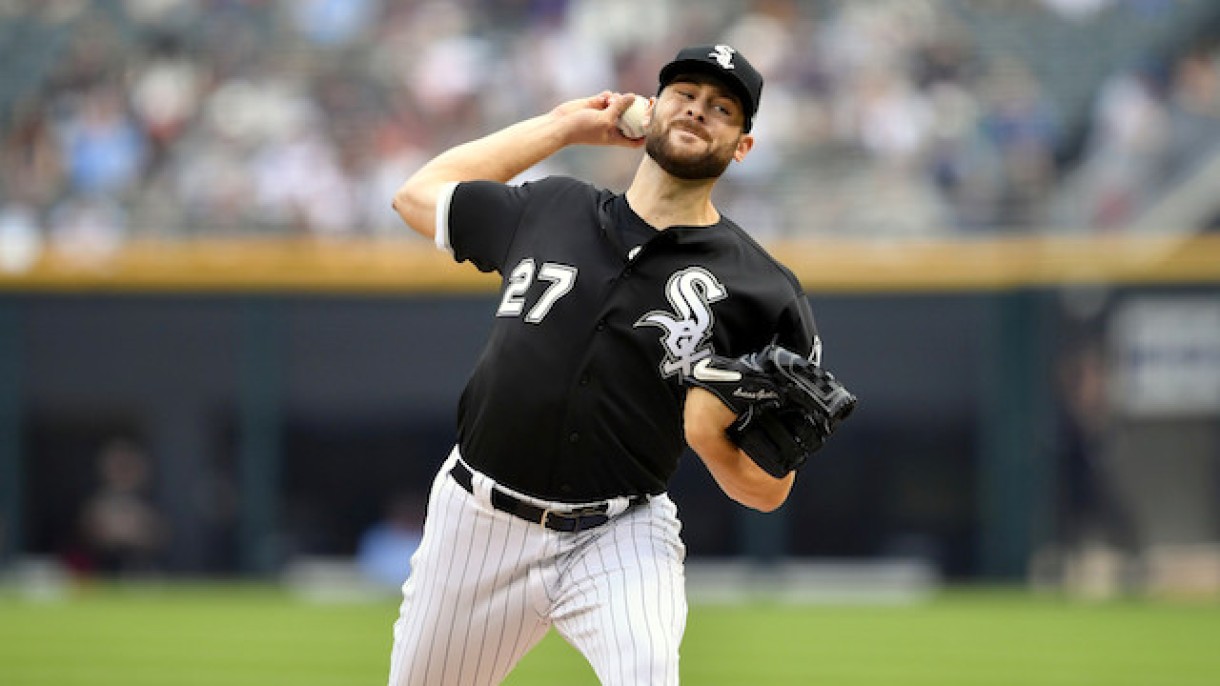
Lucas Giolito illustrates the opposite extreme. His 2,345 RPM fastball spin rate was only average, but his Active Spin was an insane 99.3%. The result was a heater that demonstrated all of the characteristics of a high-spin fastball: 10.4 SwStr%, 39.9 FB%, and 29.6 IFFB%.
If you're looking for a contact manager instead of a strikeout artist, you want a spin rate below the average range above. Low-spin fastballs produce weakly-hit ground balls and a lower slugging percentage against compared to their high-spin counterparts. Ranger Suarez illustrated this approach nicely last year, as his 1,933 RPM was the sixth-lowest among qualified pitchers and generated a 66.9 GB%. This profile offers less fantasy upside due to the lack of strikeouts but can be a great way to hit your innings minimums without jeopardizing your ratios.
Evaluating Spin Rate on Secondary Offerings
Unlike fastballs, changeups usually want a low spin rate to maximize how much they move. Breaking pitches usually want high spin rates. Unlike fastballs, breaking offerings have topspin, or spin toward the ground, which can help guide the ball down if contact is made. Breaking pitches tend to be a given pitcher's strikeout offering though, so managers generally aren't looking for any kind of contact on them. Breaking ball spin rates are therefore the least important to look at but may provide interesting information at times.
There are enough variables in play here that spin rate should never be considered on its own. Instead, start with Pitch Info and then use spin rate to confirm if a given pitch can sustain its elite performance or if it was probably a fluke.
Conclusion
To summarize, spin rate is measured in RPM. Fastballs can be good with high or low spin rates, but higher spin rates tend to translate better to fantasy. Changeups want as little spin as possible to maximize their movement. Breaking pitches typically benefit from higher spin rates, but it's not as clear-cut as it is for fastballs and changeups. Finally, gyro spin can distort spin rate readings, meaning that you should always combine spin rate with other metrics in your analysis. Stay tuned to learn more about how analytics can help you dominate your fantasy baseball leagues in 2022!
Download Our Free News & Alerts Mobile App
Like what you see? Download our updated fantasy baseball app for iPhone and Android with 24x7 player news, injury alerts, sleepers, prospects & more. All free!

More Sabermetrics & Statcast for Fantasy Baseball