




 RADIO
RADIO







Elliott Baas dives into the topic of spin rate sabermetrics for starting pitchers after the MLB announcement cracking down on foreign substances. Which starting pitchers could be affected in fantasy baseball as RPM fallers?
On August 16, 1920 in the fifth inning of a game against the Cleveland Indians, Yankees right-hander Carl Mays wound up and delivered an unusually moist fastball in his signature submarine delivery. The batter, Cleveland shortstop Ray Chapman, lost the errant spitball in the twilight sun and was struck in the head by the pitch. In all, 112,102 batters have been hit by a pitch in a major league game heading into the 2021 season, and Chapman is the only one unlucky enough to lose his life.
The year 1920 was the swan song of the legal spitball, as Major League Baseball banned the pitch following the incident. Banning spitballs is often credited as the catalyst for moving baseball into the live-ball era, ending the days of the low-scoring, pitcher-friendly game. Despite the use of foreign substances being explicitly against MLB rules for over a century, pitchers have been desperately trying to regain the advantage they once had. From dirt to pine tar, to Vaseline, to thumbtacks taped to their hands, pitchers will do anything for an edge. We’ve seen pitchers get ejected from time to time in recent years for foreign substances, but the topic has moved to the forefront thanks to a Twitter feud between Trevor Bauer and Gerrit Cole.
In early March, MLB released a statement saying they plan to crack down on pitchers using foreign substances by analyzing Statcast spin rate changes to identify the cheaters. To me, the whole thing sounds like some sort of sabermetric-inspired Philip K. Dick novel, with Harrison Ford punching excel formulas into downloaded baseball savant data to try and determine which pitchers are the replicants. Even if the MLB’s plan seems a little far-fetched in practice, there’s reason for concern with certain pitchers, as several notable hurlers have blossomed over the last few seasons as their spin rates have risen. This article will breakdown why spin rate is important, who might be in trouble (besides Cole and Bauer), and whether fantasy players should really worry about MLB targeting foreign substance usage.
Featured Promo: Save 50% off the regular price with discount code CHAMP, for a limited time. Exclusive access to our Team Sync platform, DFS cheat sheets, Lineup Optimizers, betting/prop picks, and exclusive content from Nick Mariano and Eric Cross! GAIN ACCESS NOW
Why is Spin Rate Important and How Do Foreign Substances Help?
The baseball world has spent decades hyper-focused on velocity. We salivate over 100 MPH fastballs, and scoff at pitchers who can’t get it up over 90. Fastball velocity is a key component to pitcher success, especially when it comes to strikeouts, but StatCast has taught us that velocity isn’t everything. A higher fastball spin rate changes the ball’s trajectory to home plate and makes it appear as if it’s rising. Fastball spin rate has shown moderate correlation between positive outcomes.
Below is a table demonstrating the coefficient between fastball spin rate and certain pitcher performance metrics using data from qualified pitchers between 2018-2020 (A positive number indicates positive correlation, and a negative number indicates a negative correlation. The closer the number is to 1 or -1, the stronger the correlation).
| Fastball RPM | |
| ERA | -0.35863 |
| FIP | -0.36093 |
| xFIP | -0.28904 |
| SwStr | 0.320936 |
| CSW | 0.204885 |
Fastball spin rate has negative correlation with ERA and ERA estimators, meaning that, generally, the higher a pitcher’s fastball spin rate the lower his ERA, FIP, or xFIP will be. Conversely, fastball spin rate has a positive correlation with swinging strike rate and CSW rate (called strikes+whiffs), meaning the higher a pitcher’s fastball RPM the more whiffs and called strikes he’ll get, which have already been shown to correlate strongly with strikeout rate.
None of these correlations are rock solid, but they demonstrate that spin rate is a key component of pitcher success, as is velocity. Not a numbers person? Then let’s have a look at a high spin rate fastball in action. Below is what a 98th percentile RPM fastball looks like.
You feel bad for Cole Tucker after watching him try fruitlessly to hit that 97 MPH, 2814 RPM fastball from Corbin Burnes. But then you Google Cole Tucker and see that he’s dating Hollywood starlet Vanessa Hudgens, and you don’t feel bad for him anymore. The speedy shortstop’s love life aside, this pitch by Burnes illustrates the effect spin can have on a fastball. The high spin rate on Burnes’s fastball was why he was identified as a breakout by many prior to the 2020 season.
A lower spin rate can also cause a high-velocity fastball pitcher to underperform expectations, with current Minnesota Twins righty Michael Pineda serving as the poster child for this phenomenon earlier in his career. Chances are if you ever hear a scouting report or TV analyst refer to a pitcher’s fastball as “straight,” it probably has a below-average spin rate.
So, we know spin rate matters, but how do foreign substances help? Writing for the Player Tribune, then-Cincinnati Reds starter Trevor Bauer said that, “I knew that if I could learn to increase it (spin rate) through training and technique, it would be huge. But eight years later, I haven’t found any other way except using foreign substances.” In the same article (full piece here) Bauer speculated that 70% of pitchers use illegal substances when pitching. It’s hard to say whether these statements were sour grapes since it was written shortly after rival Gerrit Cole inked the largest contract for a pitcher in MLB history, but if we operate under the assumption that Bauer’s statement is mostly rooted in truth, then red flags should be raised for any pitcher experiencing a significant uptick in fastball spin rate.
When it comes to modern-day foreign substances, it’s worth pointing out that contemporary pitchers aren’t throwing your grandpa’s spitball. In fact, the pitchers in question likely aren’t using many of the popular substances like pine tar or sunscreen of decades past. Ex-Angels clubhouse manager Brian “Bubba” Harkins developed and distributed a proprietary substance to several MLB pitchers over the course of his decades-long career before being fired in 2019. The substance is said to be magnitudes more effective than any previous method of ball-doctoring. Personally, I wouldn’t touch an unknown sticky substance offered by a guy named Bubba (sorry @bdentrek), but for major leaguers with careers on the line, perhaps they’re more willing to take a risk. Whatever’s in that stuff, it’s working wonders for certain pitchers, and with threats of crackdowns by MLB, fantasy managers are probably wondering how this affects the pitchers they invested in on draft day. But how do we know which pitchers are in trouble?
Spin Doctors: Pitchers with large RPM jumps
If we believe Trevor Bauer, pitchers can’t drastically change the spin rate of their fastballs without foreign substance. Like fastball velocity, a given pitcher’s spin rate is vastly driven by natural ability. As with velocity, mechanics changes and/or health could potentially influence spin rate, but large jumps are unlikely. Using the last three seasons of spin rate data, I’ve identified some suspects (besides Gerrit Cole and Trevor Bauer) who could be dipping their fingers in Bubba’s secret sauce.
Brandon Woodruff, Milwaukee Brewers
(317 RPM gain between 2018-2020)
In 2018, Woodruff’s fastball had a pedestrian spin rate of 2139 RPM, got a pinch higher at 2257 in 2019, but that skyrocketed to 2457 RPM in the 2020 season. Woodruff also shaved 31 points off the AVG against his fastball in that time, along with a 69 point drop in xWOBA and a 12% rise in whiff rate. Woodruff also blossomed from a burgeoning prospect into a bona fide number one starter over that time. Something stinks here, right? Not so fast, because as I outlined above spin rate is only one component of fastball and pitcher effectiveness. Let’s see if there’s anything else Woodruff may have changed could help explain his breakout.
Spin rate isn’t the only thing that has improved on Woodruff’s fastball over the past few seasons. Below are charts of his horizontal movement, vertical movement, and fastball velocity over the course of his major league career.


That's a whole mess of positive trends for Woodruff. This could be a result of a mechanical change, as Woodruff did lower his fastball vertical release point slightly over the past few years. Outside of his fastball, Woodruff’s success coincided with an increase in changeup usage, an impressive offspeed offering that boasts a 14.4% SwStr rate, the best among Woodruff’s pitches.
There are enough positive changes here that make it look like Woodruff’s spin rate rise was one of many pieces that molded him into the pitcher he is today. Even if Woodruff is using foreign substances to increase his spin rate, there’s enough to like in this profile that fantasy managers shouldn’t fret if he loses access to whatever he is (potentially) using.
Tyler Mahle, Cincinnati Reds
(251 RPM gain between 2018-2020)
Mahle appeared to make a major breakthrough in 2020, posting a career-best 29.9% strikeout rate and 3.40 FIP in 47.2 innings for Cincinnati. That strong performance has made Mahle a popular late-round sleeper in mixed leagues, and he’s currently the number 56 ranked starting pitcher by RotoBaller rankings. But was Mahle’s 2020 breakout a farce? Let’s have a look at anything else he may have changed.
The most glaring difference between Mahle’s 2020 and previous seasons isn’t his spin rate, but his slider usage. After scrapping the pitch in favor of his curveball and a new splitter, Mahle’s slider returned with a vengeance in 2020. He used the pitch 33% of the time, and opposing hitters mustered a meager .180 AVG and .243 xwOBA against it. Batters also whiffed 41.1% of the time, making the pitch by far his most dominant. If we were to identify Mahle’s spin rate jump as a reason for his performance increase, his revamped slider would be an even bigger factor.
Even considering the slider, Mahle’s fastball is still suspicious to me. He did improve his fastball velocity by 0.6 MPH, but that alone doesn’t account for the 10% gain in whiff rate from 2019 to 2020 or the 52-point drop in opponent batting average against. It seems very likely that Mahle was sprinkling some sort of fairy dust on the ball before delivering the pitch.
There’s one more thing that may vindicate Mahle and give more credence to his breakout, and that’s pitch location. The average launch angle on balls in play against Mahle’s fastball was a whopping 32 degrees, and overall Mahle had the ninth-highest average launch angle against of all qualified pitchers. Foreign substances likely weren’t responsible for this, as Mahle began using his fastball higher in the zone, which can lead to low-probability batted balls like popups and weak flyballs. Below is a comparison of Mahle’s fastball heatmaps from 2020 (right) compared to his previous seasons(left).


If Mahle can maintain this trend he should be able to keep his hard hit rate down (three-year low 87.4 MPH average exit velocity in 2020) and it should help his strikeout rate as high fastballs generally produce more whiffs than fastballs low in the zone.
Still, if Mahle’s fastball spin rate suddenly reverted back to previous seasons he may not be able to command the pitch as well. Mahle’s already struggled with command throughout his career, and throwing high fastballs can be a dangerous game in Cincinnati. Mahle’s already been homer-prone in previous seasons, and he had a 50% flyball rate in 2020, the highest of his career. His 4.59 xFIP should give fantasy players pause before jumping in headfirst on the Mahle bandwagon. Losing access to foreign substances would at least have some impact on his fastball whiff rate, and Mahle doesn’t have a strong track record outside of 2020 (4.88 ERA between 2017-2019), making me more concerned about his sustainability.
Don’t drop Mahle if he has one or two bad starts, but pay attention to his spin rate and fastball location. Early changes could be a red flag.
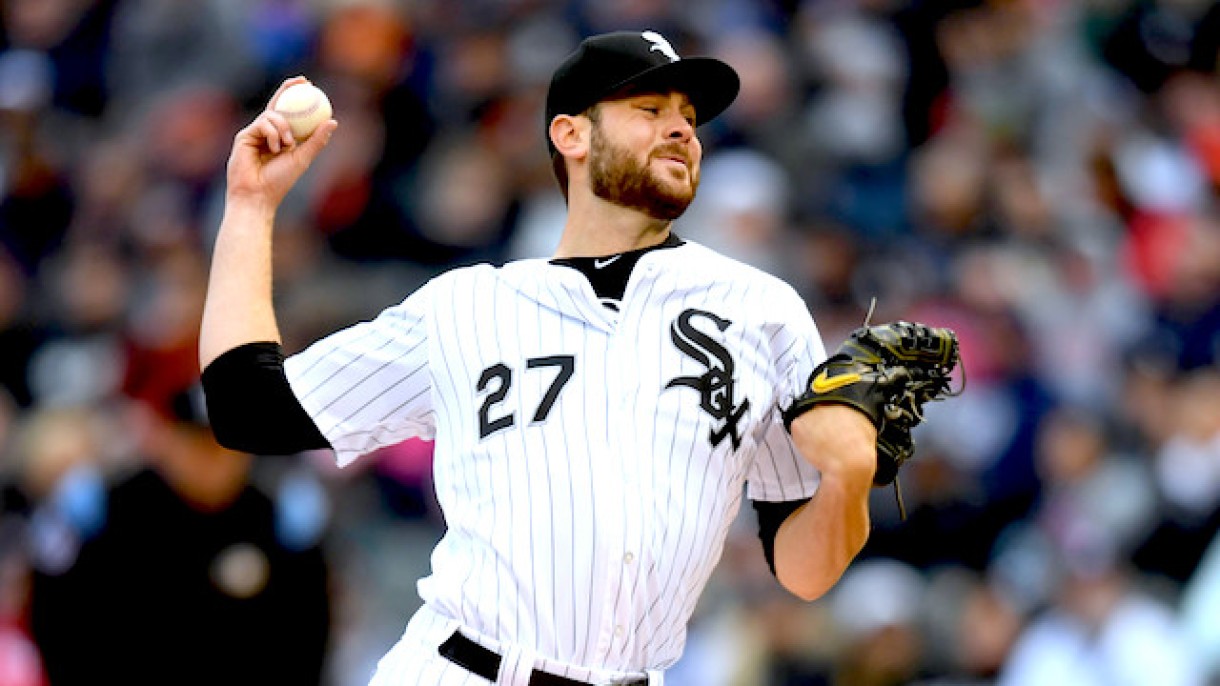
Lucas Giolito, Chicago White Sox
(250 RPM gain between 2018-2020)
Lucas Giolito posted a 6.13 ERA in 2018, the highest among qualified starts by over half a run. It wasn’t rotten luck either, as Giolito had the worst FIP, xFIP, and K/BB ratio among qualified starters. He was, by most objective measures, the worst starting pitcher in baseball three years ago. With the bust label hanging over his head, Giolito pulled a complete 180 with his career, turning into a bona fide ace the next two seasons. Lots changed for Giolito in those two seasons, including his fastball spin rate, which spiked 250 RPM in 2020 when compared to his 2018 season.
In addition to his spin rate gains, Giolito’s fastball velocity improved by about 2 MPH, and the OPS against his fastball dropped by nearly 300 points. Giolito’s success is at least partially mechanical, as he, like Brandon Woodruff, lowered his vertical release point and increased his extension to home plate, meaning the ball has to travel slightly less to get from Giolito to home plate. These improvements not only helped improve results on his fastball, but allowed his best pitch, the changeup, to flourish.
It would be a disservice to credit Giolito’s breakout to his fastball spin rate, as it’s in fact his changeup that catalyzed his career. The pitch ranked in the top-10 of whiff rate, xBA, xsLG, and hard hit rate last season, along with a monster 41.4% whiff rate. It’s worth noting that spin rate players a large part in changeup performance as well, but the results are inverse compared to fastballs. A lower spin rate is better for a changeup, as it helps increase movement and deception.. Gioltio’s changeup also experienced drastic spin rate changes with his breakout, but in the opposite direction. He had a decent 1654 RPM pre-breakout, but posted 1414 RPM in 2020, ranking 12th-lowest among qualified pitchers. Large gaps between fastball velocity and changeup velocity have shown to be important predictors of changeup effectiveness, and it’s possible the same is true between fastball spin and changeup spin. If Giolito is adding something extra to his heater, it may also be contributing to the success of offspeed pitches.
Giolito has made enough changes and his transformation has been so drastic that his success should be attributed to more than foreign substances. If he was able to go from the literal worst starting pitcher in baseball to one of the game’s best with just the sticky stuff then every pitcher would do it. Foreign substances may have been used by Giolito and may have even contributed to his success, but even if they were taken away he should still be able to deliver outstanding results. His strikeout rate could take a slight dip, but he’s already one of the best strikeout pitchers in baseball and should be able to maintain an above-average rate.
Conclusion
MLB’s memo about enforcing rules against foreign substances may prove to be actionable for major league teams and players, whether it be to stop using substances or increase efforts to conceal their usage, but fantasy players should not make roster decisions solely on this move. Even if MLB is able to identify cheaters with Statcast data, it would be hard to implement their findings in a game setting. Perhaps they could instruct umpires to scrutinize suspected offenders more closely, but umpires rarely inspect players anyway unless the opposing managers asks them to, which is also rare, because chances are that manager’s pitchers are cheating too. One thing that seems more likely to occur is a high-profile ejection, fine, and/or suspension so that MLB can show they are trying to crack down.
As I hit on at the beginning of this piece, foreign substances have been banned for a century, and pitchers have been using them ever since despite public declarations to suppress usage. MLB made a similar claim in 2020 and said they were going to use stickier balls in 2017 to help prevent foreign substance usage. I’m not convinced anything MLB can do will stop or significantly reduce foreign substance usage, as it seems like nearly every pitcher is using them to some degree. But, even if they succeed in their efforts, the top-line pitchers will still be the best. I’d be a little more concerned about mid- and low-tier pitchers like Mahle, which is why he and pitchers like him are worth monitoring in the early season.
Download Our Free News & Alerts Mobile App
Like what you see? Download our updated fantasy baseball app for iPhone and Android with 24x7 player news, injury alerts, sleepers, prospects & more. All free!

More Fantasy Baseball Advice