RADIO
RADIO





Elliott Baas identifies players whose launch angle dropped the most last season. These players could be power busts in 2022 fantasy baseball leagues.
Once the toast of advanced stats in the baseball universe, average launch angle’s prominence as a performance predictor has taken a step back to other power-focused metrics such as barrel rate and max exit velocity.
Perhaps this is because the “launch angle revolution” from a few years ago turned out to be more of a “juiced ball revolution” -- but regardless of the reason, launch angle is cited less in a player context and more in an individual outcome, such as a home run.
Television broadcasts are quick on the trigger with the Statcast anatomy of a batted ball, but let’s instead look at launch angle from a player perspective.
Featured Promo: Save 50% off the regular price with discount code CHAMP, for a limited time. Exclusive access to our Team Sync platform, DFS cheat sheets, Lineup Optimizers, betting/prop picks, and exclusive content from Nick Mariano and Eric Cross! GAIN ACCESS NOW
Launch Angle Fallers
I took every hitter who registered at least 100 batted ball events (BBE) between 2020-2021 and compared their launch angle changes from one season to another. 100 BBE was used because the qualifying cut-off in the pandemic-shortened 2020 season was 96 BBE. Below are the 10 players who lost the most air on their launch angle:
| Team | Name | 2020 LA | 2021 LA | Difference |
| COL | Raimel Tapia | 1.8 | -4.4 | 6.2 |
| OAK | Mark Canha | 19.4 | 13.5 | 5.9 |
| MIN | Max Kepler | 21.9 | 16.3 | 5.6 |
| PHI | Jean Segura | 11.2 | 5.8 | 5.4 |
| PIT | Erik González | 5.3 | 0.1 | 5.2 |
| ATL | Freddie Freeman | 17.2 | 12 | 5.2 |
| CLE | José Ramírez | 23.2 | 18.3 | 4.9 |
| SFG | Donovan Solano | 15.5 | 11 | 4.5 |
| MIL | Christian Yelich | 7.1 | 2.8 | 4.3 |
Some are studs we wouldn’t expect to be on this list, and there should be little concern for the production of players like Freddie Freeman or Jose Ramirez. We should be more interested in the fantasy-relevant players who are in flux or saw big changes or downward trends last season, which is why I pulled three players from this list to put under the microscope to see whether we should be worried about their production going forward.
The average draft position (ADP) is taken from NFBC ADP and is accurate as of 1/30/2022.
Ramiel Tapia, Colorado Rockies
ADP 270
2020 Average Launch Angle: 1.8 degrees
2021 Average Launch Angle: -4.4 degrees
Difference: 6.2 degrees
The biggest mover among all hitters with at least 100 batted ball events (BBE), Tapia drove the ball directly into the dirt last season. His -4.4-degree average launch angle was the lowest among hitters in the sample by over four degrees, and he was the only player to average a negative average launch angle. The only other player to come close was Pittsburgh’s Erik Gonzalez, who had a 0.1-degree average launch angle.
Launch angle has been a downward trend for Tapia, as you can see in the image below; however, he’s quite literally plummeted to new depths in 2021. A -4.4-degree average launch angle is the lowest any player has posted since the metric has been recorded, with Luis Garcia (-3.6-degree average launch angle in 2020) being the only player to come relatively close. Tapia also had an insane 67.4% groundball rate and a 4.1 GB/FB ratio last season, making him one of the only four players to ever qualify for the batting title with a GB/FB ratio over four.

Tapia's Launch Angle has cratered over the years
What makes Tapia’s falling launch angle especially frustrating is that he plays in Colorado. His entire fantasy relevancy hinges on his home ballpark and his speed (20 steals in 2021). The thin air and spacious outfield is what makes Coors Field so conducive to offense, but that effect is significantly diminished when a player sends the ball directly into the ground. It doesn’t matter how thin the air is as the ball rolls into the waiting glove of an infielder.
Nobody expects Tapia to pop 30 home runs, nor do we draft him for power, but he’s posted an ISO below .100 in each of the last two seasons as a corner outfielder playing in Colorado. If the Rockies had anyone better, one would have to assume Tapia’s job would be in jeopardy, but as it stands, he’s penciled in as their everyday right fielder and leadoff hitter. That being said, if two of Sam Hilliard, Connor Joe, Yonathan Daza, or Ryan Vilade take a step forward, Tapia could face a real threat to his playing time.
As gross as Tapia’s underlying skills are, he deserves to be drafted in most roto leagues for his speed and home ballpark. If he were on any other team, he’d be going around pick 450, but as it stands, he’s going around pick 275 in NFBC leagues. Going immediately after Tapia is his teammate Garrett Hampson, who offers even more speed upside and has multi-positional eligibility between second base and the outfield. No reason to draft Tapia when one could have Hampson instead. You could also gamble on a bounce back from the likes of Mike Yastrzemski, Wil Myers, Max Kepler, Kyle Lewis, or Brandon Nimmo for the same price, all of whom appear to be more talented players than Tapia.
Max Kepler, Minnesotta Twins
ADP: 280
2020 Average LA: 21.9 degrees
2021 Average LA: 16.3 degrees
Difference: 5.6 degrees
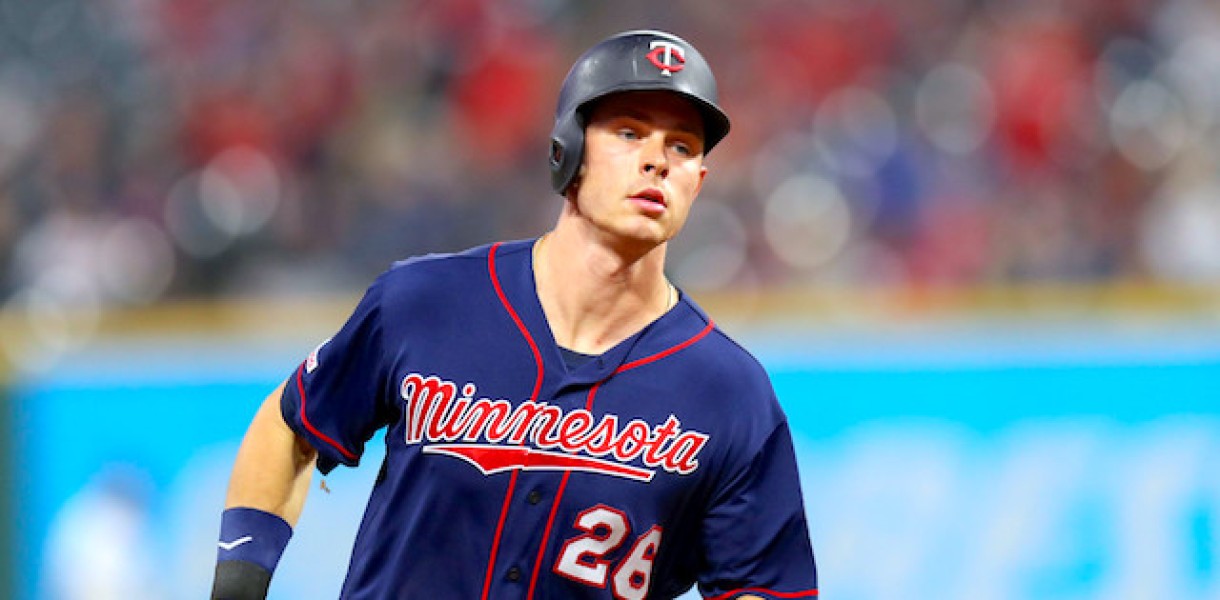
Speaking of Max Kepler, he’s another of the biggest fallers in terms of launch angle. Unlike Tapia, Kepler keeps the ball above the earth’s lithosphere, and a 16.3-degree average launch angle puts him in a rather favorable zone for base hits and power. In fact, when reviewing Kepler’s batted ball profile, it’s a wonder why his 2021 season went so poorly. He was above average in every Statcast metric, including launch angle, yet he puttered to the finished line with a .211/.306/.413 triple slash and 19 home runs. Hardly worthy of mixed-league relevance, even in an increasingly shallow outfield pool. On paper, Kepler should be a lot better, and Statcast thinks so too, as Kepler had a .255 xBA and .452 xSLG, both about 40 points higher than his actual numbers. Could this drop in launch angle be to blame?
As much as it would make for easy detective work (my wife does have dinner waiting, and she doesn’t like when I come home late), it would be hard to pin it all on the launch angle. For starters, Kepler’s 2021 batted ball profile is closer to his standout 2019 season, where he crushed 36 home runs with a .519 SLG. Therefore, we can’t blame his struggles on a launch angle decrease, and in fact, Kepler might be better off living in the 16-19-degree range. Players who average over 20 degrees on their launch angle tend to be on extreme ends of the spectrum, and thus produce extreme results. A few examples would be Adam Duvall and Joey Gallo, both of whom possess incredible power, but are sinkholes in the batting average department and are prone to immense slumps.
Kepler’s biggest problem is that he’s extremely shiftable. He faced a non-traditional defensive alignment on 91.4% of his plate appearances, which was 10th-most in the majors. He was fourth-most among full-time players (min. 400), and second-most among true blue lefties behind Joey Gallo. His 42.5% pull rate last season was technically a career-low by 0.6%, but still on the higher side for a left-handed batter in the modern game. Kepler possesses a lot of the physical tools, and if he were playing 25 years ago, he’d be a monster. Probably because he’d be juiced out of his mind, but he’d also face approximately zero shifts. Kepler certainly has the athleticism and talent to be a producer, but what would it take for a bounce-back?
For Kepler, it might come down to playing into the shift and accepting it rather than trying to spray the ball around the field. He had a career-high 53.4% pull rate in 2019, yet he also had a career-high .252 AVG. His pull rate dropped by 9% the following year in 2020, and by two more percentage points in 2021. Between that and his launch angle fluctuations, this screams of trying too hard and making too many tweaks to get around this shift. Granted, he only saw shifts 72.1% of the time in 2019 versus his 91.4% in 2021, but perhaps Kepler needs to get back to basics and pull the ball more. Announcers, pundits, and fans often wonder why a player doesn’t simply hit the ball the other way when facing a shift, and the answer is, it’s simply not that easy. MLB athletes are already the elite of the elite, and only a small fraction of that pool can aim their hits with such precision while still producing quality contact.
In 2019, Kepler made an adjustment that worked by raising his launch angle and hitting more flyballs, and it seems to me that he’s trying to replicate that magic with more and more tweaks. The talent is in this bat, and if his problems truly are mechanical, he’s a nice late-round lottery ticket in standard leagues. He’s got guaranteed playing time on a team with an underrated lineup when everyone is healthy. I’d certainly take him over Raimel Tapia, and ahead of all the other names listed previously in this piece as Kepler has the most stable role and health history of that group.
Christian Yelich , Milwaukee Brewers
ADP: 101
2020 Average LA: 7.1 degrees
2021 Average LA: 2.8 degrees
Difference: 4.3 degrees
Perhaps the most intriguing and frustrating player of the bunch, Yelich has watched his launch angle (and production) whittle down year-over-year, with 2021 presenting a new low. Yelich hit just .248 with nine home runs and nine steals. His supreme plate discipline gave him a .362 OBP, so he had some value in leagues that value walks; however, it was objectively the worst season of his career, including his days in Miami. His power production evaporated, as Yelich posted a meager .125 ISO and .373 SLG last season, his ISO the lowest it had been since 2015, and his SLG a career-low.
The good news for Yelich believers is that he still pulverized the ball, posting a 91 MPH average exit velocity and an air-cracking 114.9 MPH max exit velocity. Those aren’t numbers we typically see from a single-digit home run player. The power still lurks in this bat, but can Yelich harness it again, and might launch angle be the key to unlocking past success?
Yelich is one of those rare players whose major league success can be tracked almost perfectly by his launch angle. Yelich posted an average launch angle of 0-degrees in 2015--the first year the metric was tracked—and his launch angle had risen along with his production every season up to 2020, where Yelich saw his first-ever decline. At 2.8-degrees, Yelich was back to pre-Milwaukee days in the groundball department, and his 54.4% groundball rate was ninth-highest in the majors last year (min. 400 PA).
Exacerbating Yelich’s bad luck was a stark and unforeseen drop in the HR/FB ratio. Yelich had been on the fortunate side between 2018-20 with an HR/FB ratio of 32% or higher in each of those seasons. Even so, a drop to 13.2% seems like an overcorrection. 13.2% isn’t too far off from league average, but power hitters with high groundball rates tend to have higher HR/FB ratios than most players. For example, let’s say you have a flyball-focused slugger and groundball heavy power hitter, both of whom hit 40 home runs in 500 batted ball events (BBE) in a given year. Even though they had the exact same opportunities and outcomes, the flyball-focused slugger will have a much lower HR/FB ratio than the groundball hitter because it took the former so many more flyballs to achieve his outcomes. That’s why a 32% HR/FB ratio isn’t so crazy for someone like Yelich, and he has plenty of room for positive regression next year.
The real mystery behind Yelich is health. Yelich is aware that he needs to elevate the ball more often to find past success, but the question is whether he is physically able. Chronic back issues shelved him on more than one occasion, and a bad back could explain a change in swing path. Yelich and Cody Bellinger are inextricably linked this draft season, as both are recent MVPs coming off dismal seasons marred by nagging and somewhat vague injury situations.
If one was to gamble on either Yelich or Bellinger for 2022, Yelich seems like the better choice for redraft leagues. He still pulverized the ball, his plate discipline remained strong, and he’s practically guaranteed a prominent role in the batting order regardless of slumps. Bellinger’s batted ball profile cratered much farther than Yelich’s last season, and the Dodgers can better afford to relegate Bellinger to the bottom of the lineup or out of a full-time role altogether if he can’t figure things out. Of course, if Bellinger is healthy, his issues could disappear too, but there’s more to like about what Yelich did last year than Bellinger. Yelich is an extremely high-risk, high-reward option around pick 100, and it’s a gamble this writer is willing to take in at least a few leagues. It would be tough to be on the outside looking in at a Yelich renaissance knowing he might be just one adjustment away.
Download Our Free News & Alerts Mobile App
Like what you see? Download our updated fantasy baseball app for iPhone and Android with 24x7 player news, injury alerts, sleepers, prospects & more. All free!

More Fantasy Baseball Advice