




 RADIO
RADIO










The RBC Heritage PGA betting model, and top outright betting picks for the 2026 RBC Heritage at Harbour Town. Find the best golf betting picks with Sharpside's betting model.
All other PGA Premium Tools can be accessed on the premium dashboard.
Welcome RotoBallers to our RBC Heritage PGA Betting Model, and favorite outright betting picks for the 2026 edition. This model has hit 66 outright winners since 2021.
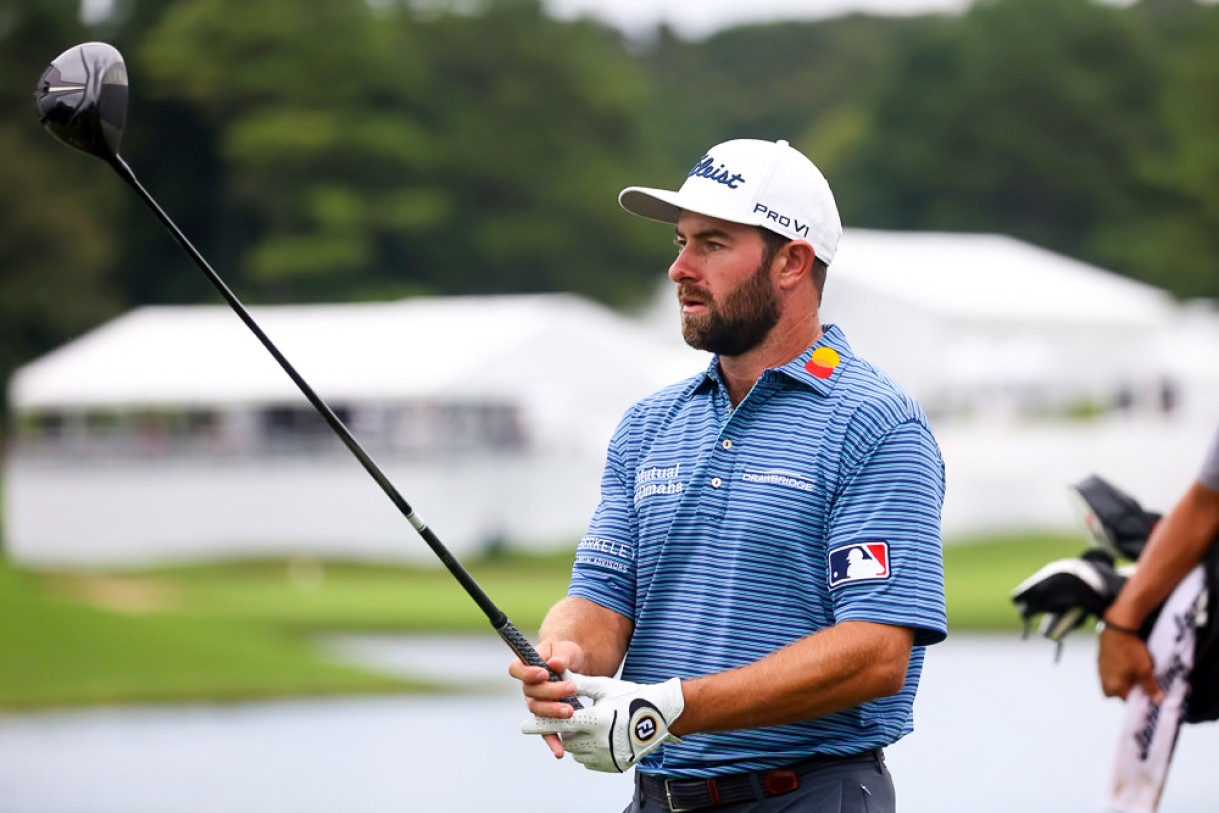
Cam Young couldn’t close for us last week, but at least Patrick Reed cashed us the top 20! Our model loves Harbour Town. It has hit 3 outright winners in 6 years, and hasn’t had a top selection outside the top 10 since 2023. Let’s dive in.
It’s always difficult to follow up The Masters, but RBC Heritage presents a completely different test, which requires a completely different modeling approach. Augusta is a course where distance, course history, and elite ball striking can separate at the highest level, but Harbour Town removes that advantage almost entirely and forces players into a much tighter, more controlled style of golf. Because of that, the metrics we prioritize this week shift significantly, and every inclusion in the model is based on how the course forces players to navigate it.
Harbour Town Golf Links
Harbour Town is one of the purest target golf courses on the PGA Tour, and the layout itself dictates how players are allowed to play. With forced layups, narrow landing areas, and tree-lined holes that eliminate aggressive lines, players are consistently taken out of driver and forced to prioritize placement over distance. This is why traditional SG: Off The Tee becomes far less useful from a predictive standpoint, as distance does not translate into a consistent scoring advantage.
Instead, we shift heavily toward fairways accuracy, which better captures a player’s ability to consistently find the correct landing areas and set up the second shot. Harbour Town ranks near the top of the Tour in driving accuracy importance, and missing the fairway, or even missing to the wrong side of the fairway, creates significantly more difficult approach angles into some of the smallest greens players will see all season.
Approach Play
From there, everything flows directly into approach play, and GIR metrics. These greens rank second smallest on Tour, which actually gives GIR % some importance unlike most weeks where it is a meaningless metric. Because of this, we place a strong emphasis on specific proximity buckets that align with the most common approach distances on the course, particularly 100–150 yards and 175–200 yards.
These ranges represent a large portion of approach shots this week, and players who consistently create opportunities from these distances will separate over four rounds.
Par-4 Scoring
Par 4 scoring becomes another primary driver within the model due to the structure of the course. With 11 par 4s making up the majority of the scoring opportunities and several of the most difficult holes falling in the 450–500 yard range, performance on these holes ultimately determines positioning on the leaderboard.
Many of these holes carry elevated bogey or worse percentages, which reinforces the idea that this is not a birdie-heavy environment but rather one that rewards players who can manage their way around the course without giving strokes back. For that reason, we increase the weight of Par 4 efficiency, specifically in the 400–450 and 450–500 yard ranges, while also incorporating BoB gained to capture both scoring and mistake avoidance in a single metric.
Around The Green
Around-the-green play is included more as a constraint than a primary driver, as the small greens naturally lead to more missed greens and increased scrambling opportunities, but the penalty for slightly missing is not as severe as other venues due to relatively manageable rough. However, players who struggle in this area will still lose strokes over time, which is why SG: ARG remains in the model to filter out players who cannot consistently recover and maintain position. Putting, on the other hand, is de-emphasized, as the flatter green complexes reduce volatility and limit the advantage gained by elite putters relative to the field baseline.
All of this ultimately reinforces the same conclusion when building the model for Harbour Town. Success is driven by players who can consistently position the ball off the tee, control distance into greens with a high level of precision, and navigate a par 4-heavy scoring environment without making costly mistakes.
The key metrics reflect that structure, with SG: Approach, fairways gained, Par 4 efficiency, BoB gained, GIR gained, and the relevant proximity ranges all carrying the most weight in the model this week.
Outright Betting Picks from the RBC Heritage Base Model
Cameron Young To Win Outright +1800
In terms of pure form, this should not come as a surprise. A Sunday that was plagued by poor putting variance likely cost him the green jacket, not his approach or driving metrics. He is the top player in the model, largely because his irons are NBA Jam style on fire. He leads the field in GIR% and is gaining 1.11 SG: APP per round.
His Dye track record also correlates with his current form, which is a welcome sign for us, especially coming off a win at The Players.