


 RADIO
RADIO







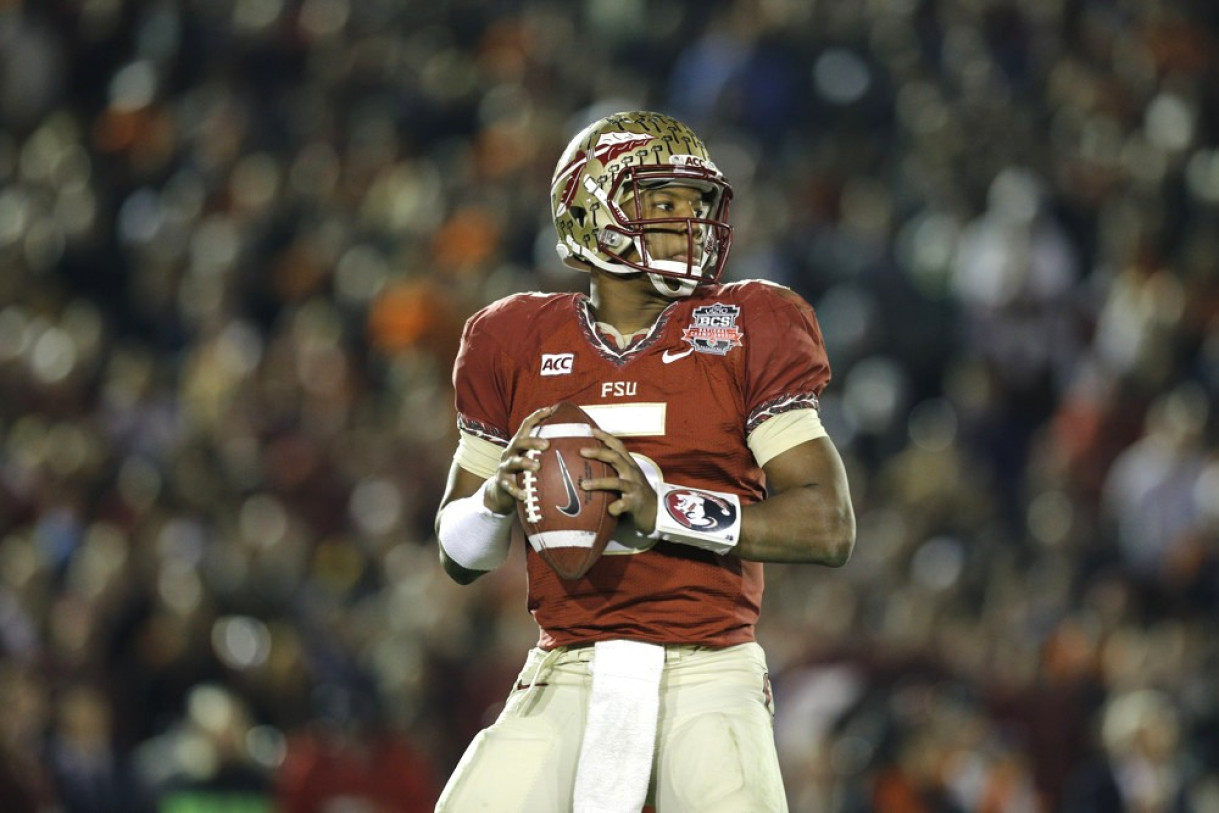
Mike Marteny ranks all of the college football National Championship teams of the last 40 years, including the split championships of 1990, 1991, and 1997. Where is your favorite team?
Who is the best team ever? Since college football began in 1869, not one person has seen every championship team play. The ambiguity of early polls sometimes crowned several champions per season. The AP Poll in 1936 helped to alleviate that, but there were still issues. Issues that still aren't completely resolved. When I was approached about this, I tried to decide on a good starting point. We already ranked all 27 National Championship Games since the inception of the BCS. I could have started there, but there were some beast-like teams in the 1990s.
The best solution I could come up with is this. I became a college football fan living in Oklahoma in 1984. Back then, we didn't have cable TV or satellite. The internet was still more than a decade away from widespread use, and even further from streaming college football games. The only team that I really watched in 1984 was Oklahoma. I never watched BYU, not even in the bowl game. If you wanted to watch Robbie Bosco and that BYU squad during the regular season, you had to live in Utah. ESPN didn't carry dozens of games per Saturday as it does now.
By 1985, I was watching every college football game that I could get my eyes on (which still wasn't many). By 1986, we had cable and ESPN. I watched more games. The 1990s brought many more games to many more households. Now I watch every game that is on every Saturday. The DVR is still your friend. I have watched every team on this list play during their championship seasons, so that's why I started with 1985. Let's take a trip down memory lane and start an argument that will never be finished. Co-champions before the start of the BCS are included. Co-champions since then (1998) are not.
No. 44 - 1990 Colorado Buffaloes (11-1-1)
Yes, Colorado had a football team before Deion Sanders got there. It's hard to believe, but it's true. The OG Deion Sanders for Colorado was a guy named Bill McCartney.
McCartney had his own issues, which came to light later, but he is the guy who finally brought winning back to the Rockies, and brought Colorado its only national championship in football.
McCartney was 7-25-1 in his first three seasons in Boulder. That's how you know it was a different time. He would have been fired in today's era. He led Colorado to four bowl games in the next five seasons, finishing fourth in the AP Poll in 1989 after a loss to fourth-ranked Notre Dame in the Orange Bowl as the No. 1 team.
It all came together in 1990. It has been alleged that the 1989 team was better, and I wouldn't argue that. Colorado was ranked No. 1 heading into that game, but ran into one of the best Notre Dame teams in history.
The 1989 team beat Nebraska for the first time in 27 years, and played the season in memory of quarterback Sal Aunese. He was the projected starting quarterback but was diagnosed with stomach cancer in March. The loss to the Irish was the only loss for that team.
Darian Hagan returned in 1990 as the quarterback, along with RB Eric Bieniemy and WR Mike Pritchard. Hopes were high for the Buffaloes, but they played Tennessee to a draw in the opener (with Bieniemy suspended and Pritchard playing RB).
A loss to No. 21 Illinois after blowing a 14-point lead put Colorado in a precarious situation. It was only the middle of September, but the Buffaloes were 1-1-1. Teams don't usually contend for championships after that.
This isn't some feel-good story of perseverance and persistence, but rather a story of an egregious error by officials. Colorado beat two more ranked teams (No. 22 Texas and No. 12 Washington) to end September before heading to Faurot Field to begin conference play on October 6.
It was back and forth the entire game. Colorado was driving to try to leave Columbia with a win when this happened.
(1990) The infamous “Fifth Down Game.” The refs inexplicably give Colorado five downs to score the winning touchdown and beat Missouri 33-31. The TD was a very close call as well.
CU would finish the season 11-1-1 & ranked #1 in the AP Poll to win a share of the national title pic.twitter.com/OMRaLpXKCo
— Bad Sports Refs (@BadSportsRefs) April 10, 2020
To give this some context, this was the first season in which the ball spike to stop the clock was legalized. During the timeout called on what should have been third down, a fan suffered a fatal heart attack in the stands, which distracted the person holding the down counter. He never flipped it to third down.
What most people forget is that the officials realized their mistake shortly after the winning touchdown. They conferred on the field for about 20 minutes to decide what to do. There was no replay at the time, but the TV crews figured out what we all knew: Colorado got five downs.
The officials were on the phone for most of those 20 minutes, presumably with conference officials. They ended up standing by their decision. The touchdown itself was controversial because it appeared backup QB Charles Johnson may not have crossed the goal line.
This may not be the "worst" championship team of the last 40 years, but the 1990 Colorado Buffaloes are certainly the least legitimate champions.
No. 43 - 1990 Georgia Tech Yellow Jackets (11-0-1)
1990 was one of those seasons where there wasn't a truly dominant football team. Colorado started 1-1-1, and likely should have finished 10-2-1. A win over No. 6 Notre Dame in the Orange Bowl looked better than Georgia Tech's dismantling of No. 19 Nebraska in the Citrus Bowl.
#ThisDayInGAHistory in 1991 @GeorgiaTechFB beat Nebraska in the Florida Citrus Bowl to win the National Championship. pic.twitter.com/uCBJMOzvVV
— Today In GA History (@2DayInGAHistory) January 1, 2018
It was plastered on the scoreboard in Orlando because no one thought that the AP would give the title to Colorado. The Orange Bowl was played later in the day, with Colorado escaping Notre Dame 10-9.
Most thought that with Georgia Tech's record and a win over one of the 80s powers in dominating fashion, the title was theirs. The coaches still voted them champions.
Georgia Tech finished the season undefeated, with the lone blemish a tie on the road against North Carolina. The Yellow Jackets beat four ranked teams in 1990, including a win over top-ranked Virginia at Scott Stadium in early November during a nationally televised game (a rarity in those days).
Led by sophomore quarterback Shawn Jones (who also started as a freshman) and RB William Bell, Georgia Tech outscored opponents 379-186 on the season.
This was the era when some teams started to go away from option-oriented offenses such as the wishbone. Georgia Tech ran a more balanced offense with Jones throwing for 2,008 yards while only rushing for 277 yards.
Bell led the team with 891 yards rushing. Tech had both Bobby Rodriguez and Emmett Merchant with nearly 500 yards receiving. The defense was anchored by LB Calvin Tiggle and DB Ken Swilling, Georgia Tech's only All-American that season. That's a rarity on a championship team.
No. 42 - 2024 Ohio State Buckeyes (14-2)
What would you rather have your champion be? A team that was tested intermittently throughout the season and won all of the games (or all but one), or a team that got hot at the right time? That's my reasoning for the Buckeyes this low. It's not about talent.
In the year since losing to the undefeated Michigan team in Ann Arbor, Ohio State vowed to do everything in their power to return the rivalry back in their favor. This offseason they...
Returned five prominent starters from last years team in TreVeyon Henderson, Emeka Egbuka,… pic.twitter.com/D06aTKG7zi
— Adam Carter (@impactfbdata) December 1, 2024
It's about losing to an unranked rival on the last day of the regular season -- a loss that would have knocked them out of any proper playoff. The Michigan game meant nothing. Ohio State got hot and won the title anyway, despite a second loss.
This isn't meant to cheapen Ohio State's run. They beat an undefeated Oregon team that had beaten them in Eugene in October. They took out a hot Tennessee team and a Texas team that probably shouldn't have been in the game. It culminated in a win over seventh-seeded Notre Dame.
The talent on this team was ridiculous. The Buckeyes attacked the transfer portal, getting Will Howard to guide the team for a season, then Julian Sayin for the next couple of seasons. Quinshon Judkins joined TreVeyon Henderson to form a formidable backfield.
The WR room of super freshman Jeremiah Smith, Emeka Egbuka, and Carnell Tate was the best in college football. The defense was similarly loaded, anchored by the steal of the portal, DB Caleb Downs.
As I said earlier, this was not about talent. As far as talent goes, this is one of the most talented teams to ever win a title. How in the world did they lose two games? That's the issue.
This team ran the table when it counted, but this was the ONLY season that Ohio State would have even had a chance to do that.
No. 41 - 2007 LSU Tigers (12-2)
LSU was thought to take a step down after losing JaMarcus Russell, Dwayne Bowe, Craig Davis, LaRon Landry, and Justin Vincent to the NFL. Career backup Matt Flynn turned out to be a star of a different nature, and DT Glenn Dorsey was one of the best defensive linemen in LSU history.
The only 2-loss champion in modern college football history is 2007 LSU… and their 2 losses both came in TRIPLE OVERTIME!!! pic.twitter.com/P4eZOEzz32
— Dubs Only Sports (@dubsonlysports) January 5, 2025
LSU became the first champion with more than one loss since Minnesota in 1960. This was the year of carnage in college football. Appalachian State knocked off fifth-ranked Michigan during the opening weekend. That was just the beginning.
13 top-5 teams lost to unranked teams in 2007. Higher-ranked teams lost to a lower-ranked or unranked team 59 times this season. Teams ranked second lost seven times in the final nine weeks of the season, with both No. 1 and No. 2 falling in the same week during Rivalry Week and Conference Championship Week.
LSU was one of those casualties, losing a triple-overtime game to Kentucky. LSU's other loss of the season was in the Battle For The Boot against Arkansas, also in triple overtime, when LSU had ascended back up to No. 1 in the rankings.
Upset of the day🚨
Arkansas 50
#1 LSU 48
(2007) pic.twitter.com/pKQoXdWfcQ— College Football Report (@CFBReport) September 8, 2023
No need to adjust your computer. That's Run DMC (Darren McFadden) eviscerating the LSU defense. Everyone, including LSU, thought that ended their chances. The Tigers were ranked seventh in the next BCS rankings, but nothing was safe in 2007. Three weeks later, LSU was back at the top.
That resulted in fifth-ranked Ohio State climbing into the second spot to face LSU. Flynn threw four touchdown passes in the championship to beat Ohio State.
No. 40 - 1992 Alabama Crimson Tide (13-0)
Alabama didn't beat its first-ranked team of the season until the middle of October (the third Saturday, to be exact) and didn't face a top 10 team until the Sugar Bowl, where they faced top-ranked Miami. Even though the Tide didn't lose a game in 1992, they have one of the easiest schedules of a title winner over the last 40 years.
This team only beat Southern Miss by seven and Louisiana Tech by 13. One could argue that Alabama's best game of this season was the title game, a game in which starting QB Jay Barker only threw for 18 yards.
Alabama was mostly a running team at this time. Barker threw more interceptions (9) than touchdowns (7) during the season. Led by Derrick Lassic and Chris Anderson, this team thrived on running the ball and playing defense.
Both George Teague and Antonio Langham picked off six passes during the season. Teague ran an interception back for a touchdown in the Sugar Bowl win. Alabama was outgained 326-285 in that game, but forced four turnovers.
Alabama snapped Miami's 29-game winning streak to take the title away from one of Miami's better teams of that era. The final game was epic, but the total body of work pales in comparison to most teams on this list. When dealing with nothing but championship teams, it takes a lot to set your team apart.
43 days away from Alabama Crimson Tide football
Crimson Tide All-American DB, Antonio Langham wore jersey number 43 and made a crucial interception in the 1992 SEC Championships game, known as "The Play That Changed College Football." Langham intercepted Shane Mathews in the… pic.twitter.com/eug2nQvzXW
— Ryan C. Fowler (@RyanCFowler) July 19, 2024
"The play that changed college football" only did so because it fueled the rise of conference championship games. They are overwhelmingly redundant now, but they became necessary when conferences started eating each other in the 1990s.
No. 39 - 1991 Miami Hurricanes (12-0)
This is how the Canes started the 92 Orange Bowl (catch a glimpse of @coach_cristobal at the end right after @GinoTorretta and Jessie).
Nebraska averaged 355 rush yds a game with 6.5 yards per carry. Miami shut them out, holding them to 122 rush yds (3.2 ypc). pic.twitter.com/jdCxypCDH0
— Canes Legacy (@CanesLegacy) December 26, 2021
You'll notice a lot of familiar faces running out of that tunnel. Current Miami coach Mario Cristobal was on that team. So was Bob Marley's son Rohan. Perhaps the most famous member of this team, who was legendary for something other than football, was Dwayne Johnson. You know him as The Rock.
The only ranked team at the end of the season that Miami played in the regular season was Florida State. They finished third. The Nebraska team that Miami made short work of in the Orange Bowl was not your normal Nebraska team and was the same one that Washington beat in Lincoln earlier in the season.
This was the year that Gino Torretta finally got the team to himself. He piloted Miami for a few games in 1989 with Craig Erickson hurt. Erickson returned as the starter in 1990. Miami was ranked at the top in preseason polls, but lost the opener to BYU. Miami was the last preseason No. 1 team to lose a season opener until Texas in 2025.
The team was expected to take a step back with Erickson and Randal Hill gone. That wasn't the case. Only three teams (Penn State, Florida State, and Boston College) stayed within a touchdown of the Hurricanes.
Torretta threw for 3,095 yards in his first year as a starter with 20 touchdowns to eight interceptions. WR Lamar Thomas filled in nicely for Hill alongside Horace Copeland. The defense was led by future NFL star Jessie Armstead and Micheal Barrow.
No. 38 - 1991 Washington Huskies (12-0)
Projected starting quarterback Mark Brunell was hurt in spring practice, so hopes weren't all that high for Washington, despite winning 10 games in 1990. Sophomore Billy Joe Hobert took the reins and led the Huskies to an upset of Nebraska in Lincoln during Week 3.
This was the year that I moved to Nebraska from Washington, so I had a lot of fun with that one. What brings Washington in so low on this list is that they only beat two more teams that were ranked during the season. One of those was Michigan in the Rose Bowl.
Hobert's growing pains (10 interceptions) were eased by the stable of backs (Beno Bryant, 943 yards; Jay Barry, 718 yards; Napoleon Kaufman, 307 yards) that the Huskies had at their disposal. WR Mario Bailey had 1,037 receiving yards with 17 touchdowns to be crowned an All-American.
On the defensive side, Steve Emtman was arguably the most disruptive defensive player that Washington has ever had. He didn't live up to his billing as the top overall pick in the 1992 NFL Draft, but he was a force in college. Walter Bailey picked off seven passes and returned two of them for touchdowns.
Hobert threw two touchdowns in the second half of the Rose Bowl to pull away from Michigan. Even the now-healthy (and 1992 starter) Mark Brunell got a touchdown against Michigan.
🎥 #ChampionshipMoments 1991
WASHINGTON 34 | MICHIGAN 14UW caps off the perfect season in style -- Mark Brunell finds Mario Bailey, who mocks Desmond Howard's Heisman posepic.twitter.com/7aG1gBj8Xe
— Pick Six Previews (@PickSixPreviews) January 19, 2026
The Huskies went into the Rose Bowl ranked second in both polls, but a convincing win over Michigan moved them up to the top of the Coaches Poll. Miami's shutout of No. 11 Nebraska in the Orange Bowl left them at the top of the AP Poll.
No. 37 - 1997 Michigan Wolverines (12-0)
1997 Nebraska or 1997 Michigan?
• 1997 Nebraska finished 13-0 & #1 in the Coaches Poll
• 1997 Michigan finished 12-0 & #1 in the AP Poll
• Split National Championship1997 Nebraska
• 13-0
• 46.7 Points Per Game (#1)
• 16.5 Points Per Game Allowed (#16)
• 3 Shutouts… pic.twitter.com/Ucv2g8I7US— College Football Report (@CFBReport) June 25, 2023
The foreboding schedule that Michigan looked to have in 1997 didn't pan out. Colorado, Wisconsin, Iowa, and Michigan State all finished the season unranked. Penn State and Ohio State both finished outside the top 10. That leaves Washington State, Michigan's Rose Bowl opponent, as the only top 10 team they faced this season.
This was a weird year for Michigan. It was the first team since 1969 without a Rose Bowl veteran on it. There was an open quarterback competition heading into camp between 1996 starter Scott Dreisbach, Brian Griese, and a sophomore named Tom Brady.
Griese ended up winning the job. He set Michigan records for most completions (193) and attempts (307). Both records lasted just one year. Brady broke both in 1998. Despite this, Michigan didn't have a receiver with more than 404 yards.
RB Anthony Thomas (529 yards) and Chris Howard (868 yards) led the backfield. The true strength of this Michigan team was the defense. Charles Woodson picked off seven passes and added 231 receiving yards to win the Heisman Trophy.
Iowa was the only team to score more than 17 points on Michigan. They were second in total defense, and set an FBS record for fewest yards allowed per pass completion (8.8 yards).
Washington State's Ryan Leaf threw for 331 yards despite losing the Rose Bowl 21-16. Bowl stats weren't counted at that time, so that record wouldn't stand today.
Michigan held on in the AP Poll, but Nebraska's demolition of No. 3 Tennessee and Peyton Manning in the Orange Bowl gave the Cornhuskers the title in the Coaches Poll.
This is the last recognized split National Championship. Sorry, 2003 USC, 2004 Auburn, and 2017 Central Florida. That's the way it goes.
No. 36 - 1986 Penn State Nittany Lions (12-0)
Penn State was still a very proud independent at the time. That didn't stop BYU from winning the 1984 title. It didn't stop Penn State in 1986 either, despite not playing a ranked team until the last week of October.
That game was only guaranteed because Bear Bryant was so impressed with Penn State and Joe Paterno in the 1979 Sugar Bowl that he agreed to a 10-year deal to play them every year. The Tide came into that game ranked second in the nation. Penn State was ranked fifth.
The Penn State defense held a team averaging 33 points per game to just three. Mike Shula was sacked five times. Penn State ground it up with D.J. Dozier and Blair Thomas to win by 20. A trip to the Fiesta Bowl was a formality after this.
#TBT: 1987 Fiesta Bowl - National Championship pic.twitter.com/mH4vAjZFka
— Penn State Football (@PennStateFball) December 26, 2024
I vividly remember watching that game as a nine-year-old. Miami was the first team that I had a hatred for besides Texas. Texas was obvious. Most kids in Oklahoma learned to hate Texas before they could even identify it on a map. We'll get to the Miami reason later.
That Fiesta Bowl is still the most-watched game in college football history. Miami was just the second team ranked in the AP Poll that Penn State played that year. The Hurricanes came into the game as the heavy favorite, once again beating top-ranked Oklahoma in the regular season.
Miami's offense did what it did best: move the ball. They outgained Penn State 445-162, but turned the ball over seven times. Vinny Testaverde was picked off five times.
Miami only scored one touchdown with all of those yards, and it was because Penn State quarterback John Shaffer fumbled to give Miami a short field.
Linebacker Pete Giftopoulos picked off Testaverde twice, once to end the game. That, along with the iconic image of Joe Paterno being carried to midfield, made Penn State history.
Both Dozier and Shane Conlan were picked in the top half of the first round of the 1987 NFL Draft. Two other running backs (Tim Manoa and Steve Smith) were taken in the third round.
No. 35 - 2023 Michigan Wolverines (15-0)
Not all undefeated and untied teams are created equal. This is particularly true of teams from the modern era. Super-mega-big-ass conferences have destroyed any chance of balanced schedules. 2023 Michigan is a prime example of that.
Michigan didn't play a ranked team until the second week of November. The non-conference schedule consisted of East Carolina, UNLV, and Bowling Green. The Wolverines got the gift of Iowa in the Big Ten Championship. Iowa was essentially a less-talented version of Michigan.
I'm not going to dump on this entire team, but the easy schedule needed mentioning. The Wolverines were the first team since Miami in 2001 to lead every game of the season at halftime. It's not as easy as it sounds. Michigan didn't trail in the second half of a game until the CFP semifinal against Alabama.
The 2023 Michigan Wolverines are one of the greatest teams of all time.
- 15-0
- 18 draft selections (so far)
- Outscored opponents 501-156
- #1 scoring defense
- #1 total defense
- Held 9 teams under 10 points
- Allowed 3 rushing TDs the whole season
- 6 All AmericansHail. 〽️ pic.twitter.com/9EeYxOuTSP
— 〽️ichigan Mogul (@michiganmogul) June 10, 2025
The Michigan defense was instrumental in this. They held opponents to just 10.4 points per game. That was the lowest since 2011, when Alabama held opponents to 8.8 points per game. Quarterback J.J. McCarthy, RB Blake Corum, and TE Colston Loveland were first-team Big Ten players.
Between recruiting violations and sign-stealing allegations, head coach Jim Harbaugh was suspended for six of the 12 regular-season games. Harbaugh ended up taking the fall, but don't feel bad for him. He got a nice, cushy job in the NFL.
Despite Ohio State alleging that Michigan could only beat them because of stolen signals, the Wolverines beat the second-ranked Buckeyes to catapult into the CFP. McCarthy solidified his future as an NFL quarterback against Alabama, scoring the go-ahead touchdown in overtime.
Michigan made short work of Michael Penix Jr. and Washington to claim its first consensus national championship since 1948.
No. 34 - 1989 Miami Hurricanes (11-1)
The Jimmy Johnson era was over as his friend and former teammate at Arkansas, Jerry Jones, lured Jimmy to the NFL. Dennis Erickson took the keys to the Ferrari in 1989.
Starting quarterback Craig Erickson was hurt in the Week 4 win over Michigan State, which thrust freshman Gino Torretta into the starting role in the middle of the season.
Miami didn't tangle with a ranked team until the end of October when they played rival Florida State in Tallahassee. This was during the height of the FSU-Miami Rivalry.
This is the infamous game where Sebastian the Ibis was arrested before the game for trying to put out Chief Osceola's spear with a fire extinguisher. Instead of capitulating, Sebastian sprayed one of the officers in the chest with said fire extinguisher, leading to him being escorted off the field in handcuffs.
Florida State & Miami once played three straight Top-3 games, but the rivalry's high point was 1989 when Sebastian the Ibis, wearing a fireman's coat, was manhandled by Leon County sheriffs after taking the field w/a fire extinguisher & threatening to douse Chief Osceola's spear. pic.twitter.com/Rmd3JBTPih
— Mark Schipper - 5th Down CFB (@5thDownCFB) April 25, 2023
This caused Torretta to say that this only added to the bad boy image that the Miami teams of the 1980s cultivated. Torretta stated, "Man, look, even the mascot's getting arrested." The game wasn't any better for Miami. The Seminoles shut Miami out after the first quarter en route to a 24-10 win.
Miami earned the title by beating top-ranked Notre Dame during Rivalry Week (the way it should be). That was Miami's seventh win in seven tries over No. 1 teams in the 1980s. They secured the title with a win over Alabama in the Sugar Bowl.
Torretta filled in nicely for Erickson, who regained his starting position in time to beat Notre Dame and Alabama. This wasn't as star-studded as the mid-80s Hurricanes. Leonard Conley and Stephen McGuire split the backfield.
Dale Dawkins led the team with 833 receiving yards and seven touchdowns. Future NFL starter Randal Hill had 652 yards and four touchdowns.
The defense had eight players selected in the 1990 NFL Draft. Cortez Kennedy was selected third overall. DT Jimmie Jones, LB Bernard Clark, DE Willis Peguese, and DE Greg Mark were all selected in the third round. LB Richard Newbill (5th), DB Kenny Berry (10th), and DB Bobby Harden (12th) went later in the draft.
No. 33 - 2003 LSU Tigers (13-1)
2003 LSU Tigers
National Champions, 13-1
5 wins over Top 20 opponents.
Allowed 11 points per game all season.
One of THE BEST defenses of all time!
— SEC Numbers Guy (@secnumbersguy) December 26, 2025
LSU only played three teams all season that finished ranked in the final 2003 poll before the title game. They beat Georgia twice, but were beaten handily by Florida at home in the middle of October.
I would say that some of LSU's superb defense was because of playing teams like Louisiana-Monroe, Arizona, Western Illinois, Louisiana Tech, and Alabama. No, Alabama wasn't very good then.
LSU's second win over Georgia in the SEC Championship Game allowed them to jump USC in the BCS rankings to get a crack at the Oklahoma team that got demolished by Darren Sproles in the Big 12 Championship for its only loss.
The AP still had USC at the top of the rankings and dropped Oklahoma for losing to Kansas State. The BCS rankings still favored the Sooners since USC lost to an unranked Cal team at the end of September. When the AP still crowned USC the champions in 2003, that was when they lost all credibility.
Led by 1,000-yard rusher Justin Vincent, the Tigers came into the game averaging more than 34 points per game. Oklahoma came in averaging just 45.2 points per game. This was expected to be a high-scoring affair.
The LSU defense showed up as it had all season long. Heisman Trophy Winner Jason White completed just 13 of 37 passes and was picked off twice.
No. 32 - 2011 Alabama Crimson Tide (12-1)
This is the team, or more accurately, the BCS Committee, that ended college football as we know it. Alabama lost an epic battle of field goals to LSU at home on November 5. Oklahoma State's only loss was in double overtime at Iowa State.
That Oklahoma State team was the best in school history. After epic wins over No. 8 Texas A&M, No. 22 Texas, No. 17 Kansas State, and a blowout of Oklahoma in Bedlam, the Cowboys ascended to second in the BCS rankings behind LSU.
The Big 12 didn't have a conference championship game, and Alabama didn't make the SEC Championship game. For some inexplicable reason, Alabama jumped Oklahoma State in the AP and, therefore, the BCS rankings. Oklahoma State was still crowned the champion in the computer polls.

That gave us a rematch between division opponents for the national championship, a scenario which the BCS was designed to prevent. The first allegations of SEC bias were brought because of the Alabama-LSU rematch. Those hoping for a repeat of the epic battle in Tuscaloosa were sorely disappointed.
Alabama's defense crushed LSU, holding the Tigers to just five first downs and 92 yards of offense in the entire game. LSU didn't cross midfield until the third quarter.
This Alabama defense was one of the better ones. Trent Richardson ran for 1,679 yards and 21 touchdowns, finishing third in the Heisman Trophy race. First-year starter A.J. McCarron threw 16 touchdowns to only five interceptions.
The defense was the real key to this team. They allowed only 8.2 points per game and 183 yards per game. LSU game in well under those averages, and needed overtime to beat that average in the regular-season meeting.
The 2011 Alabama defense was simply on another level 💥pic.twitter.com/4zBm0oAuiT
— Football’s Greatest Moments (@FBGreatMoments) July 4, 2024
Only Georgia Southern (which was FCS at the time) scored more than 14 points (21) on the Tide that year. Alabama shut out North Texas, Vanderbilt, and LSU in the title game.
This Alabama team was the worst championship team of the Nick Saban dynasty, but maybe just because Oklahoma State deserved the chance to play LSU. Alabama squashed legitimacy concerns with a dominating performance in the championship, so it's easy to argue both sides of this.
No. 31 - 2014 Ohio State Buckeyes (14-1)
The Buckeyes came into the season with high expectations after finishing 12-2 in 2013. Then Braxton Miller, the two-time reigning Big Ten Player of the Year, was hurt a couple of weeks before the season. Redshirt freshman J.T. Barrett took over and lost in Week 2 to unranked Virginia Tech.
But this was the first year of the expanded playoffs. Ohio State wasn't out of it yet. Led by all-world RB Ezekiel Elliott, the Buckeyes beat a top-10 Michigan State team and made short work of Michigan...but it felt like a loss. Barrett got hurt in that game.
Third-string quarterback Cardale Jones led the Buckeyes to a 59-0 demolition of Wisconsin in the Big Ten Championship. Since TCU and Baylor split the regular-season Big 12 title and the conference didn't have a championship game, Ohio State got into the expanded playoff as the four-seed. They still had no chance against Alabama, right?
Ezekiel Elliott in the final 3 games (2014-15)
• 76 Carries
• 696 Rushing Yards
• 8 Rushing TDs
• 9.8 YPC
• National Champion✔️ pic.twitter.com/5TI0MHdQwn
— College Football Report (@CFBReport) July 28, 2023
Cardale Jones played well, but he didn't need to carry the team in the CFP. That was up to Zeke. His performances against Wisconsin, Alabama, and Oregon are the stuff that legends are made of.
He carried a team that was on a third-string QB. Nowadays, the CFP Committee wouldn't even give this team a chance with their starting QB injured, let alone the second-stringer as well.
What Ohio State did without Braxton Miller is a testament to the preparedness of the backup quarterbacks and the strength of the team around them. DE Joey Bosa was the Big Ten Defensive Player of the Year.
Nine Ohio State players from this team were future first-round NFL Draft Picks. A total of 31 players from this team were drafted into the NFL.
No. 30 - 2017 Alabama Crimson Tide (13-1)
This team may be better remembered for having a better bench than starters. They weren't better in the 2017 season, but this bench had Henry Ruggs, Jerry Jeudy, DeVonta Smith, Josh Jacobs, and Tua Tagovailoa on it.
That was the foundation of the 2020 team, but it also fell victim to facing generationally good Clemson and LSU teams in the two seasons after this one.
2017 was the year that Nick Saban proved that he was arguably the best coach of all time. Alabama was down 13-0 at halftime of the National Championship game to Georgia when Saban did the unthinkable: he benched star quarterback Jalen Hurts for the true freshman Tagovailoa.
Hurts had only attempted eight passes in the first half, completing just three of them for a meager 21 yards. Tagovailoa threw for 166 yards -- all after halftime -- and brought Alabama its 17th championship.
8th Anniversary for 2nd and 26
Eight years ago today, on January 8, 2018, Tua Tagovailoa connected with DeVonta Smith for a stunning 41-yard touchdown pass in overtime, securing a victory against the Georgia Bulldogs.
This dramatic play clinched a walk-off championship for… pic.twitter.com/b3M8e0a2SP
— Ryan C. Fowler (@RyanCFowler) January 8, 2025
Alabama's only loss of the regular season was in the Iron Bowl. That knocked the Tide out of the SEC Championship Game, and seemingly out of the playoff race. Alabama was ranked sixth in the CFP polls heading into conference championship week.
Two-loss Ohio State beat Wisconsin in the Big 10 Championship, thereby dragging the Buckeyes down and giving Alabama another shot at Clemson. The Tide exacted revenge for the loss in 2016 by taking them out with stifling defense.
Georgia was the only team aside from Mississippi State to stay within a touchdown of Alabama this season, but the strength of the schedule was repeatedly in question for Alabama.
After the season-opening win over a Florida State team that was ranked third, but out of the rankings for good before September was over, the Tide didn't face a ranked team until November.
The good news was that Wisconsin was the only other one-loss team, and its schedule was even worse. Don't even get me started on Central Florida. Alabama may have been a "controversial" addition to the CFP this year, but they proved they belonged by beating top-ranked Clemson and third-ranked Georgia.
No. 29 - 1997 Nebraska Cornhuskers (13-0)
The 1996 calendar year was a disaster by Nebraska's standards. QB Brook Berringer, a fan-favorite and great backup when Tommie Frazier went down in 1994, died in a plane crash in April of 1996.
The Cornhuskers, prohibitive favorites to win a third straight championship, were shut out by Arizona State in the opening game of the season.
Nebraska did play its way back to prominence, but lost the inaugural Big 12 Championship game to Texas when Mack Brown shocked the world and passed on fourth down to seal the victory and doom Nebraska's chances at another title.
Scott Frost showed enough promise in 1996 that Nebraska still opened the 1997 season ranked sixth. A win over second-ranked Washington in mid-September propelled them up to third.
Remember how Colorado got that big break in 1991? Nebraska had a similar one in 1997. The difference is that this one was legit.
Here's a good one!
1997 Nebraska vs Missouri.
Matt Davison's "Flea-kicker" catch
with Nebraska's radio audio....followed by the Missouri radio audio. pic.twitter.com/5lFtPccO1g
— Paul Jake Jacobsen (@HuskerTapes) May 30, 2024
The fans had to be chased off the field because they were already after the goalposts. Nebraska ended up winning in overtime. Nebraska scored the biggest blowout win in the storied Oklahoma rivalry with this team.
Scott Frost became the 10th player in FBS history to run for 1,000 yards and pass for 1,000 yards. Ahman Green, who took over as the lead back in the 1996 season, ran for 1,877 yards and 22 touchdowns.
Tom Osborne, after 25 seasons at Nebraska, announced that the Orange Bowl against Tennessee would be his last game as Nebraska coach. Marred by the 1995 incident between Lawrence Phillips and Frost, he decided to call it quits.
Nebraska wasn't supposed to beat the mighty Tennessee Volunteers, led by Peyton Manning. The Cornhuskers blew out Tennessee 42-17 to send Osborne out as a champion.
No. 28 - 2016 Clemson Tigers (14-1)
This Clemson team lost a wild game to Pittsburgh in the middle of November. It was the first loss to an unranked opponent in 46 games. Clemson's only win that remained strong was its first win in Tallahassee in 10 years.
The Tigers only fell a couple of slots after the loss to Pitt, so they were able to jump right back into things when Ohio State beat Michigan, and Washington beat Oregon.
The Tigers got the "gift" of facing an Ohio State team in the CFP that didn't even make the Big Ten Championship Game that year. It was easy enough to dismiss that obliteration of the Buckeyes by Ohio State as not belonging there.
There was no chance in hell that this team would beat Alabama, right? Alabama ripped Clemson's heart out in the 2015 title game, and this team wasn't better than the 2015 Clemson team.
The offense was still intact, but the defense lost CB Mackensie Alexander, S T.J. Green, and DE Shaq Lawson to the NFL. DT Kevin Dodd, S Jayron Kearse, and LB B.J. Goodson graduated. It left many holes in a defense that gave up 45 points to the Tide the previous year.
Alabama traded in Jake Coker for freshman sensation Jalen Hurts. It made the Alabama offense that much better, and it didn't need to be better. At least not in Clemson's eyes.
This was the first rematch of the championship game in consecutive seasons since the Bowl Coalition began. Clemson trailed 14-7 at the half and fumbled on the first drive of the second half. It felt like it was going to go the way of the 2015 game.
Clemson played catch-up for much of the 2015 game. This time, Deshaun Watson got the ball with a chance to win the game inside of two minutes.
Deshaun Watson’s championship drive against #1 Alabama pic.twitter.com/dyb645r3h2
— College Football Report (@CFBReport) August 19, 2023
This was Watson's defining moment, and it gave Clemson its first national championship since 1981.
No. 27 - 2015 Alabama Crimson Tide (14-1)
The 2014 team was knocked out by Ohio State in the first year of the expanded playoff. Amari Cooper, T.J. Yeldon, and Landon Collins all left for the NFL.
RB Derrick Henry and TE O.J. Howard were the only returning starters on offense that weren't on the line. The defense was better off with CB Cyrus Jones, LB Reggie Ragland, DT A'Shawn Robinson, and DE Jarran Reed returning.
This team was still expected to take a step back, especially with unproven Jake Coker starting at quarterback. True freshman Calvin Ridley became a star at receiver across from ArDarius Stewart. Henry, the returning RB starter, won the Heisman Trophy by leading the FBS in rushing yards (2,219) and rushing touchdowns (28).
A big reason why Alabama didn't regress is the coaching staff. The offensive coordinator was Lane Kiffin. Kirby Smart was the defensive coordinator and has won national titles at Georgia. Mario Cristobal was the offensive line coach. He led Miami to the championship game this year.
Billy Napier was the WR coach. Forget about the disaster at Florida. That was never a great fit. Look at what he did at Louisiana. That's more indicative of his coaching ability. Former Michigan State coach Mel Tucker was the DB coach. New Cal coach Tosh Lupoi was the LB coach. Some guy named Dan Lanning was a graduate assistant.
Alabama committed five turnovers against Mississippi at home in the SEC opener in Week 4, losing to Chad Kelly and the Rebels. This showed SEC teams that they finally had a chance against Alabama. Even USA Today got in on the action.
Here’s your 2021 reminder of @DanWolken calling his shot in 2015 after Ole Miss beat #RollTide.
Since, @AlabamaFTBL is 75-5 with four @sec championships, 56 weeks at @AP_Top25 #1 spot, 2 National Championships, 2 runners up & will play for its third in 10 days. #CFBPlayoff pic.twitter.com/ELDWTx0vPw
— Bobby Bragg (@BraggBobby) January 2, 2021
That wasn't exactly true. Alabama smacked a top-10 Georgia team in Athens two weeks later and ran the rest of the SEC table. They held star LSU RB Leonard Fournette to just 31 rushing yards in the win over the Tigers. Fournette was the leading rusher in the FBS coming into the game.
Alabama made short work of Florida in the SEC Championship Game and against Big Ten champion Michigan State in the CFP Semifinal. Next up was the first of an epic series of games between Alabama and Clemson.
There were 1,023 total yards of offense in the Championship. It wasn't the offense that won the game for the Tide (they were outgained 550-473), it was special teams.
Alabama recovered a surprise onside kick early in the fourth quarter and returned a kickoff for a touchdown to get far enough ahead that Deshaun Watson couldn't reel them back in.
No. 26 - 1998 Tennessee Volunteers (13-0)
The 1997 version of the Vols is widely accepted as the best team of the modern era of Tennessee football. This 1998 team was supposed to take a step back. Peyton Manning, Marcus Nash, and Leonard Little were off to the NFL.
1998 Tennessee Volunteers
13-0, National Champions
Snapped a 5 game losing streak to Florida.
Beat 8 bowl eligible teams, 4 Top 10 teams and 3 teams that would play in BCS bowl games.
A team that simply WOULD NOT be denied!
— SEC Numbers Guy (@secnumbersguy) January 7, 2026
Besides, Tennessee hadn't beaten rival Florida in five years. If they couldn't do it with Manning, how were they going to do it with some guy named Tee Martin? Truth be told, the Tee Martin era didn't start that great in Knoxville.
Syracuse, led by future NFL star Donovan McNabb, took the Vols to the brink in the opener. Jeff Hall kicked a field goal with four seconds left to pull off the win. The Vols needed a field goal in overtime (and a missed field goal by Florida) to take down the second-ranked Gators in the second week.
It didn't get much easier for Tennessee, but the winning did. They beat another top-10 squad (No. 7 Georgia) badly at Sanford Stadium. They smoked stogies in Neyland against the Tide. Tennessee overcame a 21-3 deficit to beat 10th-ranked Arkansas.
It took a fourth-quarter comeback in the SEC Championship to take down Mississippi State. Martin to Peerless Price pushed Tennessee into the title game against mighty Florida State.
CB Dwayne Goodrich returned a Marcus Outzen interception for a touchdown to make it 14-0 Vols in the second quarter. Price set a Tennessee record for receiving yards in a bowl game (199). Even punter David Leaverton tackled the mighty Peter Warrick in the open field on a punt return.
Everything that could go right for Tennessee did in that game. When the dust cleared, Tennessee had its first undefeated season since 1938 and captured the first-ever BCS Championship.
No. 25 - 2000 Oklahoma Sooners (13-0)
Bob Stoops led the Sooners to a bowl game in his first year in 1999 for the first time since 1994. Oklahoma was expected to improve in 2000, but few saw this coming.
Truth be told, this wasn't the most talented team Stoops had in Norman. Far from it. But it may have been the most determined. Led by Heisman Trophy runner-up Josh Heupel, this team just kept winning.
Oklahoma began the season ranked for the first time since 1994. Wins over UTEP, Arkansas State, Rice, and Kansas didn't do much to change the perception of this team. People started to notice when Oklahoma handed 11th-ranked Texas its worst-ever loss in the Red River Shootout, 63-14.
The next week, Oklahoma scored a double-digit win over second-ranked Kansas State in Manhattan. The very next week, Oklahoma fell behind top-ranked Nebraska 14-0 after the first six minutes of the game. The magic was gone, right?
Not really. Oklahoma held Nebraska scoreless for the rest of the game for a 31-14 win. The Sooners were on their heels once again two weeks later in College Station, until this.
In 2000, Torrance Marshall tore out Texas A&M’s heart with a pick-six for the ages. #SoonerMagic
Full 🎥🆓 https://t.co/LvkUUzK8cX pic.twitter.com/CKubfj6nDV
— Oklahoma Football (@OU_Football) May 1, 2020
I remember a lot of things about this iconic season, but none more than the Marshall interception. Well, that and almost getting fired by my boss for repeatedly sneaking to the break room to watch the Championship game.
The offense was serviceable, but the defense was the true strength of the team. J.T. Thatcher led the Big 12 with eight interceptions and 162 return yards. Marshall, Derrick Strait, Brandon Everage, Rocky Calmus, and Roy Williams (he of Superman fame) are among my favorite Sooners of all time.
This was not the most talented team, but they played with more heart than most of the Oklahoma teams that came after them. Fun fact: Mark Mangino was the offensive coordinator on this team, taking over for Mike Leach. Those early Stoops teams were fun!
No. 24 - 1996 Florida Gators (12-1)
To say that this team changed college football as we know it is not a stretch. Nebraska's title in 1997 was not the resurgence of the option. It was the last gasp of a dying offense. Starting in 1998, every champion since then has been a fan of the forward pass.
This was the team that started it all. The Miami teams of the 1980s all had quarterbacks who became successful in the NFL. They were proficient passing teams, but they still ran pro-style offenses, meaning that the passing game was still predicated on the run game.
Steve Spurrier changed all of that. The Gators teams of the early 90s had some success despite Spurrier inheriting a team that was in trouble for recruiting violations. The Gators won the SEC in 1991, 1993, 1994, and 1995, but Spurrier's offense was still largely thought to be too gimmicky and something that wouldn't lead to a national title.
That was reiterated when they were blown out by Nebraska in the 1995 Fiesta Bowl. Nebraska's defense swarmed Danny Wuerrfel. It's hard for a quarterback to throw when he spends most of the game on his back.
The option offense of Nebraska dominated the mid-90s. Spurrier's "fun and gun" finally got that breakthrough in 1996 when Wuerrfel won the Heisman Trophy. That made Spurrier the first Heisman Trophy winner ever to coach a Heisman Trophy winner.
Florida crushed top-ranked Florida State in the Sugar Bowl to avenge their only regular-season loss just a month earlier at Doak Campbell Stadium. That regular-season meeting was the first time that both rivals went into the game 10-0.
Its rivalry week!! As we get geared up for another Sunshine Showdown, let's flash back to the 1997 Sugar Bowl when Danny Wuerffel found Ike Hilliard in the endzone 3 different times! The Gators would go on to beat #1 FSU 52-20 and claim their first ever National Title. #GoGators pic.twitter.com/euTMJhlC6r
— Florida Vault (@FloridaVault) November 20, 2017
Spurrier famously quipped after the game that "If Danny would have had more time, we would have killed them. I was getting past them all the time with all kinds of routes." To counteract the ferocious FSU pass rush, Florida went to the shotgun formation for most of the Sugar Bowl to give Wuerrfel more time. The Gators did indeed "kill them," 52-20.
That also showed that the shotgun could function as a useful formation in college football. Guys like Hal Mumme and protege Mike Leach were coming up with schemes like that at smaller colleges. Spurrier showed that they could be used in the "big time" SEC.
This wasn't just a passing offense. RB Fred Taylor went on to become a very successful NFL running back and probably should be in the Hall of Fame. Receivers Riedel Anthony and Ike Hilliard played in the NFL.
The 1996 version of the Gators was the last first-time national champion until Indiana in 2025. This may not have been the most talented team, but it literally changed the future of college football.
No. 23 - 1987 Miami Hurricanes (12-0)
Jimmy Johnson can't win the big one. That was the narrative heading into the 1987 season. Miami lost to Tennessee in the 1985 Sugar Bowl after Penn State lost to Oklahoma in the Orange Bowl earlier that day. A Miami win would have brought Miami its second title.
Miami ran the table in 1986 behind Heisman Trophy winner Vinny Testaverde. They entered the Fiesta Bowl as huge favorites over Penn State. A horrendous game by Testaverde left Miami fans disappointed yet again.
The 1987 version of the Hurricanes lost Testaverde, RB Alonzo Highsmith, and all-world DT Jerome Brown. This team was expected to take a step back. They began the season ranked 10th in the AP Poll.
1987 Miami Hurricanes:
12-0 Conf: IND
HC: Jimmy Johnson
* 32.7 PPG (5th nationally of 104)
* 9.2 PPG/A (2nd nationally)
* def. No. 20 Florida
* won at No. 10 Arkansas
* won at No. 4 FSU
* def. No. 10 Notre Dame
* def. No. 1 Oklahoma
* Orange Bowl winners
* National Champions… pic.twitter.com/Oxv1PimwPY— Code Name: Darkseid (@TylersTake_) August 27, 2024
New quarterback Steve Walsh threw for 2,249 yards when much of the country was still running the ball. The stable of backs led by Warren Williams and Melvin Bratton proved to be a solid replacement for Highsmith.
Still, Miami was behind the 8-ball (fourth-ranked Florida State) at halftime when star receiver Michael Irvin delivered an impassioned speech to the team while down 19-3. Miami came back and won.
The real strength of this team was the defense. They allowed only 125 points all season, led by CB Bennie Blades, DE Daniel Stubbs, DT Cortez Kennedy, and LB Randy Shannon.
Miami ended the regular season at 11-0 and would face top-ranked Oklahoma for the 1987 championship. Miami was the only team to beat Oklahoma in both 1985 and 1986.
This caused a feud between former friends and Arkansas teammates Johnson and Oklahoma coach Barry Switzer. Oklahoma came in as the favorite, but once again, Switzer could not beat Miami.
No. 22 - 1993 Florida State Seminoles (12-1)
LB Derrick Brooks outscored the first five opponents of the season by himself in 1993. Florida State outscored those opponents (including then-No. 21 Clemson and then-No. 13 North Carolina) by an average score of 49-3. That set up a showdown against No. 3 Miami.
Florida State ended Miami's 31-game regular-season winning streak. Facing an unbeaten Notre Dame team in a windy game in South Bend a couple of weeks later, the perfect season was ruined for the Seminoles, as was the hope for a national title, as the Irish were No. 1.
Boston College took out the Irish just one week later. Florida State ascended back to the top and never left it.
Led by senior Heisman Trophy winner (and future NBA point guard) Charlie Ward, this offense was a force to be reckoned with. Ward led the ACC with a 69.5% completion percentage and 27 touchdown passes while only throwing four interceptions. He threw for 3,032 yards and ran for 339 more.
A stable of backs led by Sean Jackson and Warrick Dunn ran for 2,667 yards and 26 touchdowns. Kez McCorvey led the ACC with 74 receptions and 966 yards. Kevin Knox and Tamarick Vanover both eclipsed 500 receiving yards.
Florida State took out Nebraska in the Orange Bowl on a field goal that missed wide right. Nebraska was two points away from a three-peat. They just didn't know it at the time. This was Florida State's first national championship.
Florida State’s bowl game dominance from 1985-1995 was quite literally generational:
1993 National Champions
11 Straight Bowl Wins (NCAA Record)
11-0 Bowl Game Record
8-0 “NY6” Game Record1995: 31-26 vs #6 ND (Orange)
1994: 23-17 vs #5 Florida (Sugar)
1993: 18-16 vs #2… pic.twitter.com/sAuQvqFRdO— College Football Report (@CFBReport) July 9, 2023
No. 21 - 2010 Auburn Tigers (14-0)
This was the best team that money could (allegedly, but most likely true) buy. The problem was that it wasn't legal yet. No matter, there were no sanctions against Auburn, and this is one of their legit titles...not one of the fake ones they now claim.
It was a story of redemption for quarterback Cam Newton, who was arrested for stealing a laptop from another student while enrolled at Florida and kicked off the team. He spent a year blowing up junior college at Blinn College before another heated recruitment began.
There were allegations that Cam Newton's father was shaking down SEC teams for Cam's services. A 13-month NCAA investigation ensued, but nothing could be proven.
Newton won the 2010 Heisman Trophy by a landslide, throwing for 2,854 yards and 30 touchdowns while running for 1,473 more and 20 touchdowns on the ground.
Newton got most of the attention on the offense, but the trio of Emory Blake, Darvin Adams, and Terrell Zachery accounted for over 2,000 receiving yards. RB Michael Dyer ran for 1,093 yards as well.
It took a crazy play for Auburn to get its first title since 1957. This was one of the iconic plays of the BCS era, and surprisingly, it didn't involve Newton.
14 years later and Michael Dyer still ain’t down 😏🦅
pic.twitter.com/D51Ni2YluF— Johnny Barner 🤙🦅 (@jrptigers) January 10, 2025
No. 20 - 2006 Florida Gators (13-1)
This is one of the few Florida teams that relied on defense over offense. QB Chris Leak threw for 2,942 yards and 23 touchdowns but led the SEC with 13 interceptions.
Freshman quarterback Tim Tebow threw for five touchdowns on only 33 pass attempts, but made most of his headlines on this team as a runner. Tebow was second on the team with 469 rushing yards and led the team with eight rushing touchdowns.
Another freshman was the star of the offense. Percy Harvin ran for 428 yards and three touchdowns and also caught 34 passes for 427 yards and two more touchdowns.
This iteration of the Florida defense was a group of monsters. LB Brandon Siler, DE Jarvis Moss, and DE Derrick Harvey all had 10 or more sacks. CB Ryan Smith led the SEC with eight interceptions. Reggie Nelson picked off six more.
🎥 #ChampionshipMoments 2006
FLORIDA 41 | OHIO STATE 14Gators defense swarmed Heisman-winner Troy Smith all game. Held Ohio State to just 82 total yards
Urban Meyer's 1st national title pic.twitter.com/3Hsz1c0izs
— Pick Six Previews (@PickSixPreviews) January 11, 2021
Despite Florida's success and beating five ranked teams (at the time), few gave the Gators a chance against Ohio State. Ted Ginn Jr. returned the opening kickoff for a touchdown, but was injured in the ensuing celebration.
Without his star receiver, Ohio State's Troy Smith had the worst game of his career. The Florida defense harassed him all game long, holding Smith to four completions on 14 pass attempts for 35 yards.
The entire Ohio State offense had just 82 yards in the whole game. Ginn's kickoff return to open the game went 93 yards.
No. 19 - 2009 Alabama Crimson Tide (14-0)
Nick Saban's first championship team at Alabama was a talented team, but not as formidable as some that came afterward. Greg McElroy was a solid quarterback, but defenses didn't prepare for him the way they did with McCarron.
Mark Ingram II was a different story. Ingram led the SEC with 1,658 rushing yards and 17 rushing touchdowns. He also scored three more through the air. Ingram is the only RB to win a Heisman since 2005 besides Derrick Henry. Surprisingly, Ingram was also Alabama's first Heisman winner.
This Alabama team laid the foundation for the 2011 team that was dominant on that side of the ball. Dont'a Hightower, Courtney Upshaw, Nico Johnson, Dre Kirkpatrick, and Damion Square were all on this team.
The only team to score more than 21 points on Alabama was Virginia Tech (24) in the opener. Alabama held six opponents to a touchdown or less.
After beating top-ranked and defending national champion Florida in the SEC Championship, Alabama headed to the Rose Bowl to play Colt McCoy and Texas.
That game never really measured up since McCoy was hurt on the first drive of the game. Alabama teed off on true freshman Garrett Gilbert to win Saban's first of six titles in Tuscaloosa.
🎂 Happy Birthday to the GOAT — Coach Nick Saban! 🐐
6 National Championships (2009, 2011, 2012, 2015, 2017, 2020)
9 SEC Titles
206–29 record at Alabama
7 College Football Playoff appearances
4 Heisman Trophy winners coached — and he delivered Alabama’s first Heisman Trophy… pic.twitter.com/munKud4u9h
— Ryan C. Fowler (@RyanCFowler) October 31, 2025
No. 18 - 2012 Alabama Crimson Tide (13-1)
Despite Hightower, Kirkpatrick, and Trent Richardson declaring for the NFL draft, hopes were still high for the Tide after winning the 2011 title. After all, QB A.J. McCarron was returning. McCarron threw just three interceptions to 30 touchdowns and led FBS with a 175.3 passer rating.
Alabama also returned four of the five starters on the offensive line and six key starters on defense. Eddie Lacy took over in the backfield for Richardson and didn't miss a beat. Lacy ran for 1,322 yards and 17 touchdowns. T.J. Yeldon ran for 1,108 yards and 12 touchdowns.
This is the year that Amari Cooper became a star. He caught 59 passes for exactly 1,000 yards and 11 touchdowns.
9 days until Alabama Football 🐘
Story time: I was lucky enough to go to an open practice in 2012, and I remember looking out and seeing this kid sort of jog through routes and thought:
“He’ll never touch the field running like that”
Then you actually look closer and see he is… pic.twitter.com/3VmbjaNJOf
— Nick Perkins (@NickyPerkss) August 24, 2023
The Alabama defense that only allowed 8.2 points per game in 2011 was strong once again. They held opponents to 10.9 points per game, once again leading FBS.
Alabama obliterated eighth-ranked Michigan to open the season and cruised until a November matchup with LSU. Alabama beat the Tigers again, but was upset by Texas A&M at home the next week. Yes, that was the Johnny Manziel game.
A rout over rival Auburn and a win over third-ranked Georgia in the SEC Championship game got the Tide back into the BCS Championship game against Notre Dame. That wasn't even a game.
No. 17 - 2002 Ohio State Buckeyes (14-0)
I really struggled with where to put this team. It was Ohio State's first championship team since 1968, and they ended Miami's reign of terror in college football. This team ended the greatest dynasty of the 20 years before this game.
How much should that count? This wasn't Ohio State's best title team. You could convincingly argue that it was the worst. The quarterback was Craig Krenzel, if that tells you anything.
True freshman Maurice Clarett was, at the time, arguably the best true freshman ever in college football. Clarett ran for 1,237 yards and 16 touchdowns.
WR Michael Jenkins had 1,076 of the team's 2,425 receiving yards. Krenzel was the dreaded game manager, but the running game of Clarett, Lydell Ross, and Maurice Hall made it work.
The defense was special. A.J. Hawk was one of the best defensive players Ohio State has ever had, which is saying a lot. Chris Gamble played both WR and CB. Mike Doss and Dustin Fox were terrors in the secondary. LB Matt Wilhelm was a consensus All-American along with Doss.
Seven of Ohio State's 13 games were decided by a touchdown or less, including each of the last four games. Two of those four went into overtime. If you're looking for dominance, this team wasn't going to provide it.
Something has to be said for ending Miami's reign. The 2002 Championship Game changed the trajectory of both programs. The Buckeyes have seven CFP appearances and two more championships since. Miami finally got back into the CFP this year.
As for the game itself, it is one of the most controversial endings in college football history. In fact, the Miami confetti had started falling, and the field had to be cleaned off in order to finish the game.
17 years ago, a controversial call kept championship hopes alive.
Relive the 2003 @Fiesta_Bowl between Ohio State and Miami tonight 🏈 pic.twitter.com/ZaYQ5ovp20
— ESPN (@espn) May 28, 2020
The flag took so long to come out on the final play that Miami had already stormed the field, thinking they had won back-to-back championships.
No. 16 - 1994 Nebraska Cornhuskers (13-0)
The narrative coming into the season was that Tom Osborne and Nebraska couldn't win a bowl game. Nebraska lost seven straight bowl games coming into this one, including "wide right" in 1993.
Before the season, this Nebraska team promised something different. Tommie Frazier was back as the quarterback. Lawrence Phillips was back at running back and ran for 1,722 yards with 16 touchdowns.
Also returning from the 1993 team were Damon Benning, Cory Schlesinger, and Jeff Makovicka. All were key pieces of the option offense.
Disaster struck in the third game of the season when Frazier left the game against Pacific with a blood clot in his knee. This would be a recurring issue for the rest of the season, and something that would end his playing career after college.
Backup quarterback Brook Berringer proved to be a revelation for Nebraska. My lasting image of him is the Wyoming game in Week 4, in which Berringer suffered a partially collapsed lung and still won the game. He played in a couple of more games like that before his lung healed.
Berringer ended up throwing 151 passes for 1,295 yards and 10 touchdowns in an option offense. Nebraska altered the playbook when Berringer was in there. This is something that Nebraska would turn to at other times this season, even with Frazier healthy again.
After running through the Big 8 again (the seven conference opponents scored a combined 55 points), with only Oklahoma providing any resistance, Nebraska was back in a familiar situation.
For the fourth time under Tom Osborne (1981, 1983, and 1993 being the others), Nebraska was headed to the Orange Bowl with a chance to win a championship.
🎥 #ChampionshipMoments 1994
NEBRASKA 24 | MIAMI 17Fullback trap to win a National Title
Tom Osborne brilliantly rotates QB's Brook Berringer & Tommie Frazier -- wins his 1st National Championshippic.twitter.com/GOa9mcKDDb
— Pick Six Previews (@PickSixPreviews) January 19, 2026
It seemed like much of the same. Nebraska trailed Miami 17-7 with just over 16 minutes left in the game. Nebraska scored 15 unanswered points in the fourth quarter on runs by Schlesinger to give Osborne his first title.
I knew many people who attended the celebration of this title in Omaha and Lincoln. It was the first title for Nebraska since 1972, and the beginning of four years of dominance in the mid-90s for Nebraska.
As an interesting aside to this team, the punter on this team was Darin Erstad. He quit football after this season and was drafted first overall by the Angels in the 1995 MLB Draft.
Darin Erstad from Jamestown, ND. Scored 36 goals in hockey as a SR, state champ 110+300 meter hurdles, punted for Nebraska’s 1994 nat champ football team and won a World Series with the Angels. pic.twitter.com/eMnjxWNNQ5
— KC NoDak Brim 🇺🇸 (@brim006) June 2, 2023
Erstad played in the majors for 13 years. He is from the same town as me (Jamestown, North Dakota). I was fortunate enough to watch him play legion ball many times during the summers I spent up there with my grandparents.
No. 15 - 1988 Notre Dame Fighting Irish (12-0)
Notre Dame's 11th (and to this date, last) National Championship team may have been the best. The Irish beat four of the other six teams behind them in the final AP Poll (No. 2 Miami, No. 4 Michigan, No. 5 West Virginia, and No. 7 USC).
Not only that, but Notre Dame won 10 of its 12 games by double figures. Only Michigan and Miami stayed within 10 points. Both were early in the season, with Notre Dame breaking in a lot of new components on offense.
QB Tony Rice was the epitome of the game manager. This team was built on speed. Future NFL stars Ricky Watters and Raghib "Rocket" Ismail were the real stars of the offense. DE Frank Stams, LB Michael Stonebreaker, DT Chris Zorich, and LB Wes Pritchett were All-Americans.
The 1988 game against Miami was one of the most heated in the rivalry and was the birth of the "Catholics vs. Convicts" moniker for the rivalry. Miami's bad boy reputation started with the 1983 team and only got stronger with the antics of the team.
Another Saturday without Notre Dame Football? No problem. Let me bless you with a legendary call from Tony Roberts of Pat Terrell’s infamous “batted down” pass in the 1988 Miami Notre Dame game ☘️ pic.twitter.com/YdSr4x3ZWt
— Bruce Straughan (@bruce_straughan) February 14, 2026
The batted Steve Walsh pass by Pat Terrell secured the 31-30 win for the "Catholics" over the top-ranked "Convicts."
Notre Dame was a favorite over Heisman candidate Major Harris and West Virginia in the Fiesta Bowl. Harris left the game with a separated shoulder after just three plays.
Harris would return to the game, but West Virginia's offense was severely limited. You couldn't have that against a defense like this. On a side note, this was the last national championship game until 2025 in which a Nike-sponsored team wasn't involved.
No. 14 - 2008 Florida Gators (13-1)
After a disappointing 2007 season, even though Tim Tebow won the Heisman, there were questions about whether this team could get back to the heights of 2006. Tebow and Harvin were still on the roster, but the Gators lost four games in 2007.
Despite that, the Gators were still ranked fifth to start the season. After the Gators disposed of Miami in Week 2 and Tennessee in Week 3 in blowout fashion, it appeared that Florida was significantly better than in 2007.
Then came the blown second-half lead and loss to an unranked Mississippi game. What followed was college football's best speech since Knute Rockne's "win one for the Gipper" speech.
For Tim Tebow's birthday, look back at his "The Promise" speech.
It will still give you chills. pic.twitter.com/L0ZeWCG8W7
— ESPN College Football (@ESPNCFB) August 14, 2019
I guess we should have known then that Florida wouldn't lose again. They blew out third-ranked LSU by 30 two weeks later. Florida blew out Georgia in the World's Largest Outdoor Cocktail Party by 39 to start November.
The Gators also blew out rival Florida State by 30 in Tallahassee before disposing of top-ranked Alabama by 11 in the SEC Championship game.
The national championship against Oklahoma featured Bob Stoops in his first meeting against Florida since he was the defensive coordinator there under Steve Spurrier.
Oklahoma contained Tebow, but Harvin was a different story. Harvin gouged the Oklahoma defense in the second half, and the Florida defense held the high-powered Oklahoma offense to just 14 points.
Tebow led the SEC with 42 total touchdowns but finished third in the Heisman voting as a junior. Harvin racked up 1,304 yards from scrimmage. A total of 30 players on this roster would go on to play in the NFL.
No. 13 - 2021 Georgia Bulldogs (14-1)
Georgia had 15 players from this team taken in the 2022 NFL Draft, the most for any team in the seven-round era. This team also has the distinction of being the only team to win a national title without winning the conference championship game before the playoff got too big.
The team only allowed 83 points in 12 regular-season games. The only team to stay within a touchdown of Georgia was Clemson in the opener. Alabama laid 41 on Georgia in the conference championship.
Led by Stetson Bennett IV, Georgia scored 488 points in the 12 regular-season games and 90 in the three postseason games. Clemson holding them to 10 points in the opener was really quite an achievement. Of course, J.T. Daniels was the QB in that game, not Bennett.
The skill players around Bennett might have been Georgia's most talented offense since 1980. Zamir White, James Cook, Brock Bowers, Ladd McConkey, and George Pickens are all starting for NFL teams. Kendall Milton, Kearis Jackson, Adonai Mitchell, Arian Smith, and Kenny McIntosh are also on NFL rosters.
Georgia got a rematch against the only team that had beaten them in the national title game after making short work of second-ranked Michigan in the CFP semifinal.
1 week ago today, the Georgia Bulldogs became College Football champions for the first time in 41 years. pic.twitter.com/TwqBqLx1mf
— garrett (@gxrrettgsn) January 17, 2022
Bennett took care of the ball in the rematch, and Georgia picked off Bryce Young twice after he carved them up in Atlanta. An interception return for a touchdown by Kelee Ringo sealed the game for Georgia and gave them their first title since 1980.
No. 12 - 1999 Florida State Seminoles (12-0)
The 1999 version of the Seminoles was the first team in NCAA history to go wire-to-wire as the top-ranked team. They were preseason number 1, and never left that spot, culminating with a win over Michael Vick and Virginia Tech in the BCS National Championship.
The Seminoles lost the inaugural BCS Championship to Tennessee in 1998. 1999 was the 13th consecutive season that Florida State finished in the top five in both the AP and Coaches Polls.
There were other dynasties in the 1990s, most notably Nebraska and Florida, but Florida State was consistently great for 14 straight seasons. The streak of top-5 finishes would end in 2001.
Quarterback Chris Weinke, who led Florida State to a 9-1 record in 1998 before a neck injury ended his season, was questionable to be ready for the start of 1999. His neck surgery required at least six months to heal and often resulted in weight loss.
When it was determined that Weinke was good to go, the Seminoles were ranked at the top of the preseason rankings. Florida State returned 16 starters and 19 fifth-year seniors from the team that finished third in 1998.
📽 #ChampionshipMoments 1999
FSU 46 | VIRGINIA TECH 29Peter Warrick's punt return TD extended the lead to 28-7 over Michael Vick's VT. '99 FSU was the only BCS-era team to go wire-to-wire #1 pic.twitter.com/9I5IH43Pwm
— Pick Six Previews (@PickSixPreviews) January 8, 2018
Star receiver Peter Warrick, who would have undoubtedly been a top-5 pick in the NFL Draft and may have gone first overall, came back to play his senior season because he wanted a title. He got one.
No. 11 - 1985 Oklahoma Sooners (11-1)
Roll the tape 📽️ 1985 National Champions
Celebrating the 40th anniversary of the title team Saturday on Owen Field 🏆 pic.twitter.com/VqIebh9CKU
— Oklahoma Football (@OU_Football) October 2, 2025
There are a lot of things that people, even avid college football fans, forget about this 1985 squad. Jamelle Holieway became a household name for his performances against Iowa State, Kansas, and Nebraska during this season. He was one of the first freshman phenoms.
Holieway wasn't even the starting quarterback to open the season. Troy Aikman was. Yes, THAT Troy Aikman. Future NFL Champion, future NFL MVP, and future Hall of Famer.
Oklahoma's season seemingly went up in smoke on October 19 against Miami. Early in the second quarter, Miami DT Jerome Brown sacked Aikman, breaking his ankle. Aikman would miss the rest of the season and would transfer to UCLA at the end of the season.
Holieway struggled a bit against Miami, but Vinny Testaverde lit up the Oklahoma defense for 270 yards in this one. To understand what an achievement that was, Oklahoma allowed just 16 first downs combined against Minnesota, Kansas State, and Texas going into that game.
The 1985 defense was one of the best in modern history. They allowed just 103 points all season, with eight opponents scoring a touchdown or less. Miami took advantage of All-American NT Tony Casillas missing the game after being hurt against Texas.
The option offense thrived under Holieway, who only threw 58 passes all season. Holieway (861 yards), Leon Perry (518 yards), Lydell Carr (735 yards), and Spencer Tillman (242 yards) propelled the offense to 3,694 rushing yards and 35 touchdowns on the ground.
WR Derrick Sheppard (273 yards) and TE Keith Jackson (486 yards) accounted for nearly 70% of the team's passing yards.
Oklahoma held the 1986 Champion Penn State to just 10 points in the Orange Bowl. The 61-yard touchdown run by Carr to put the game away is one of the lasting memories of my childhood.
Casillas and CB Rickey Dixon went on to become Pro-Bowlers at the NFL level. LB Brian Bosworth was one of the best and most disruptive linebackers I've ever seen.
His NFL career was cut short by an injury in his second season. "The Boz" was "The Rock" before The Rock was cool. After his career, Bosworth became an action star in Hollywood movies.
I fondly remember this team because it was the first one that I really paid attention to. I watched/listened to the 1984 team several times, but in 1985, I stopped whatever I was doing to take in the games.
Jerome Brown breaking Aikman's leg was a fluke. That isn't where my disdain for Miami started. The feud between Johnson and Switzer, between Bosworth, Brown, Testaverde, and RB Alonzo Highsmith was more of it.
The final straw was when Miami players were given the phone number to Bosworth's hotel room before the 1986 meeting in Miami by a friend of someone on the team who worked at the hotel. They spent the entire night before the game prank-calling Bosworth to make sure he didn't get any sleep.
Sides were chosen, and my side wasn't Miami. I paid way too much for tickets near the Miami tunnel for the 2007 game in Norman -- the first meeting between the two since the 1988 Orange Bowl -- just so I could boo them loud enough for them to hear. It felt like vindication.
No. 10 - 2018 Clemson Tigers (15-0)
We all know the story of this team and the promise that it held heading into the new decade. How many of you also remember that Kelly Bryant, not freshman phenom Trevor Lawrence, was the starting quarterback to begin the season?
Dabo Swinney's alternating of Bryant and Lawrence through the first four games led to Bryant's transfer after the Georgia Tech game, in which Bryant only played the first two drives.
Lawrence's first start against Syracuse was a game to forget. He was knocked out of the game in the second quarter by a hard hit to the head after just 93 passing yards. Third-stringer Chase Brice was able to hand off to Travis Etienne without turning the ball over to survive this game.
No other ACC team got closer than 20 points. Clemson demolished Notre Dame in the first semifinal game to set up a meeting with Alabama in the CFP for the fourth straight season. Alabama won two of the previous three.
Lawrence and Etienne made short work of the top-ranked Tide in the second half. Lawrence, still just a true freshman, threw for 347 yards and three touchdowns on a tough Alabama defense.
2018 Clemson through 13 games:
+32 ppg average
+260 yard/game average
93.4 average Game Grader (factors opponent strength)2019 Clemson:
+36 ppg
+305 ypg
96.2 Game GraderEven with schedule factored in, this Clemson team is every bit as strong as “Best Ever” 2018
— Pick Six Previews (@PickSixPreviews) December 8, 2019
This was supposed to be the dawn of an age of domination for Clemson behind Lawrence. The 2019 team ran into Joe Burrow's LSU squad. The COVID season(s) changed everything in college football.
Lawrence was the first pick in the 2021 NFL Draft. He left college with two more CFP appearances but was unable to make it out of the semifinal in 2020.
No. 9 - 2013 Florida State Seminoles (14-0)
“How good was 2013 Florida State”
• 14-0
• National Champions
• ACC Champions
• #1 Margin of Victory (39.5)
• #2 in Points Per Game (51.6)
• #14 Passing Offense
• #6 Total Offense (YPG)
• #1 Pass Defense (YPGA)
• #3 Total Defense (YPGA)
• #18 Rush Defense (YPGA)
•… pic.twitter.com/RjMVElwakB— College Football Report (@CFBReport) June 23, 2023
25 players from this team went on to play in the NFL. Some of them are still playing. The offense, led by Heisman Trophy winner Jameis Winston, set an FBS record with 723 points scored (since broken by 2019 LSU). They won each game by an average of 39.5 points, a record in modern college football.
Winston threw for 4,057 yards and 40 touchdowns (still a school record) while running for 219 more. RB Devonta Freeman chipped in 1,016 yards and 14 touchdowns on the ground.
Rashad Greene and Kelvin Benjamin both topped 1,000 receiving yards, with Kenny Shaw missing by only 67 yards.
After laying waste to everyone in the regular season, Florida State faced Auburn in the final BCS Championship Game. The Seminoles were heavy favorites but fell behind 21-3 and trailed 21-10 at the half -- the largest halftime deficit of the season.
Trailing at halftime was the kiss of death in the BCS Championships. In the previous 15 BCS games, the team trailing at the half went on to lose every one of those games.
Florida State scored three touchdowns in the fourth quarter to take the game from Auburn. Winston won the Heisman as a redshirt freshman. This was supposed to be the beginning of the next Florida State dynasty, but Winston could never recapture the magic of 2013.
No. 8 - 2020 Alabama Crimson Tide (13-0)
2020 Alabama was something else😳
• 13-0
• SEC Champions
• Rose Bowl Champions
• National Champions
• Heisman Winner
• 29.1 Margin of Victory
3 Alabama players finished top 5 in Heisman Voting
• #1 DeVonta Smith
• #3 Mac Jones
• #5 Najee Harris
• 48.5 PPG
• #3… pic.twitter.com/qIyNdvNoNM— College Football Report (@CFBReport) July 17, 2023
I struggled with just where to rank this team. Due to the COVID-19 pandemic, the Big Ten played just six games, and the Pac-12 didn't play at all. Then you have Alabama, which played 11 games against SEC teams and ran the table.
Of course, players missing games due to COVID was a weekly occurrence. The fact that Bama was even able to play 13 games is a miracle in itself.
So why is this team ranked lower, despite an all-SEC schedule until the CFP? For the same reason that many don't count the Lakers' 2020 NBA title, played at Disney World: fans.
More specifically, the absence of fans at road games. The largest crowd that Alabama played in front of this season was against Tennessee. Only 23,394 of Neyland's crazies were allowed into the game, and you know some of those were Alabama fans.
There is a HUGE difference between playing in front of 110,000 opposing fans and 23,000. No matter how loud those 23,000 were, they weren't all bunched together. They were spread out throughout the stadium.
Due to this, every game was at worst like a neutral-site game for every team. When you don't have to play in front of a really hostile road environment, it changes things.
That's not to take anything away from this team. Despite losing Henry Ruggs, Jerry Jeudy, and Tua Tagovailoa to the NFL, the Tide offense reloaded and may have been better than the 2019 version.
Mac Jones led FBS with 4,500 passing yards and a 77.4% completion percentage, despite playing all SEC foes. Najee Harris led the SEC in rushing with 1,466 yards and led FBS with 26 rushing touchdowns.
Neither of them won the Heisman. The winner was Alabama WR DeVonta Smith, who led FBS with 117 receptions, 1,856 yards, and 23 receiving touchdowns.
The 2020 Alabama offense was closer to 2019 LSU than most will admit. The defense was another story. Alabama gave up 48 to Mississippi and 46 to Florida. That's unheard of in Tuscaloosa.
The defense was young and inexperienced. The offense was more than good enough to make up for it.
No. 7 - 2022 Georgia Bulldogs (15-0)
The second of Georgia's back-to-back titles, the team brought back most of the offense and four key defensive starters. QB Stetson Bennett IV, WR Ladd McConkey, WR Adonai Mitchell, and TE Brock Bowers caused this offense not to miss a step when many thought they would take a step back.
If you remember, Georgia lost a lot from the 2021 team with the 15 first-round draft picks in the 2022 draft. However, this team was still stacked and did a lot of reloading from within. Many of those players were better than the ones who graduated.
2022 Georgia ⭐️
15-0
National Champions
SEC Champions
#1 Final AP
#1 Final CFP
Averaged 41.1 Points per game (#5)
Allowed 14.3 Points per game (#5) pic.twitter.com/pBCImEHvDi— College Football Report (@CFBReport) August 12, 2023
CB Kelee Ringo was on the Lott Trophy watch list and played a critical role in the season. DT Jason Carter and LB Nolan Smith joined Ringo on the Nagurski Trophy and Bednarik Award watch lists.
The first indicator that the rest of college football was in trouble was in the first game when Georgia blew out No. 11 Oregon 49-3 in the Chick-Fil-A Kickoff Game. Georgia dethroned top-ranked Tennessee in November and crushed LSU in the SEC Championship.
Somehow, Georgia dodged Alabama in 2022. However, they pulled off the largest fourth-quarter comeback (14 points) in CFP history against Ohio State in the Peach Bowl. We all remember what happened against TCU.
Georgia set the record for most points scored in a championship game (65) and the largest win in bowl game history (58). That record stood for one whole year when the Bulldogs blew out Florida State in the Orange Bowl by 60 points.
Bennett ended the season with 4,127 passing yards and 27 touchdowns, including four in the National Championship Game. Bowers won the Mackey Award, finishing with 109 rushing yards, 942 receiving yards, and 10 total touchdowns.
An argument can be made that the 2023 Georgia team was better than BOTH of the championship teams. The Bulldogs were 46-1 since the 2020 Cocktail Party before the 2023 SEC Championship Game.
Georgia's loss to Alabama left them out of the CFP that year, though many thought Georgia should have been in over Texas.
No. 6 - 2004 USC Trojans (13-0)
Forget the "vacated" wins. We all remember how good this team was. On top of that, what Reggie Bush was accused of doing is nothing compared to what goes on now. Get rid of that dumb asterisk. This team was legit.
What's insane is that the 2005 version of the Trojans may have been even better. USC's loss to Cal at the end of September in 2003 prevented them from playing for the title that year. This year, the Trojans were on a mission to prove that they earned the AP's No. 1 ranking at the end of 2003. Mission accomplished.
Matt Leinart threw for 3,322 yards with 33 touchdowns and just six interceptions en route to taking home the Heisman Trophy. The backfield duo of Bush (908 yards, 6 TD, 509 receiving yards, 7 TD) and LenDale White (1,103 yards, 15 TD) was nearly unstoppable for opposing defenses.
The WR room was loaded as well with Dwayne Jarrett (849 yards, 13 TD) and Steve Smith (660 yards, 6 TD). The unsung heroes of this team were LBs Lofa Tatupu and Matt Grootegoed.
USC nearly lost the perfect season to Cal. QB Aaron Rodgers completed his first 23 passes (an FBS record) to give Cal an early lead. The unheralded USC defense held tough on the last drive.
USC stopped Aaron Rodgers and Cal on downs to win a classic game in 2004, and the Trojans have not lost to the Bears since. #MilestoneMoment pic.twitter.com/PKBcqH81FD
— USC Trojans (@USC_Athletics) September 21, 2017
The rest of the defense was nearly as good. USC didn't allow more than 28 points to any team and held six teams to 10 points or less. On top of that, they held the high-powered Oklahoma offense to just 19 points in one of the most lopsided championship games.
Four of the top 5 in the Heisman voting played in that game. Leinart (winner), Oklahoma RB Adrian Peterson (2nd), Oklahoma QB and 2003 winner Jason White (3rd), and Bush (5th). The Trojans and Sooners were both ranked first and second, respectively, for the entire season.
No. 5 - 2025 Indiana Hoosiers (16-0)
Largest Point Differential in a Single Season in CFP Era
1. 2025 Indiana +473
2. 2018 Clemson +467
3. 2019 Ohio St +464
4. 2019 Clemson +456
5. 2021 Georgia +426
6. 2018 Alabama +413
7. 2022 Georgia +402
8. 2019 LSU +398
9. 2023 Oregon +388
10. 2016 Alabama +387
10. 2025 Texas… pic.twitter.com/RgRdr8Ic0A— Tom Fornelli (@TomFornelli) January 10, 2026
This may be the reverse of recency bias. I'm not sure that we will really appreciate just how good this Indiana team was until a few years from now. Sure, we all know that they were the first team in 131 years to go 16-0. They are the first team to make it out of the first-round bye of the CFP. The rest of their seven counterparts lost.
Indiana entered the 2025 season as the losingest program in college football history. They still are. The Hoosiers have lost 715 college football games. Only Rutgers (701) and Northwestern (712) have lost 700 games besides the Hoosiers. This may be the least-likely champion in the history of college football.
What we do know is that Indiana wasn't the most talented team according to prospect hounds and prospect ranking sites. They weren't even close. Curt Cignetti got the guys that he wanted, and they all bought in. This is what a team should be, and what every coach hopes he can get his players to be.
Indiana was dominant in all but four of the 16 games. They survived against Iowa, outlasted Ohio State, and held off Miami. This is how close Indiana came to losing true greatness on an October Saturday in Happy Valley.
One of the greatest drives in CFB history🤯
Who else is still thinking of this INSANE play from @IndianaFootball? 🙋♂️🔥 pic.twitter.com/VRbYfJn3pM
— FOX College Football (@CFBONFOX) February 18, 2026
Coaches will be studying this team and trying to capture this magic for years to come, but that oversimplifies the 2025 Hoosiers. Nearly half of the team was still Cignetti's guys that he brought with him from James Madison before the 2024 season.
Indiana assessed the weak points. They get an underappreciated and under-the-radar guy from Cal...who had to go across the country to play at Cal because no one else wanted him. They added depth at RB and WR. They beefed up the defense.
Not by getting the best players that money could buy. Indiana did it by targeting guys who they thought would fit the system. Indiana already had "system guys" -- the JMU Cignetti guys -- in place to help everyone else coming in. It was a perfect storm.
That's not to say that Fernando Mendoza, Roman Hemby, Omar Cooper Jr., Elijah Sarratt, Kaelon Black, Mikail Kamara, D'Angelo Ponds, and Hosea Wheeler won't go on to successful careers in the NFL. Most of them will be multi-year starters.
What they have in common is that they aren't the best players at their respective positions, and most of them weren't highly recruited coming out of high school. But they worked hard. They became better. They became champions.
This play epitomizes Indiana football under Cignetti and will be shown for years to come pic.twitter.com/YXwFVsX3us
— Lucas Gilbert (@LGilbertFF) January 20, 2026
If there isn't at least a mural of this on the wall somewhere on campus before August, we can no longer take this team seriously. We expect a statue in three years.
No. 4 - 2005 Texas Longhorns (13-0)
If you were around in 2005, you remember the seemingly endless loop of commentary on ESPN about the USC Trojans being the best college football team of all time. Yes, believe it or not, ESPN used to LOVE the Pac-10, and USC in particular.
They had analysts on there saying that the Trojans, led by 2004 Heisman Trophy winner Matt Leinart, could beat the Cleveland Browns. USC, which was anointed "champion" in 2003 by the AP, was chasing the first three-peat in the AP polls since Minnesota in 1934-36.
You know the team to take down that USC squad had to be something special. Led by Vince Young, who famously said "we'll be back" after beating Michigan in the Rose Bowl in 2004, he made good on his promise.
Young made significant strides in 2004 after the loss to Oklahoma in the Red River Shootout. By 2005, he was an unstoppable force of nature. Texas beat every Big 12 foe by double figures, including a 33-point win over the Sooners in the Red River Shootout and a 70-3 bludgeoning of Colorado in the Big 12 Championship.
Still, all of the talk was of how great USC was. Young -- despite 3,036 passing yards, 26 touchdowns, 1,050 rushing yards, and 12 rushing touchdowns -- still finished second in the Heisman Trophy race to USC running back Reggie Bush.
All three of the top Heisman finalists (Leinart, Bush, and Young) played in this game. What Vince Young did in the final seven minutes of the game showed why he should have won the Heisman. Young accounted for all 69 yards of a drive to bring Texas within five. That set up this ending to one of the greatest college football games.
13 years ago today: @TexasFootball. USC Trojans. Vince Young. End Zone.
"[The 2006 @rosebowlgame has to] be the greatest championship performance of all time in college football..." pic.twitter.com/mg2PFN1nGq
— NFL (@NFL) January 4, 2019
The defense, led by future NFL stars Brian Orakpo, Michael Huff, and Rodrigue Wright, was able to hold USC one last time. Young and unheralded RB Jamaal Charles led Texas to its first championship since 1970.
No. 3 - 1995 Nebraska Cornhuskers (12-0)
The second of Nebraska's three titles in four years was the strongest team of the three. Nebraska trailed just once in a game all season. They trailed Washington State 7-0 in the first quarter before winning by 14 points. That was the lowest margin of victory of the season.
Nebraska scored a school record 63 points in the first half against Arizona State. The Sun Devils got the ultimate revenge, shutting out Nebraska to open the 1996 season, helping to cost the Huskers a shot at four straight titles.
The Cornhuskers scored 49 points on a Kansas State defense that allowed only 145 points on the season, good for second in the nation. Nebraska's win over Florida, a 62-24 rout of Heisman Winner Danny Wuerrfel, was the second-largest win as a No. 1 team over a No. 2 team at the time.
In 1995, Nebraska beat 4 teams that FINISHED inside the top 10.
Average margin of victory for those 4 top 10 matchups was 30 points. Narrowest margin? 21...3 touchdowns.
Greatest Team of All Time, and it isn't close. pic.twitter.com/7jJHGabSbp
— Peaked in College (@V1K1NG_HUSK3R) January 9, 2024
Nebraska beat four teams that finished in the top 10 of the final 1995 poll by an average score of 49-18. The offense ran for over 400 yards per game and scored 51 rushing touchdowns. The defense was the exact opposite, allowing just six rushing touchdowns all season and 78 rush yards per game.
Nebraska beat Michigan State by a score of 50-10 that year. After the game, Tom Osborne told Michigan State coach Nick Saban, "You're not as bad as you think." That was the worst loss of Saban's career.
The team was the epitome of dominance. Nebraska didn't allow a quarterback sack all season. They weren't even penalized for holding over the entire season! Tommie Frazier threw for 1,362 yards and 17 touchdowns despite the team's dominance in the run game.
Frazier also ran for 604 yards and 14 more touchdowns. Ahman Green led the team with 1,086 rushing yards while running for 13 touchdowns. Lawrence Phillips ran for 547 yards and nine touchdowns while averaging an absurd 7.7 yards per carry.
The defensive line of Grant Wistrom, Jared Tomich, Christian Peter, and Jason Peter is widely regarded as one of the best in history. Mike Rucker and Chad Kelsay were backups to this line. Both ended up playing in the NFL.
DBs Mike Minter, Tyrone Williams, Eric Warfield, Tony Veland, and Michael Booker all ended up in the NFL as well. Four of the five starters on the offensive line did too.
No. 2 - 2019 LSU Tigers (15-0)
There is a great possibility that this LSU offense was the best in recorded history. That claim is further substantiated by the success of Joe Burrow, Ja'Marr Chase, and Justin Jefferson in the NFL.
2019 LSU Tigers
15-0, National Champions
Beat 7 Top 9 teams, the most in a season ALL TIME
Heisman winner Joe Burrow responsible for a record 65 touchdowns
Average Margin of Victory was 26.5 Points per Game
THE GREATEST TEAM OF ALL TIME!
— SEC Numbers Guy (@secnumbersguy) January 19, 2026
Burrow won the Heisman Trophy by the largest margin in the history of the award. His 60 touchdown passes on the season are a record that may stand for a long time. Same with Burrow's 6,039 yards of offense. That doesn't even take into account the talented backfield of Clyde Edwards-Helaire and Tyrion Davis-Price.
Many forget that this LSU defense was as solid a bunch as well. Jacob Phillips led the SEC in tackles. Derek Stingley Jr. and Thorpe Award winner Grant Delpit were monsters in the secondary. LSU outscored its opponents 726-328 on the season.
LSU played seven top-10 (at the time) teams. They beat the five top 5 opponents by an average of 20 points per game. Scoring 49 points in the first half against Oklahoma in the semifinal helped pad that stat a bit.
LSU had five players taken in the first round of the 2020 NFL Draft, with Burrow going first overall. LBs K'Lavon Chaisson and Patrick Queen were taken 20th and 28th overall. Jefferson was the 22nd pick. Edwards-Helaire was the 32nd pick.
18 more players from this team were drafted over the next three years. Chase and Stingley were first-round picks.
This LSU team effectively ended the Clemson dynasty. Trevor Lawrence never reached the highs that he did as a freshman. This LSU team rewrote the record books for offense in the SEC. It could be a while before we see another offensive juggernaut like this that is backed by a championship-caliber defense.
No. 1 - 2001 Miami Hurricanes (12-0)
The 2001 Miami Hurricanes are BY FAR the greatest CFB of all time!
41 players made it to the NFL
38 were drafted
17 were 1st round picks
46 Pro Bowls
25 All Pro selections
2 Hall of Famers (so far, with Frank Gore and Vince Wilfork probably getting enshrined as well.Plus this… https://t.co/P8LyMkmURy pic.twitter.com/dcjcsd2Q70
— CubanCaneV3 🇨🇺🇺🇲 (@CubanCane04) October 23, 2024
This Miami team was built differently, and it's why many think the second iteration of the Miami dynasty was even better than the first. This team produced 38 NFL Draft picks, a mark that is still a record for any one NCAA team.
If the Downtown Athletic Club weren't so close-minded, Ken Dorsey would have won the Heisman Trophy this year. The RB room alone had Clinton Portis, Willis McGahee, and Frank Gore. Jeremy Shockey, Kellen Winslow II, and Andre Johnson rounded out the offensive stars. The defense was even better.
The line of Jerome McDougle, William Joseph, and Vince Wilfork all played in the NFL. So did linebackers Jonathan Vilma and D.J. Williams. The secondary was the real strength of this team with Ed Reed, Mike Rumph, Phillip Buchanon, Antrel Rolle, and Sean Taylor.
17 players from this team were first-round draft picks. The 38 draft picks accounted for 43 Pro Bowl selections. Vilma, Shockey, Wilfork, Reed, Joseph, Rolle, and OT Bryant McKinnie all won at least one Super Bowl.
142 days until Canes Football.
The 22 starters from the 2001 Miami Hurricanes went on to play a combined 142 years in the NFL (an over 6 year average career per player). That includes 7 Canes playing in the NFL for more than a decade and 14 for over 5 years.#CanesCountdown pic.twitter.com/AJ9DmDiIx8
— Canes Legacy (@CanesLegacy) April 16, 2020
The 2001 Hurricanes outscored opponents by an average of 32.9 points per game. This team beat No. 15 Syracuse and No. 11 Washington in back-to-back games in November by a combined 124-7. Miami would have finished 8-4 even if the offense didn't score a single touchdown on the season. That is total domination!
The only team to play Miami close was No. 14 Virginia Tech. No other team stayed within 10 points of Miami, including the Nebraska team that lost in the Rose Bowl by 23 points.
More Weekly DFS Analysis
Download Our Free News & Alerts Mobile App
Like what you see? Download our updated fantasy football app for iPhone and Android with 24x7 player news, injury alerts, rankings, starts/sits & more. All free!