RADIO
RADIO






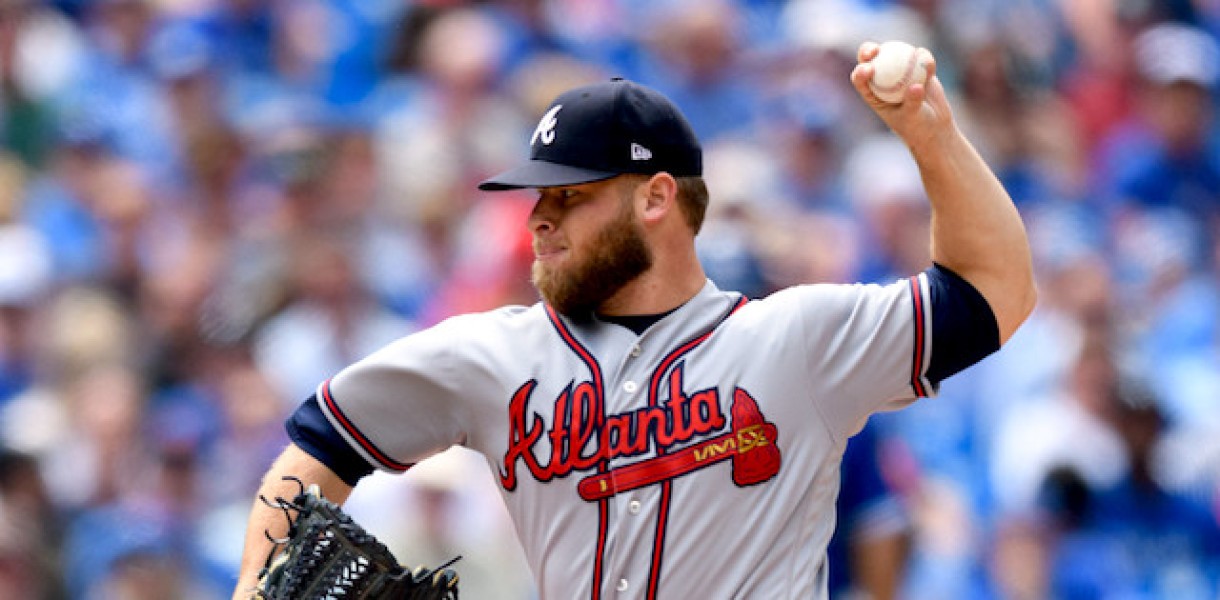
How do you approach relievers and closers in fantasy baseball drafts? David Marcillo shares strategies on how to draft the best bullpen possible in 2019 rotisserie, head-to-head, best-ball, and points leagues.
We've gone through each division, team by team. We've talked about the top setup men you should know about this season. We've looked at handcuffs and which closers you should have a backup for on draft day. It's a lot of information, but how does it apply to your league?
Most people play in standard 5x5 leagues, but a lot of people play in rotisserie leagues, points leagues, best-ball leagues, and custom leagues. The popularity of holds leagues and leagues that count saves and holds together (SVHD or SV+HD) is growing each season. So how do you draft a bullpen for these leagues? It's not going to make sense to use the same strategies across the board, right?
Let's take a look at some good ideas and bad ideas for some of the more common formats.
Featured Promo: Save 50% off the regular price with discount code CHAMP, for a limited time. Exclusive access to our Team Sync platform, DFS cheat sheets, Lineup Optimizers, betting/prop picks, and exclusive content from Nick Mariano and Eric Cross! GAIN ACCESS NOW
Standard 5x5 Leagues (Head-to-Head or Rotisserie)
The standard 5x5 league is what you get if you start a league on any fantasy provider and don't set any custom options. Because of this, and because of everyone's general familiarity with it, it's the most common type of league around. Batters have five categories- batting average, runs scored, RBI, home runs, and stolen bases. Pitchers have five categories too- wins, ERA, strikeouts, saves, and WHIP. This kind of scoring system makes pitchers who aren't either starters or closers more or less meaningless. Even a guy like Josh Hader, who is almost guaranteed to notch a strikeout or two every time he's on the mound, will only be contributing to that one category in a significant way.
Standard scoring leagues inflate the value of closers and make even fringe talents in flimsy situations like Hunter Strickland worth picking up on draft day. Leagues like this are where you'll see guys like Kenley Jansen and Edwin Diaz come off the board even before some valuable starting pitchers and position players. With a possible maximum of 30 full-time closers (which will never happen with several teams going with the committee approach every season), a standard 12-team league ends up seeing two closers per team. I personally prefer to have three closers when I play standard scoring, but I also personally prefer not to play in standard scoring leagues.
Good ideas: Target closers early, the difference between a bullpen with Aroldis Chapman and Kenley Jansen compared to one with Wily Peralta and Drew Steckenrider is enormous in this format. Make sure you have at least two bona fide not-part-of-a-committee closers, and consider adding a third.
Bad ideas: Do not leave closer to the end of the draft. You'll end up with guys who are parts of committees or guys who are almost certain to lose their jobs by May 1. Don't waste roster space on middle relievers, no matter how good their strikeout rate might look (unless that reliever serves as a closer's handcuff)
Points Leagues
Points leagues can be a little trickier to draft a bullpen for, mostly because of the wide variation of points gained and lost from league to league. Still, in terms of bullpen scoring, the most common tend to be points for saves, points for holds, points for strikeouts. Pitchers lose points in points leagues for blown saves, runs allowed, and in some leagues, walks allowed. This makes for a slightly different value judgment for pitchers like Wily Peralta, who should rack up a decent number of strikeouts but will also pile up the walks. Pitchers with exceptional control end up being more sought after in points leagues, making Kenley Jansen, Ken Giles, and Sean Doolittle even more valuable. These guys will provide plenty of strikeouts and saves, and won't lose many points from walks or runs allowed.
Another strategy that tends to prove more useful in points leagues is the drafting of high strikeout middle relievers and setup men. Someone like Josh Hader, Dellin Betances, Adam Ottavino, or Brad Hand can really rack up points in the strikeout category while also picking up holds if the league counts them. Single-category contributors are much more palatable in points leagues, so the last few rounds of a points league draft should be dedicated to finding the guys with the highest K% (and ideally an acceptable BB%) still on the board.
Good ideas: Target closers early, and consider adding a few extra reliable relievers instead of filling out your staff with starting pitchers.
Bad ideas: Make sure not to leave your bullpen to the last few rounds. You'll want at least one high-strikeout guy besides your drafted closers.
Best-Ball Leagues
Best-ball formats have been growing in popularity in fantasy football in recent years, and they are starting to make some noise in the fantasy baseball world as well. Best ball is a less involved season-long fantasy format. Players draft their teams like they would in any other format, however after that, it's mostly hands off. There are no daily lineups to set and no transactions to make. The league will automatically count the best performances for each game day and count the best possible lineup for that matchup. For example, if a team has two shortstops on the roster and one goes 2-for-3 with a home run and three RBI while the other goes 0-for-4 with two strikeouts, the system will place the 2-hit shortstop in the lineup, then do the same for a full starting lineup, position by position.
This makes for some interesting, new strategies in drafting a bullpen. Because of the inability to make any transactions once the draft is complete, it's important to target guys who are not injury risks. If a player gets injured in a best ball league, he becomes dead weight until he returns. In a worst-case scenario, if a player gets hurt and is out for the season, you're basically stuck playing with one missing roster spot.
Since best-ball leagues somewhat protect you from the worst ball your players might play, it's a good format to go with volatile players who are high-risk/high-reward. Someone who could light the world on fire and become a star or fizzle out and spend most of the season in Triple-A is a valuable asset in a best-ball league. While you could still end up with the dead roster spot issue discussed above, you could also end up with 2019's version of Jose Leclerc. Someone like Adam Conley on the Marlins or Trevor Rosenthal on the Nationals could be a last-round pick.
Good ideas: Try to grab a closer early, but then you can wait on your second closer. Fill out the end of your roster with high-upside relievers even if they don't have a clear path to the ninth inning.
Bad ideas: Don't overspend on relievers in best ball leagues. Don't draft guys with iffy injury histories or tenuous grasps on their roster spots.
Holds Leagues (Including SV+HD)
Holds leagues are a whole different animal. Some leagues count holds as a separate category and some (more commonly) combine saves and holds into one category (SVHD or SV+HD) where both count the same. This is my personal favorite format to play (also replacing wins with quality starts and batting average with on-base percentage), partly because it increases the relevant player pool by quite a bit and also because it eliminates the erratic save stat. Sometimes, the pitcher who earns a hold in a game his team wins provided far more to that victory than the pitcher who earns the save. Allow me to step onto my soapbox for a moment:
Pitcher A comes into the bottom of the eighth inning with a one-run lead. The bases are loaded and there is one out. Choose your own adventure here: either Pitcher A induces a ground ball double play or strikes out two hitters in a row. Pitcher A is credited with a hold.
In the top of the ninth, the offense scores two runs.
Pitcher B comes into the game in the bottom of the ninth inning with a three-run lead. He's facing the opposing team's 7-8-9 hitters. It's a defensive-minded shortstop, a career Triple-A outfielder filling in for an injured starter, and the backup catcher pinch-hitting in the pitcher's spot. Somehow, Pitcher B allows two runs on four hits and walk, only getting three outs thanks to a baserunning mistake and two amazing defensive plays. Pitcher B is credited with a save.
Which of these pitchers performed better? Everyone would agree that it was Pitcher A, but still, in standard scoring formats, only Pitcher B would be worth owning.
Stepping off my soapbox now...
Strategies for drafting a bullpen are, as you can imagine, very different in holds leagues. In leagues that count saves and holds as different categories, closers still maintain significant value. They should be drafted before setup men because while most teams will have one closer racking up the majority of his team's saves, they'll have two or three late-inning relievers who can come in and record holds. Since there are more setup men than closers, setup men can be drafted at the end of most fantasy drafts.
In SVHD/SV+HD leagues, where saves and holds count as the same category, the strategy is a bit different. In these leagues, closers and setup men are valued the same. What matters more are their other numbers because as long as they are pitching in close and late situations, the specific inning they pitch in is insignificant. An excellent strategy to employ in SVHD leagues is to let the other owners draft all of the closers and then just swoop in near the end of the draft to snag all of the top shelf setup men. Guys like Josh Hader, Andrew Miller, Dellin Betances, Archie Bradley, Chaz Roe, and Tony Watson can be had long after the top closers and should provide equal or even better value.
Good ideas: Draft your relievers late. Target guys who will strikeout a ton of batters but not necessarily in the ninth inning. Load up on offense and starting pitching before drafting your bullpen.
Bad ideas: You don't need to reach for the Jansens and Chapmans of the world in these formats.