RADIO
RADIO





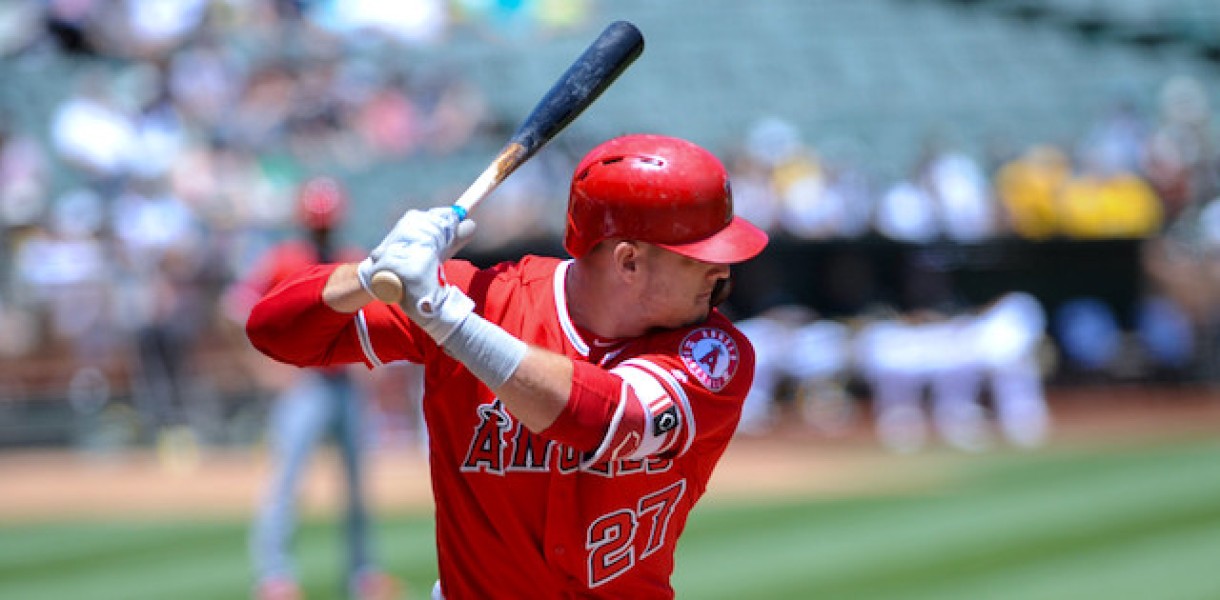
With the possibility of a shortened 2020 MLB season, Brian Rudd looks at the evolving strategies for winning high stakes fantasy baseball leagues on NFBC.
While it's not clear which of the proposed scenarios will be ultimately be used, there is hope that games will eventually be played in 2020. We may not know what the season will look like but drafts are still taking place, including those hosted on the gold standard of high-stakes competition, the National Fantasy Baseball Championship. However, the highest-stakes games (with entry fees ranging from $1,000 - $15,000) have been put on hold until the shape of the eventual season is actually known.
As many of these leagues were just a few days away from taking place when baseball ground to a halt, much of the prep work had already been done. But with a shortened season and a possibility of not all teams playing in their home parks, owners will need to reassess their values on players while we have this downtime. Some owners may be hesitant to throw big money into what amounts to be just a half-season but as excited as everyone will be to have any season at all, signups are unlikely to fall off too much.
This is the first column in a two-part series that will be focusing on preparing for these high stakes leagues but much of the discussion will also apply to the majority of other leagues. In this first piece, we'll discuss the value (or lack thereof) in looking at ADP and tackle how to handle saves on draft day.
Featured Promo: Save 50% off the regular price with discount code CHAMP, for a limited time. Exclusive access to our Team Sync platform, DFS cheat sheets, Lineup Optimizers, betting/prop picks, and exclusive content from Nick Mariano and Eric Cross! GAIN ACCESS NOW
Overview Of The Contests
There are several high stakes options to choose from at NFBC, all of which are no-trade leagues. Some are "standalone" formats where you play only against your league, while others have an overall component, in which you also simultaneously compete in a league composed of all teams in every league. There are a few variations of a 15-team standalone format, as well as one 12-team standalone option ($2,500 entry fee).
Of the leagues with an overall aspect, the Main Event ($1,700) is the most popular contest, with 570 teams in the mix in 2019. NFBC also made a new addition in 2020, the Solo Shot ($1,000), where the main differences between it and the Main Event are that owners can enter only once (hence the name), and waivers run once a month, rather than every week.
All of the NFBC high stakes leagues are standard 5x5 scoring, but strategies may differ based on format. For example, punting a category can be a viable option in a standalone league, but that's not the case in leagues like the Main Event and Solo Shot. Owners simply can't afford to be near the bottom of a category and still compete in the overall standings, as they'll need to acquire 90 percent of the possible points to win the overall title.
Accounting For Uncertainty Heading Into 2020
Something I like to do prior to draft day is look at past years' results in the formats to get a general idea of what goals to shoot for in each category. Keeping an eye on your projected stats during the draft can be helpful in determining what category you need to focus on as the draft progresses. On the NFBC site, you can find all of last season's results for the overall standings, as well as each individual league.
For example, here's what it took to reach the 90th and 80th percentile in each category in the 2019 Main Event:
| % | Runs | HR | RBI | SB | BA | K | W | Sv | ERA | WHIP |
| 90th | 1,190 | 373 | 1,144 | 136 | 0.271 | 1,527 | 100 | 82 | 3.72 | 1.18 |
| 80th | 1,149 | 360 | 1,107 | 126 | 0.269 | 1,476 | 95 | 73 | 3.85 | 1.20 |
Seeing that we seem to be heading towards a season with about half the amount the games, splitting those numbers in half leaves us with:
| % | Runs | HR | RBI | SB | BA | K | W | Sv | ERA | WHIP |
| 90th | 595 | 187 | 572 | 68 | 0.271 | 764 | 50 | 41 | 3.72 | 1.18 |
| 80th | 575 | 180 | 554 | 63 | 0.269 | 738 | 48 | 37 | 3.84 | 1.20 |
These numbers vary from year-to-year but it's going to be incredibly difficult to set goals in each category this season given all of the uncertainty and not just things that are pandemic related. Keep in mind how the juiced ball inflated the offensive numbers in 2019 and how different the run-scoring environment could be depending on what ball is used. Then there's the wrench thrown in by the possibility of not all ballparks being used, which will affect the offensive environment even more.
The season is going to be much shorter but it's probably not going to be as easy as using simple math to pro-rate the categories. We'll likely see fewer off days, more double-headers, and more six-man rotations. As a result, even the front-line starters could end up throwing a lower percentage of their team's innings. This compressed schedule would also result in even the top closers missing out on a couple save chances since they may not be available due to having fewer off-days built-in.
On the hitting side, the tightened schedule will probably mean more frequent rest for position players who are usually locked into the lineup. Rosters are also likely to be expanded which would add to the appeal of giving guys a day off. And with bigger rosters available, we're probably going to see more platoon situations than we are used to.
So if the regular season ends up being right at half of a normal season, it will be beneficial to shave off more than half of a player's projection in many cases. No matter what, though, having a sense of where your team stands in each category throughout the draft is important, so you can make sure to finish with a balanced roster.
What To Do With ADP
Tracking ADP (average draft position) can be extremely useful, as it helps owners size up the market while giving them a general idea of what point in drafts a player should be targeted. Relying too much on this data is harmful, however, as every draft is different and owners shouldn't always count on a player being there in the next round just because ADP says he usually is.
It's often said that ADP can be thrown out the window when it comes to high-stakes leagues, as owners won't hesitate to "reach" for their guy by several rounds. This will likely be the case even more in 2020, as the shortened season alone is enough to dramatically change the value of many players. If most teams end up playing in parks other than their own, ADP up to this point would be rendered essentially meaningless.
With this in mind, if you're going to utilize ADP, make sure to sort by date in order to eliminate the noise of pre-pandemic drafts and use only the most recent and relevant data. The drafts over at NFBC are constantly happening, so there will be quite a few that will take between the time the 2020 rules are established and the time the high stakes drafts get going.
Even so, the sample will be too small to draw any meaningful conclusions from, and as stated above, savvy owners will lean heavily on their own values, even if it goes against ADP. This year, more than ever, it's important to know your values for players heading into drafts and be willing to pay up for your guy even if the ADP doesn't agree.
Locking Up Saves On Draft Day
There are many different approaches when it comes to drafting closers. Some owners like to pay up for one top closer, and grab another in the double-digit rounds, while others tend to live in the mid-range of options. Some owners prefer grabbing just one guy they can count on, then throw darts at a couple of late-round options. Some even ignore the category on draft day altogether, either punting the category- a viable but risky option in standalone leagues- or planning to attack the category in-season.
Closers are a highly sought after commodity when they are available during the season, and the no-trading aspect of NFBC enhances that effect. When a pitcher moves into the 9th inning role in-season during a typical year, he will often go for several hundred dollars out of the allotted $1,000 free-agent budget.
To reach the 80th percentile in saves in 2019, you would have had to either hit on two top closers or deploy a third closer for at least part of the season. With less time to find saves in-season in 2020, it will be more important than ever to come away from the draft table with at least two reliable closers.
With a shorter season coming in 2020, there is going to be less time to find saves on the waiver wire, and more money on average for owners to spend each week. As a result, it may cost significantly more than usual to acquire a new closer during the season. Furthermore, speculating on a closer-in-waiting will be more difficult, as stashing a player for a few weeks will eat up a valuable roster spot for a larger chunk of the season than it would in a normal year.
Another reason to draft established closers instead of relying on more speculative picks is all of the uncertainty that still exists at the back of many bullpens. Several teams have yet to anoint a closer, while others are sure to rely on multiple arms to handle 9th inning duties - a strategy we have seen more of in recent years. This gives more value to the guys who already have the job. Perhaps the leash will be shorter than usual on a shaky closer, but that will vary from team to team and is tough to predict.
In both 2018 and 2019, 13 closers were selected among the first 120 picks in NFBC drafts. But pre-pandemic, the price of closers had been dropping for most of the draft season, with that number dropping to just six in the 225 drafts that took place between November 2019 through the end of January 2020. The prices had started to normalize prior to the stoppage of play, with nine closers going inside the top 120, and that number is sure to rise even further once drafting picks up steam again. Even so, locking in at least two options you feel good about should be a priority on draft day, as acquiring saves in-season will be costly, and more difficult to achieve than in years' past.
In the next column of this two-part series, we'll examine how to manage your FAAB budget in high stakes leagues in 2020 as well as take a look at a few pitchers moving up draft boards.