



 RADIO
RADIO









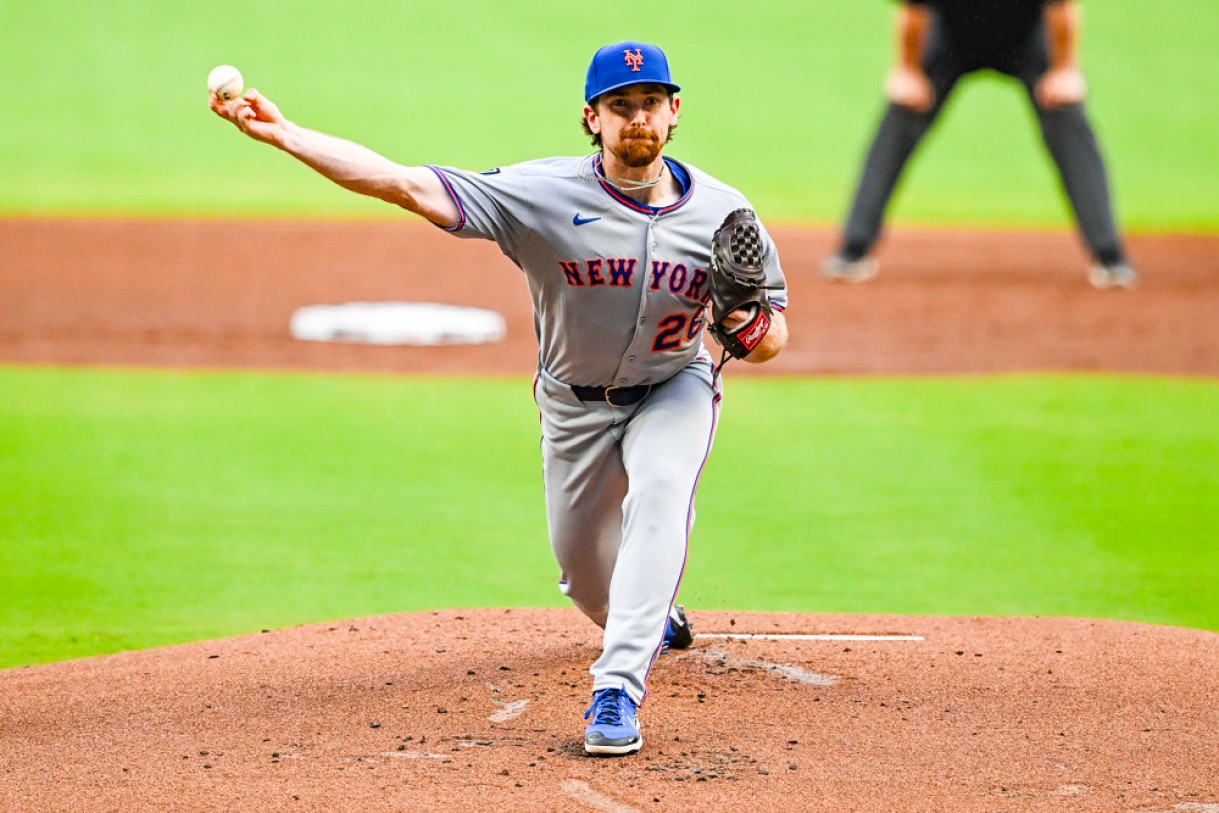
Eric's top 10 pitching prospects for fantasy baseball and how they project long-term along with some names to buy or sell at this position in dynasty leagues. His top prospects include Chase Burns, Nolan McLean, Trey Yesavage, and more.
My 2026 positional prospect rankings series here on RotoBaller concludes with the always intriguing starting pitcher position.
The top of my pitching prospect rankings heading into 2026 is especially exciting due to the proximity of many of the arms in the below Top-10. Six of the 10 have already debuted, and three of the other four could or should debut in 2026 as well.
For my entire top-200 and additional writeups, check out my Patreon. And for the other positional rankings, check out my author page.
Featured Promo: Save 50% off the regular price with discount code SUMMER, for a limited time. Exclusive access to our Team Sync platform, DFS cheat sheets, Lineup Optimizers, betting/prop picks, and exclusive content from Nick Mariano and Eric Cross! GAIN ACCESS NOW
Pitching Prospect Rankings for Fantasy Baseball
Age and highest level in parentheses
1. Chase Burns, Cincinnati Reds (23/Majors)
Since I ignore service time with my prospect rankings, Chase Burns still sits atop my list until he reaches 6.2 innings this upcoming season. It was an absolutely dominant season from Burns in 2025, dominating both in the minors and during his time with Cincinnati as well.
You might see the 4.57 ERA with Cincinnati and wonder what I'm talking about, but that doesn't tell the whole story. Burns had an xERA of 3.48 in the majors along with a 2.65 FIP, 2.68 xFIP, 35.6% strikeout rate, and a 27.1% K-BB rate. The only rookie pitchers with at least 40 innings to have a higher K-BB rate in the 21st century were Stephen Strasburg in 2010 and Spencer Strider in 2022.
On top of that, Burns was one of just eight starting pitchers in the majors to have an xFIP under 3.00 and a K-BB rate above 25% while pitching at least 40 innings. The other seven were Tarik Skubal, Garrett Crochet, Logan Gilbert, Zack Wheeler, Cole Ragans, Shohei Ohtani, and Chris Sale.
In the minors, Burns was a force to be reckoned with. In 66 innings between High-A, Double-A, and Triple-A, Burns recorded a 1.77 ERA, 0.77 WHIP, 5.4% walk rate, 36.8% strikeout rate, and a .166 BAA. The lowest strikeout rate he posted at any level in 2025 was 30.4% in his 12.1 Triple-A innings.
Chase Burns, Unhittable 93mph Back Foot Slider. 😳 pic.twitter.com/SP25vlgQzb
— Rob Friedman (@PitchingNinja) June 24, 2025
The comparisons to Strider come easily, given their elite strikeout ability while primarily working with just two pitches. With the Reds last season, Burns used his 4-seamer and slider a combined 91.7% of the time. He also mixed in the occasional changeup, curveball, and sinker against left-handed hitters, but against right-handers, all but three of his pitches were the 4-seamer or slider.
When those two pitchers are elite offerings, you can still find a high level of success as Burns has. But at the same time, I would absolutely prefer Burns to establish a consistent third offering. Against left-handed hitters, the changeup usage is 10%, so that somewhat qualifies as a "consistent third offering", but I'm hoping he works in his curveball more to right-handers in 2026, or adds a cutter.
But enough about hypothetical pitch additions. Let's talk about Burns' dynamic 4-seam/slider combination. The 4-seamer averaged 98.7 mph last season with 18" of induced vertical break while allowing a .250 BAA, .341 SLG, and .091 ISO. Out of the 59 batted balls he allowed on the 4-seamer, only six went for extra base hits, and only one cleared the outfield fence. The slider was even better with a .197 BAA and 43.9% whiff rate.
While I'd love to see a more diverse pitch mix, Burns' upside is massive as is. It wouldn't shock me if he pushed fantasy ace status in 2026 while forming one of the best 1-2 punches in baseball with Hunter Greene. I don't throw around the "future ace" tag very often with prospects, but it's 100% warranted here with Burns.
2. Nolan McLean, New York Mets (24/Majors)
Over the last two years, Nolan McLean has transformed from a fun two-way player to one of the best young pitchers in the game.
In 2025, McLean dominated at every level, including in eight starts with the Mets down the stretch. In those eight starts, McLean recorded a stellar 2.06 ERA and 1.04 WHIP across 48 innings with a 8.5% walk rate and 30.3% strikeout rate. This comes after a dominant 113.2 innings in Double-A and Triple-A, where he finished with a 2.45 ERA, 1.13 WHIP, and a 27.2% strikeout rate.
All of those stats I just rattled off are impressive, but they become even more impressive when you remember that 2025 was the first year that McLean was solely focused on pitching after ditching the two-way aspirations. For him to rise to this level already is truly remarkable.
McLean is one of the most enjoyable pitchers to watch operate on the mound. His arsenal runs six pitches deep with some impressive spin rates on most of them. McLean will use all six of his offerings to left-handed hitters and four of the six to right-handed hitters.
McLean's sweeper averaged 2929 RPMs in 2025, with his curveball coming in at a whopping 3248 RPMs on average. That curveball was absolutely lethal overall, too, recording a .074 BAA, 50% whiff rate, and zero extra-base hits allowed in the majors last season. His sinker was also a highly impactful offering with a .193 BAA and .316 SLG allowed while helping McLean generate a 60.2% ground-ball rate.
I can't stress enough how impressive it is for a pitcher to have a ground-ball rate above 60% and a strikeout rate above 30%, even if it's just 48 innings.
McLean could just be scratching the surface. He posted a strikeout rate over 30% with a 28.4% whiff rate while maintaining a 23.4% chase rate. Imagine if he gets hitters chasing at closer to a 30% clip? For starters, with at least 500 pitches thrown in 2025, McLean had the 12th-best in-zone whiff rate at 22.1%.
While it's hard to project him to have an ERA near 2.00 again, I do believe McLean can keep his ERA under 3.00 while providing an elite strikeout rate in 2026. He looks poised to cement himself as an ace pitcher this upcoming season, both for the Mets and for fantasy baseball as well.
3. Trey Yesavage, Toronto Blue Jays (22/Majors)
From start to finish, 2025 was an incredible season for Trey Yesavage. The 2024 #20 overall pick opened the season in Low-A and finished the season as one of Toronto's key pitchers in their run to Game 7 of the World Series, tossing 12.2 innings in the series.
For a pitcher to pitch at FIVE levels in one season, including meaningful postseason innings, is truly remarkable. Now, Yesavage enters the 2026 season as one of the most exciting young pitchers in the game and one of the frontrunners for the American League Rookie of the Year award.
I had a chance to see Yesavage for two of his Double-A outings mid-season and came away mostly impressed. The stuff was certainly impressive.
Yesavage is a three-pitch pitcher who will use all three pitches against both right-handed and left-handed hitters. His 4-seamer averaged 94.7 mph with Toronto last season, but he can get up to 97-98 at times. But the key to Yesavage's success with the pitch is his higher 64° arm angle and elite 19.5" of IVB, creating a flatter vertical approach angle.
This makes Yesavage's 4-seamer harder to barrel up, and he was able to generate a higher ground-ball rate in the majors. However, the air rate he allowed in the upper minors was a bit higher than you'd like to see, sitting above 60% when you combined Double-A and Triple-A.
Trey Yesavage, Dehelmeting Splitter. ✌️
6th K thru 3 pic.twitter.com/l7jU61LSJO
— Rob Friedman (@PitchingNinja) October 30, 2025
Outside of the 4-seamer, Yesavage will go to an upper-80s slider and mid-80s splitter, both of which he used more than 25% of the time last season. He'll go to the splitter more against lefties and the slider more against righties, but as I mentioned above, he's not afraid to use each offering against both RHB and LHB.
Yesavage's splitter is a truly devastating offering, featuring plenty of vertical break and some decent arm-side as well. Regardless of what level he was at, opposing hitters had a hard time doing much of anything against the offering, and that was evident in Yesavage's three MLB starts as he recorded a stellar .111 BAA, .111 SLG, and a 57.1% whiff rate on the offering. His slider also had a solid 30.6% whiff rate. Overall, Yesavage recorded an elite 35.4% whiff rate overall with Toronto, including an impressive 23.5% in zone whiff rate and a 36.3% chase rate.
Yesavage has consistently proven that he has what it takes to be one of the best whiff and strikeout arms in the game, even with only three offerings. But my one area of concern is in the command and control department. Yesavage recorded a 10.5% walk rate in the minors and an identical 10.5% mark in the majors between the regular season and the postseason.
Is that a terrible walk rate? No. Is it workable given his elite swing and miss stuff? Yes. However, inconsistent command and control are the main reasons why I have Yesavage a notch below guys like Burns and Yesavage. It's also the reason why I saw Yesavage run into problems during my live looks. He often left his 4-seamer over the heart of the plate and really seemed to nibble around the edges at times, which drove up his pitch count and forced an earlier exit from the game.
But again, it's not a major concern at this time.
While I'd like to see the command cleaned up a bit and maybe even a fourth pitch added (maybe a cutter or sinker?), Yesavage still has the makings of an impact arm for fantasy baseball long-term with Top-25 fantasy SP upside.
4. Bubba Chandler, Pittsburgh Pirates (23/Majors)
It was quite the up-and-down season for Bubba Chandler in 2025. The vast majority of the season centered around everybody and their mother clamoring for Pittsburgh to promote him, only for Chandler to receive start after start in Triple-A despite clearly being ready for a test in the major leagues. The overall surface stats ended up taking a hit in Triple-A with a 4.05 ERA and 1.48 WHIP, but I'm not putting a ton of stock into that, given the level of talent we're dealing with here.
Once Chandler finally received the call to the majors, he impressed with a 0.93 WHIP and 21.8% K-BB rate over four starts and three relief appearances totaling 31.1 innings. Chandler works up in the zone with an upper-90s fastball and will mix in a low-90s changeup, upper-80s slider, and a mid-80s curveball. Both the changeup and slider are notable swing and miss offerings for Chandler, and both can be considered above-average to plus offerings.
I'd even go as far as saying Chandler's changeup could wind up as one of the best changeups in baseball in short order.
The big X-factor with Chandler is the walk rate. Chandler's command isn't a big issue, but he finished with a walk rate above 10% in both 2023 and 2025 in the minors. Although he only walked four batters in 31.1 innings with the Pirates down the stretch last season.
5. Thomas White, Miami Marlins (21/Triple-A)
As we enter 2026, Thomas White will likely be the top left-handed pitching prospect for many rankers and evaluators, myself included. Outside of two rough outings in Triple-A to end the season, White absolutely dominated in 2025 across three levels. In 21 starts overall (89.2 innings), White recorded a 2.31 ERA and a ridiculous 38.6% strikeout rate, which was the third-highest mark in the minors among pitchers with at least 80 innings, trailing only Jonah Tong and Yesavage.
White works primarily with a three-pitch mix with all three pitches being plus or better. His fastball sits in the mid-90s and touches the upper-90s with plenty of riding life, making it one of the better fastballs in the minor leagues. White will also attack hitters with an elite slider in the 82-86 range with plenty of sweeping action, and a mid-80s changeup with good depth and fade.
The upside for White is arguably higher than that of any pitching prospect who has yet to debut in the majors. However, White's command and control were inconsistent in 2025, and he finished with a 13.6% walk rate. To reach his upside as a frontline starter, he'll need to trim the walk rate and see his overall command take a step forward.
6. Jonah Tong, New York Mets (22/Majors)
Jonah Tong is coming off one of the best statistical seasons we've seen in the minor leagues in a long time. In 113.2 innings, most of which were in Double-A, Tong recorded a stellar 1.43 ERA and 0.92 WHIP while striking out a whopping 40.5% of the batters he faced. He is now one of just five pitching prospects to have a strikeout rate above 40% in a minor league season (Min 80 IP) over the last 20 years.
But unfortunately, Tong didn't have much success in the majors, registering a 7.71 ERA and 1.77 WHIP across five starts.
Jonah Tong unleashes a wicked curveball for his first Major League strikeout 👏 pic.twitter.com/FEte001l9e
— MLB (@MLB) August 30, 2025
When you watch Tong pitch, the Tim Lincecum comps are put on a tee. He'll work in the mid-90s on his fastball, which features an elite 19.8 inches of IVB from a higher arm slot and 64° arm angle. Tong will also mix in a mid-80s changeup with plenty of depth and fade, an upper-70s curveball with elite drop, and the occasional slider.
Both the fastball and changeup are above-average to plus offerings, and I think the curveball can be a weapon for him as well. But it all comes down to whether or not Tong can keep his walk rate in check, which sat at 10.6% in the minors last season.
Heading into 2026, the Mets have a crowded rotation, which is now headlined by fellow pitching prospect McLean and the newly acquired Freddy Peralta. So for now, I'm not entirely sure when New York will let us see that Tong Ta-Tong Tong Tong.
7. Kade Anderson, Seattle Mariners (21/NCAA)
While Kade Anderson has yet to throw a professional pitch, he immediately jumped into my Top-10 overall after being drafted third overall by the Seattle Mariners last July. Anderson excelled in a tough SEC last spring, posting a 3.18 ERA, 1.06 WHIP, 7.3% walk rate, and a 37.4% strikeout rate across 19 starts and 119 innings. The 2025 season was a notable improvement for Anderson, both in terms of stuff and harnessing his command and control.
Anderson generally sits around 94 on his fastball with decent shape, and can get up to 97-98 mph at times. His delivery is clean, fluid, and repeatable, which is always encouraging to me. Outside of the 4-seamer, Anderson will mix in a slider, curveball, and a changeup, with the slider being his best pitch overall. While the changeup is behind the other three, you can make a case that Anderson's fastball, slider, and curveball are all above-average or better offerings, with the slider easily grading as plus.
Add in above-average command and control, and Anderson possesses both a high floor and the upside of a good #2 starter long-term. He absolutely deserves to be a Top-10 overall pitching prospect right now.
8. Payton Tolle, Boston Red Sox (23/Majors)
First and foremost, I wanted to start this section by urging you not overreact to Payton Tolle's results with Boston after his debut against Pittsburgh. Tolle went toe to toe with Paul Skenes in his debut and was impressive with eight strikeouts over 5.1 innings of two-run ball. But after that debut, Tolle allowed seven earned runs in his next 5.2 innings, which ballooned his ERA and WHIP to 7.36 and 1.91 in 11 major league innings.
Again, do NOT put a ton of stock in those last few outings. Instead, focus more on the debut and minor league performance, which is much more indicative of the type of pitcher Tolle has the potential of becoming.
Tolle flew through the minor leagues last season after entering 2025 with zero professional innings. In 91.2 innings across three levels, Tolle recorded an impressive 3.04 ERA, 0.99 WHIP, 6.3% walk rate, and a 36.5% strikeout rate. He was the only pitcher in the minors last season to have a K-BB rate above 30%, a walk rate under 7%, and a WHIP under 1.00 over at least 80 innings last season.
Payton Tolle's 7th and 8th Ks.
And K struts. pic.twitter.com/wODVhVfFPY
— Rob Friedman (@PitchingNinja) August 30, 2025
Tolle's arsenal is very 4-seam heavy, using it 64.1% of the time with the Red Sox. He does have five offerings total, and all five get used against right-handed hitters, but Tolle is nearly exclusively 4-seamer and slider against left-handed hitters. That 4-seamer is easily a plus offering thanks to Tolle's velocity (96.7 mph), extension (7.5 Feet/99th percentile), and movement profile. Both the cutter and slider have shown promise as well, but Tolle just doesn't go to them too often.
But even with heavy 4-seam usage, Tolle was still able to miss bats at a high clip all season while also showing above-average command and control. I'd love to see him develop and utilize the secondaries a bit more, because if he does, I truly believe there's #2 starter upside here. I'm just not sure how many innings Tolle will get with Boston this year due to their crowded rotation.
9. Seth Hernandez, Pittsburgh Pirates (19/High School)
If we're ranking on upside and ceiling alone, Seth Hernandez would be Top-5, and I strongly believe that no pitcher in the 2025 draft class possesses as much upside as Hernandez does. Hernandez is a big 6'4 right-hander taken 6th overall by the Pirates out of Corona High School in California. And while he's yet to make his professional debut, the excitement and buzz surrounding Hernandez is already soaring.
Hernandez has a big, strong, and projectable frame with elite stuff that not many pitching prospects can match. The fastball is already sitting in the mid-90s, touching higher, and Hernandez will also attack hitters with two solid breaking balls and a changeup, which you could throw a 70 grade on thanks to the combination of velocity separation, depth, and fade.
In addition to all of that, Hernandez is much more advanced than many 19-year-old pitching prospects. He's shown a good feel for spin and commanding his fastball, and it wouldn't shock me if he wound up as a 55-grade or 60-grade command and control arm.
There aren't many pitching prospects with ace upside, but Hernandez is absolutely one of them. He's my leader in the clubhouse to be the #1 pitching prospect by this time next year.
10. Robby Snelling, Miami Marlins (22/Triple-A)
It's been an up-and-down professional career so far for Robby Snelling. After breaking out in the Padres system back in 2023, he endured a rough 2024 (5.15 ERA) before bouncing back with a great season in 2025. In 25 starts between Double-A and Triple-A, Snelling recorded a 2.51 ERA, 1.11 WHIP, 7.1% walk rate, and a 30.3% strikeout rate.
His 166 strikeouts were tied with Trey Gibson for the fourth most in the minor leagues, trailing only Tong, Elmer Rodriguez-Cruz, and Carlos Lagrange.
While Snelling doesn't have that one offering that stands out among the rest, he works with a four-pitch mix with all four offerings having above-average or higher potential. Snelling's 4-seam velocity ticked back up in 2025 into the mid-90s to fair with solid riding action. All three of his secondaries are above average as well, with his curveball being the most impressive of the bunch, but he can miss bats with all four offerings.
Once you add in above-average command and control, which has always been there, Snelling offers a higher floor than most pitching prospects with the upside of a back-end SP2/high-end SP3. It would shock me if he didn't toss over 100 innings with Miami this season.
If you enjoyed these rankings and want to see additional rankings, analysis, and more, check out Eric's Toolshed Fantasy Patreon.
More Fantasy Baseball Advice
Download Our Free News & Alerts Mobile App
Like what you see? Download our updated fantasy baseball app for iPhone and Android with 24x7 player news, injury alerts, sleepers, prospects & more. All free!