RADIO
RADIO





Kyle Lindemann breaks down draft and trade strategies for fantasy football startup drafts in dynasty leagues such as FFPC.
Before you head into a dynasty startup draft, it's important to have a set strategy beforehand, or at least to be flexible in case something completely unexpected happens which makes your plans fall apart. In this article, we will go over three different approaches to drafting which involve: trading up, staying put, or moving down in a startup draft. A lot of this will depend on your league's format, scoring, and roster sizes and I will explain more in the paragraphs below. I have already participated in three startup drafts this offseason where I implemented each of the different strategies and will post my final roster for your viewing. While just three drafts is still a small sample size, it can give you a brief snapshot of how your roster may look after implementing each strategy.
One site that I play in a lot of dynasty leagues on is FFPC. This early in the dynasty season, FFPC usually does slow drafts with an eight-hour pick timer that freezes from 2-8 am ET daily. What this means is you have eight hours when on the clock to make your pick. While this may seem like an agonizingly slow process, most players on FFPC usually draft within 45 minutes of their pick on average. What the slow draft does is open up trade windows.
Ask any dynasty veteran, the first thing they will tell you about a successful dynasty league that has been together for a long time is that it is a league that trades regularly. Trades happening in a dynasty league are the sign of a healthy league because trading involves active communication and participation from the members. What this does is give you an advantage if you are comfortable with being able to move up or down on the draft board. In most drafts with a 1-2 minute pick-timer, trades rarely happen at all during a startup. With the slow draft, that changes altogether, so you can formulate a plan to dominate your startup!
Bookmark our updated and revamped fantasy football rankings portal for all league formats!PPR rankings | Half-PPR rankings | Standard rankings | Rookie rankings | Superflex rankings | Dynasty rankings | Who To Start? | Injuries | Matchup Ratings | Strength of Schedule
Importance of a Tier-Based Drafting System
One important strategy that you can implement during a slow draft is a tier-based drafting system. What this means is breaking your overall rankings of players into tiers for overall ranking and positional ranking. You can do this based on age, projected performance for the upcoming season, projected performance over the next three seasons, or a combination of any of them. What I want to do is identify players who are a cut above their position and find the cornerstone players that I want to build my dynasty team around.
Tier-based drafting is the idea that you can group players who have similar fantasy values or similar projections for the upcoming season. In a dynasty draft, you always want to be aware of any value that is out there on the board, even if it is at a position that you may currently not need. The biggest mistake that I see a lot of fantasy managers make is being too worried about what their starting lineup will look like in September. The thing is, in a dynasty, you should always draft for talent, you can always trade for needs later.
Having a tier-based rankings system is always important when there is a run on a certain position ahead of you. While you might be inclined to reach for a player because it seems like the position is drying up, it is the last thing you want to do because you're allowing others to dictate the draft to you. With a tier-based ranking to fall back on, you can have relative peace of mind knowing that you will continue to play the board regardless of the current run on a position or overall tier and be proactive versus being reactive.
I'll give you an example. Let's say you are about to be in a Superflex, TE Premium, Full PPR startup draft. Luckily, you have the 1.03, so there is a myriad of options for you to choose from. Right now, I have 10 players who I consider ahead of the rest when it goes to overall tiers and their positions on the big board:
- QB1 - Josh Allen (Tier 1)
- QB2 - Patrick Mahomes (Tier 1)
- QB3 - Justin Herbert (Tier 1)
- QB4 - Lamar Jackson (Tier 1)
- RB1 - Jonathan Taylor (Tier 1)
- TE1 - Kyle Pitts (TE1)
- WR1 - Justin Jefferson (Tier 1)
- WR2 - Ja'Marr Chase (Tier 1)
- QB5 - Kyler Murray (Tier 2)
- QB6 - Joe Burrow (Tier 2)
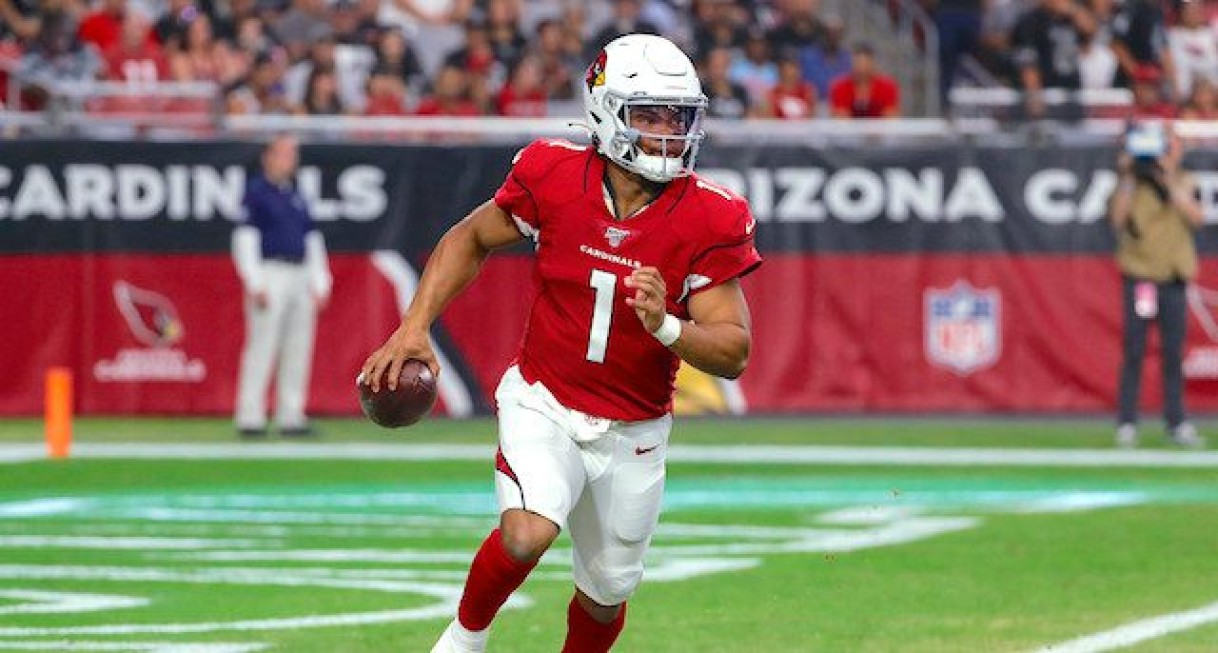
While some of the QBs are in Tier 2, they are included in the big board due to the scarcity of the QB position. Kyler Murray has QB1 potential, but he is down a bit in my current rankings due to his looming contract/potential holdout situation. The same goes for Deshaun Watson and Javonte Williams. Watson is an elite talent, but I'd like to know more about his civil suit and possible suspension for 2022 before I invest this much draft capital in him. As for Javonte, the talent is off the charts but I'd like to be sure post-NFL Draft that the Broncos aren't bringing in any more RBs who can threaten his workload (that also includes the next wave of free agency).
I am high on Joe Burrow, but he does not have the rushing upside to suggest that he can finish as a top 3-5 QB every year, but I do like him nonetheless. After those 10 players, there is a large dropoff in talent on my board. Most of the players drafted between 11-and 25 in the next tier are all similar in my rankings. So how does this apply to you?
If you are picking at 1.11, 1.12, 2.01, or 2.02 and all of those 10 players above are gone, it would be wiser to trade back later in the second round and pick up some more value because the player you are going to draft at say the 2.10 is likely to have similar value to the player you would draft at 1.11. Since they are similar in tier/talent, it is better to trade back and acquire additional picks for later since there isn't much difference between 1.11 and 2.10.
Some Drafting Insight
One thing I like to do is make sure I have gotten plenty of sleep the night before, gone over my rankings, and been made aware of any breaking news before heading into a draft. There was a guy in one of my leagues who drafted Andrew Luck only to see him hang it up and retire several hours later. The same goes for Calvin Ridley's season-long suspension for betting on games.
I also make sure that I am not consuming any alcohol before or during the draft. I want my mind to be as sharp as a tack. While some of your league mates may be consuming some beverages during the draft, I suggest waiting until afterward.
https://twitter.com/LuckIsMadeFF/status/1512137367490121732?s=20&t=Pzv53tL-CejAMuAsfsVPWw
While I did mention in Part 1 of my FFPC startup strategy that I prefer to draft a team ready to win right away, in my first four to five selections in a startup draft, I prefer not to invest in a handful of players who have the potential to lose plenty of dynasty value over the next 12 months while still drafting a team that is ready to compete in Year One. Risk cannot always be avoided, but with my first four to five choices, I prefer to avoid risk if I can. Once I get later in the draft, I have no problem trying to swing for the fences.
If you are willing to dabble in uncharted waters, there is a massive upside to be had in doing startups before the NFL Draft. On FFPC, typically rookies from each class are in startups once the new year begins. While it may seem backward to draft a player before his landing spot is determined, many of your league maters will feel the same and shy away from them. To me, a player like Breece Hall is such a transcendent talent that he will likely succeed regardless of his landing spot. Once the draft is over and we start to get closer to the start of the regular season, rookies will only get more expensive. If you are willing to embrace the unknown, there is some massive value to be had.
Full disclaimer, trading up is not my usual strategy. My typical strategy in a startup draft is to acquire an additional first-round pick for next year's rookie draft, trade back one to two times, play the board, and try to obtain as many players in the first eight rounds as possible. After the eighth round, there is typically quite a dropoff in talent. While star players can help win leagues, having depth is paramount in dynasty. With a mostly "win now" approach, it may seem like an oxymoron to obtain an additional first-round rookie pick, but the way I see it is I don't want to fire off all the rounds in my chamber too early. In one league, I was able to send away the 6.12 in a startup for a future first-round rookie pick and I still had a good roster. Having two firsts for the following season gives you additional flexibility in case Year One doesn't go your way, but it also allows you to add a piece before the deadline to strengthen your title run. Don't let anyone tell you that obtaining an additional first means you aren't trying to win now.
For this exercise, we will be assuming a 12-team Superflex TE Prem, Full PPR, H2H format with the following lineups:
1- QB, 2 - RB. 3 - WR, 1 - TE, 1 - Superflex, 2 - Regular Flex
12 - Bench, 3 - Injured Reserve, 3 - Taxi
Trading Up
Depending on the value that is there on the board, trading up can be beneficial during a startup draft. However, in deeper leagues, this is not the optimal strategy. An example of a deeper league would be a league with no kickers or defense and features starting with three wide receivers. In shallower leagues that feature 1 QB, 2 RB, 2 WR, 1 TE, and 0 to 1 Flex with smaller rosters, it can be advantageous to trade up because you want to obtain as much star power as possible. If you are trading up in a draft, typically you will trade away your future first-round rookie pick for proven talent to get players who are going to produce for you in Year One, thus reducing the overall value of the said draft pick.
In this draft that featured a third-round reversal, I picked at the 1.06. The dynasty manager at 1.03 wanted to trade back and so a rare opportunity arose for me to come up. I ended up trading away the 2.07 and 8.06, along with my 2023 1st round pick, but I was able to trade all the way up to the 1.03, where I was able to take Justin Herbert and then take Kyle Pitts with my original pick at the 1.06. Talk about a young, star-studded lineup! However, the trade, along with two others to move up, did leave me with fewer picks in the middle rounds of the draft. Here is how the final team ended up:
QB - Justin Herbert, Jalen Hurts, Kirk Cousins, Jimmy Garoppolo, Kellen Mond (Taxi)
RB - Cam Akers, Miles Sanders, Melvin Gordon, Darrell Henderson, James White, Chris Evans
WR - D.J. Moore, Terry McLaurin, Chase Claypool, Hunter Renfrow, Corey Davis, Jamison Crowder, Antonio Brown (worth a flyer in case he returns), D'Wayne Eskridge (Taxi)
TE - Kyle Pitts, Noah Fant, Kylen Granson (Taxi)
2022 Rookie Picks: 2.10, 3.10, 4.08
2023 Rookie Capital: 3.0, 4.0, 4.0, 5.0, 6.0, 7.0
While this team does have a solid core of 8-10 players, depth plus a lack of future draft capital could become a major issue. I fear I may have to trade one of my three starting quarterbacks if a bad rash of injuries occurs.
Staying Put
This strategy typically involves staying where you are draft-wise and picking up any of the value that falls to you. I like this strategy more when I am picking in the middle (1.05 - 1.08) where the fewer number of picks in between allows for me to try and build an overall solid, but balanced team. When you go into a draft trying to stay put, you aren't trying to force any unnecessary trades and you aren't likely to accept a trade offer unless it is completely lopsided in your favor. This middle strategy is probably how the majority of dynasty players are when it comes to drafting and this strategy is usually implemented by default in faster drafts with 1-2 minute pick timers, which makes trading on the clock nearly impossible.
Ironically enough, with this team, I ended up picking at 1.06 and mostly stayed put during the draft. I drafted with a win-now approach while trying not to draft a roster that would age too quickly.
QB: Trevor Lawrence, Kirk Cousins, Marcus Mariota, Daniel Jones, Kellen Mond (Taxi)
RB: D'Andre Swift, Cordarelle Patterson, Melvin Gordon, Darrell Henderson, Jamaal Williams, Kenyan Drake
WR: D.J. Moore, DeVonta Smith, Chase Claypool, Jamison Crowder, Corey Davis, Laviska Shenault, Terrace Marshall (Taxi)
TE: Kyle Pitts, Dallas Goedert, Adam Trautman (Taxi)
2022 Rookie Picks: 1.03, 2.06, 3.07, 4.06 (Yes, I will attack RB there)
2023 Rookie Capital: 1.0, 2.0, 3.0, 4.0, 5.0, 6.0, 7.0
Trading Back
My favorite approach of the three, it can take a little bit of patience to pull off, but it will reap some serious dividends for your roster should it work out. It is easier to trade back the higher your draft choice, as someone could be baited into wanting to come up for one of the three quarterbacks. One of the keys is you are going to have to sit back and be patient while sending out offers right away. This is going to take some negotiating on your part, but by implementing the tier-based drafting, as well as some of the tips I have provided above, you can fill out your roster with an awesome team!
In this scenario, I had the 1.01 (non-third round reversal). I tried to move it for a few days before the draft, but no one was willing to give up what I was willing to accept, so I went ahead and took Josh Allen. I was able to trade the 3.01 and move back, a move I did several times while fielding a competitive roster ready to compete on Day One, but also has the flexibility of additional draft capital. In this startup, which took place on FFPC, the rookies were in the draft and there was no taxi. This I felt like was by far and away from my best team of the three strategies.
QB: Josh Allen, Malik Willis (R), Ryan Tannehill (FFPC has a max of three QBs drafted per team in non-Best Ball)
RB: Christian McCaffrey, Miles Sanders, James Conner, Melvin Gordon, Khalil Herbert, Ke'Shawn Vaughn
WR: D.J. Moore, Michael Pittman, Darnell Mooney, Drake London (R), Michael Thomas, Curtis Samuel, Nico Collins
TE: Dallas Goedert, Logan Thomas, Kylen Granson
2023 Draft Capital: 1.0, 1.0, 2.0, 3.0, 4.0, 5.0, 6.0, 7.0
While this team does have some potential age issues at running back, I have two 2023 firsts in case I need to draft them in a loaded class or use the picks to trade away for proven talent.
Conclusion
I believe I drafted D.J. Moore in all three drafts (sorry, not sorry). Hard to believe he is just 25 years old and if he had a proven quarterback, he would likely be a top 3-5 wide receiver in dynasty. Melvin Gordon, Chase Claypool, Miles Sanders, and Dallas Goedert are all some of my guys for 2022 that I still believe have some value.
There is no right or wrong way to build a dynasty team. It is important to be aware of different roster construction, as well as strategies for you to lean on when building your team. What makes dynasty so enjoyable is there is typically so much more trading involved in a draft compared to a redraft league.
If you have any additional comments or questions about startup strategies, please feel free to follow me or send me a message on Twitter!
Download Our Free News & Alerts Mobile App
Like what you see? Download our updated fantasy football app for iPhone and Android with 24x7 player news, injury alerts, rankings, starts/sits & more. All free!

More Dynasty League Strategy