




 RADIO
RADIO






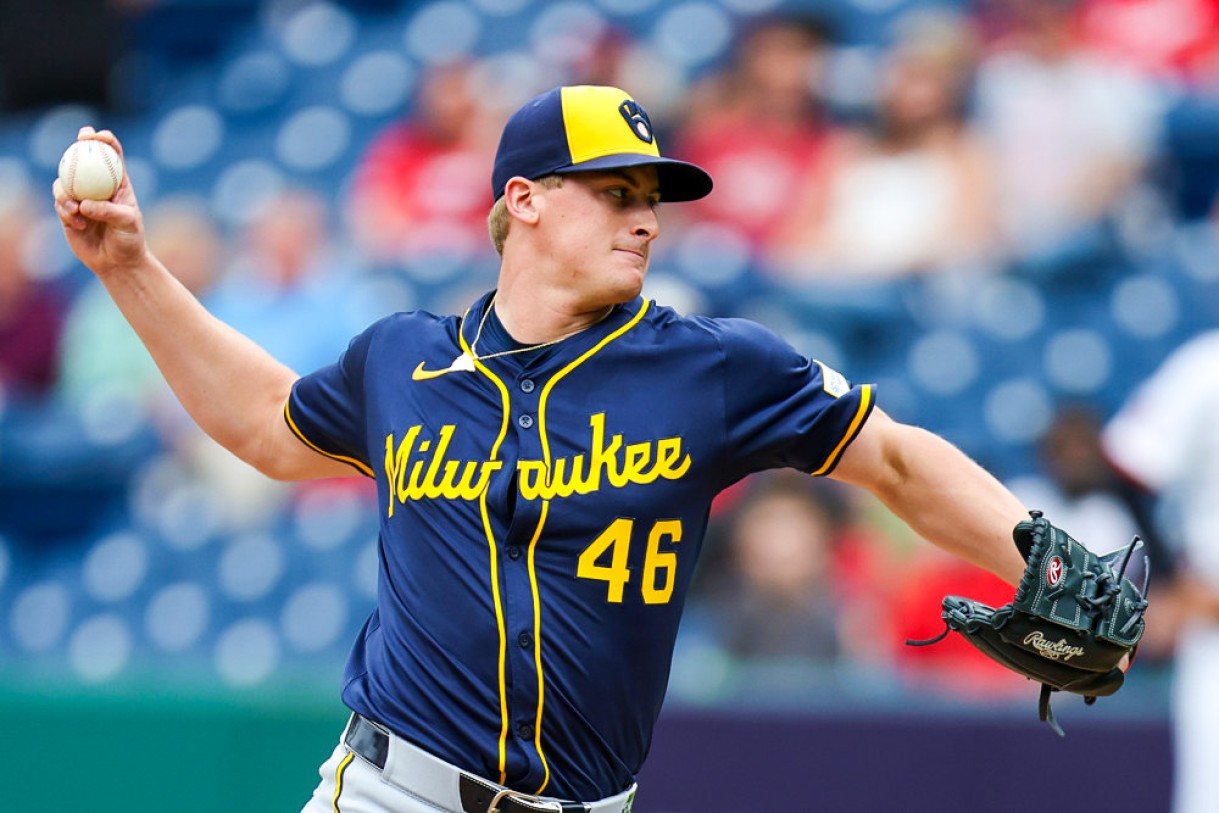
Corbin's starting pitcher fantasy baseball breakouts and sleepers from the NL, most of which have an ADP beyond pick 100. His favorite 2026 SP draft values.
We brought you the American League starting pitcher breakout candidates last time. So, we're following the previous article with five National League starting pitcher breakout candidates for 2026 fantasy baseball leagues. There seems to be more potential breakout arms coming from the American League than the National League. Regardless, we'll identify five starting pitchers that could break out in 2026, though the draft market already loves one of them.
When looking at breakout starting pitchers, we want players who haven't been pushed up the draft boards based on past success. That typically means these players are being drafted in the middle to late rounds past pick 200 or so, as an arbitrary cutoff. Bias aside, these starting pitchers have some intriguing metrics, team contexts, or potential opportunities to suggest a breakout season in 2026. In fantasy sports, breakouts occur with a mixture of luck and skills, though we could argue the latter matters more. We have five starting pitchers to target as breakout starting pitcher candidates in the National League.
Like my typical columns, we'll scour the ADP, examine the skills, and provide actionable data for why these starting pitchers could break out in 2026. These starting pitchers stood out when running different filters based on release points, pitch movement profiles, and other notable pitch-level metrics to identify early breakout candidates for the 2026 season.
Featured Promo: Save 50% off the regular price with discount code CHAMP, for a limited time. Exclusive access to our Team Sync platform, DFS cheat sheets, Lineup Optimizers, betting/prop picks, and exclusive content from Nick Mariano and Eric Cross! GAIN ACCESS NOW
Chase Burns, SP, Cincinnati Reds
NFBC ADP: 118 (Since January 1)
The market already loves Burns, and he won't fly under the radar. Burns spent one month on the injured list with an elbow injury in August. He returned in early September for five relief appearances, possibly an attempt to have him healthy for the 2026 season.
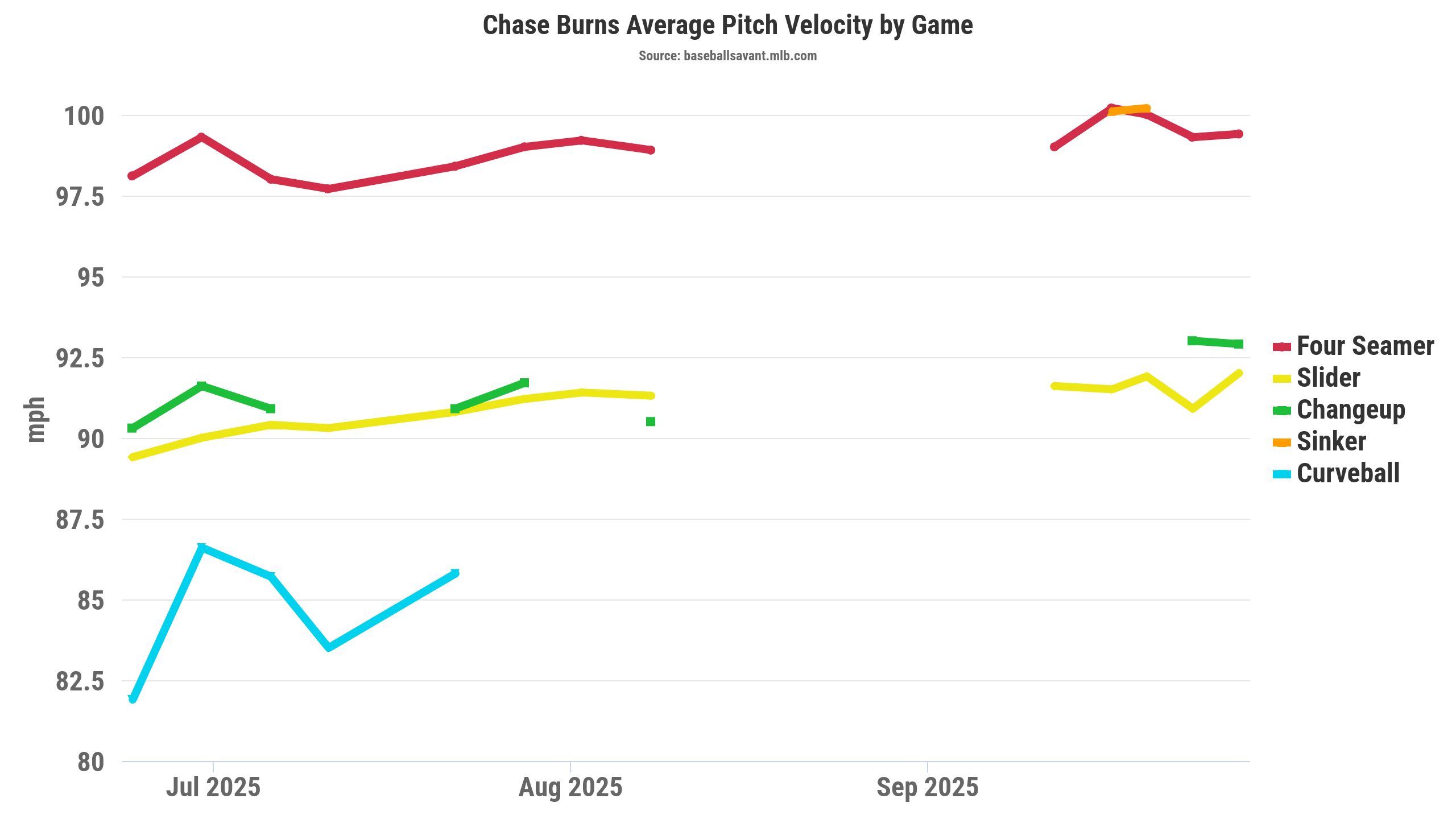
Burns's velocity was up to 99-100 mph on the four-seamer after being more around 97-98 mph as a starter, though we're dealing with a small sample. He was unlucky in the brief 43-inning sample, given his 3.15 expected ERA (xERA), mediocre control (34 percent ball rate), and an elite 16.3 percent swinging-strike rate.

Burns throws from a higher arm angle, over 53 degrees, with over 18 inches of induced vertical break (IVB). For comparison sake, Burns, Lucas Giolito, Dylan Cease, Taj Bradley, Ryne Nelson, Landon Knack, Janson Junk, Nick Pivetta, Justin Verlander, and Tobias Myers throw from a 53-degree arm angle or higher, with over 18 inches of IVB on their four-seamer.

We could argue Burns might be closer to Cease based on the velocity and whiff rate on the heater. The four-seamer doesn't generate tons of whiffs (11.8 percent swinging-strike rate), but he seems to locate it well higher in the zone. When Burns locates the four-seam in the upper third of the zone, it tends to lead to positive outcomes from a weak contact standpoint.
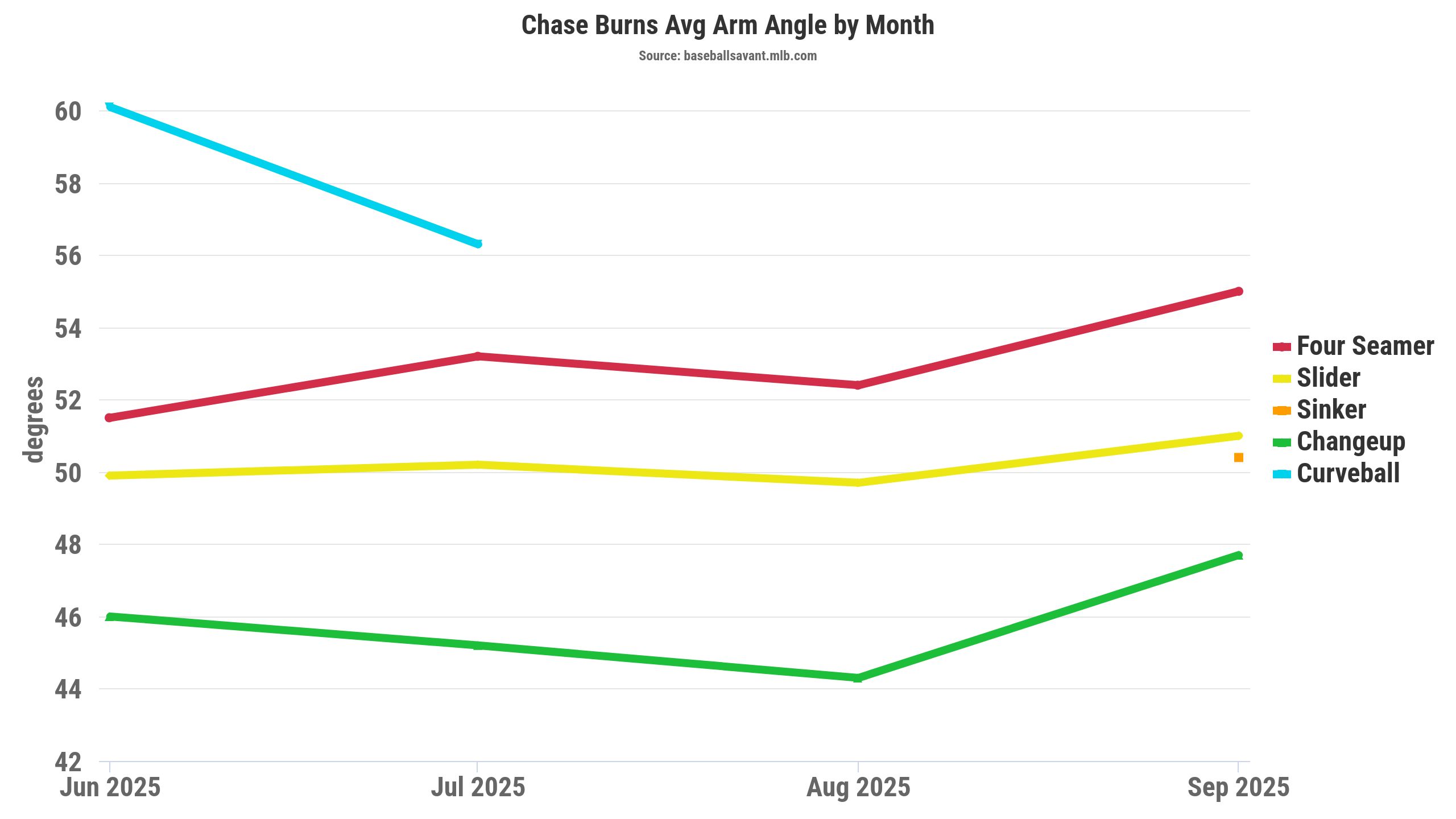
Interestingly, Burns's arm angle rose in the final months after returning from the elbow injury, though it could be a noisy small sample. Theoretically, those arm angle changes would impact his pitch movement profiles.
Burns throws a gyro-like slider that is deadly, eliciting a 23.4 percent swinging-strike rate. From a slider movement profile, Burns's slider compares closely to Tyler Glasnow, Ryan Helsley, and Max Meyer. Like the four-seamer, Burns seems to have pristine location for the slider, low and away from right-handed hitters, leading to a .259 wOBA (.230 xwOBA). He primarily throws the four-seamer (55 percent) and slider (44.2 percent) against righties.

Before suggesting that Burns is another version of Hunter Greene, we would argue that Burns has better control and command than Greene, based on the heatmaps. Among the Reds' starting pitchers, Burns (106) trailed Nick Martinez (108) in Location+, aligning with the idea of Burns having good command and pitch location.
Burns could take a step forward in 2026 by seeing the changeup evolve. In the small sample of under 50 changeups thrown, it generated nearly a 16 percent swinging-strike rate (15.9 percent). He throws a hard changeup (over 91 mph) with 14 inches of arm-side movement. That's similar to Greene's changeup before he added a splitter.
Though Burns hasn't thrown a splitter in the majors, adding one would make sense for the hard-throwing right-handed pitcher with an above-average four-seamer and slider.
It's rare to find starting pitchers with above-average stuff and command. That's what Burns possesses, with the potential to take a step forward with a newly gripped changeup or introducing a splitter in 2026.
MacKenzie Gore, SP, Texas Rangers*
NFBC ADP: 203 (Since January 1)
*UPDATE: Gore has been traded to the Texas Rangers (American League) in exchange for several high-end prospects, including infielder Gavin Fien and right-handed pitcher Alejandro Rosario. Theoretically, this is a significant upgrade for Gore from a team defense standpoint because the Rangers ranked first in defensive runs saved and sixth in outs above average. The Nationals' defense ranked 27th in defensive runs saved and 29th in outs above average. Those factors could help his WHIP.
Gore will hurt your WHIP, but there's a ton of whiffs available. He was one of eight starting pitchers with two pitches with a swinging-strike rate above 20 percent in 2025. Gore was the only starting pitcher with three pitches generating a swinging-strike rate at 20 percent or higher, including the cutter (20.3 percent), changeup (20.8 percent), and slider (21 percent).
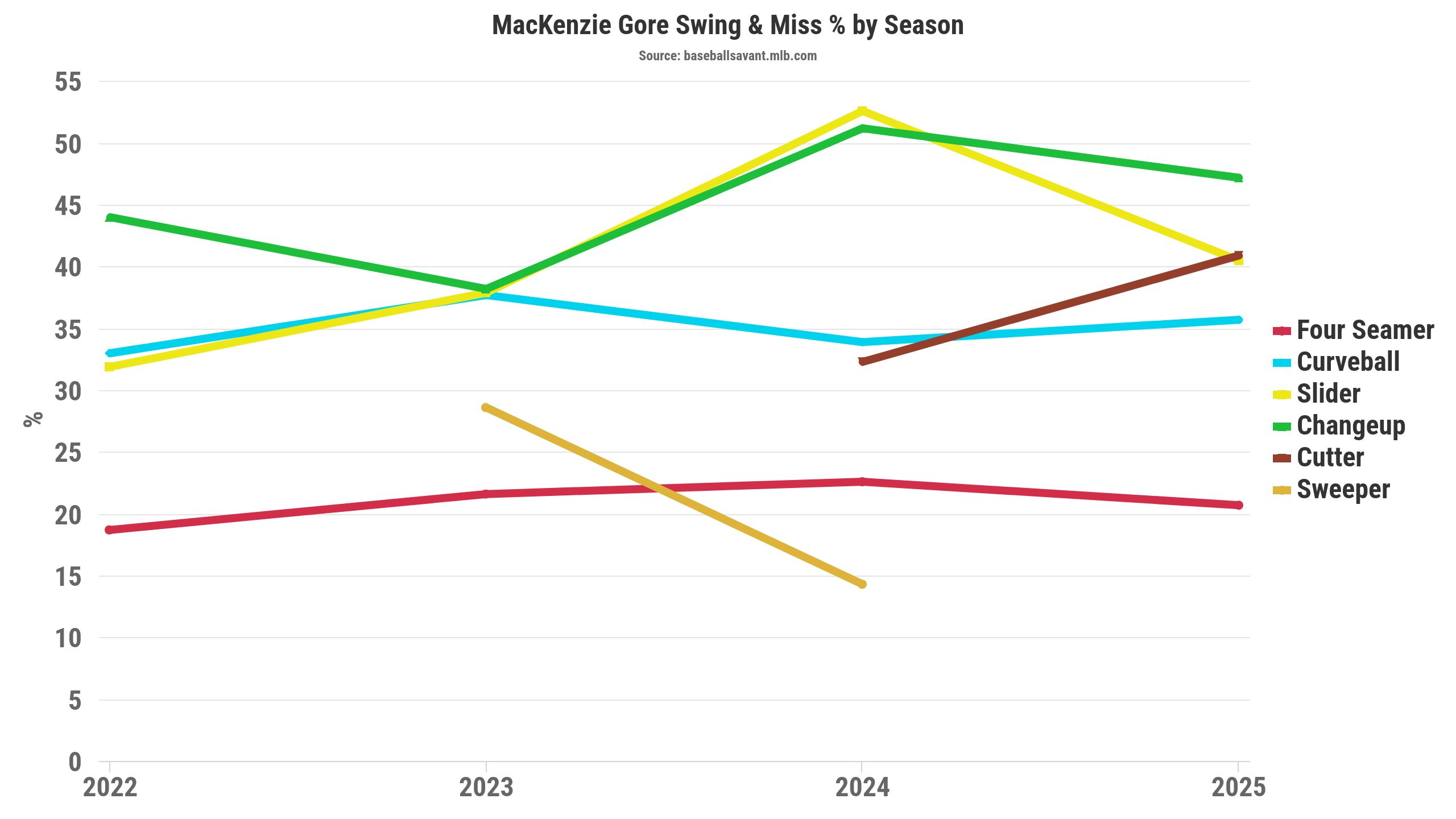
We're probably cheating with the cutter because he throws it only 4.7 percent of the time, mainly to right-handed hitters (six percent), though it's still a decent sample over over 125 cutters. He uses the cutter as a variation of the slider, thrown harder than the breaking pitch. Interestingly, Gore's cutter must have a low zone rate, since he locates it low and inside on the hands of right-handed hitters.

The data support the cutter heatmaps against right-handed hitters, with a 36.8 percent zone rate. It's an interesting wrinkle in Gore's arsenal, because before 2024, he threw the slider more often, though it could be a pitch classification issue. Over the past two seasons, Gore's cutter has elicited whiffs and induced weak contact.
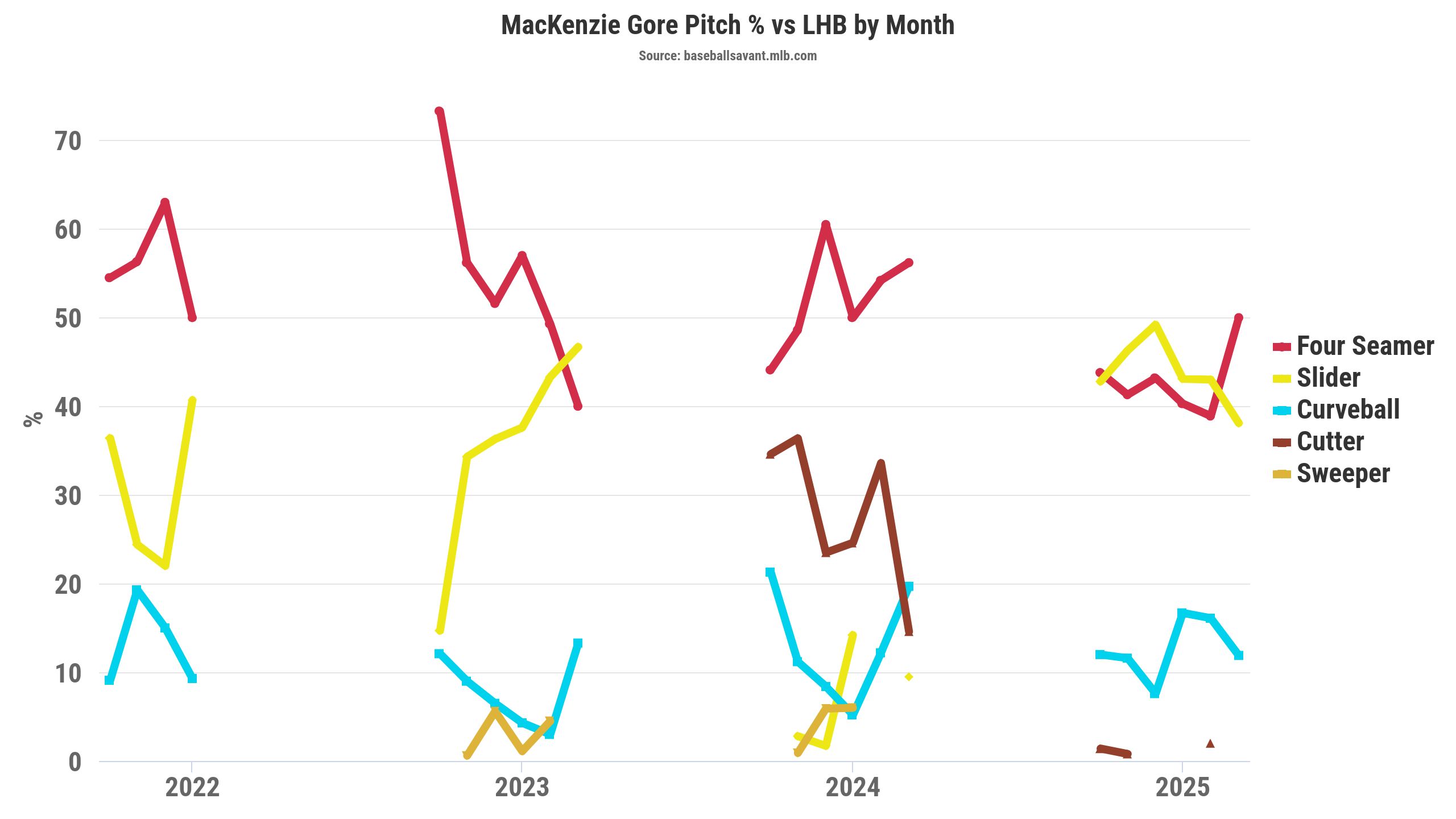
Gore's cutter usage against right-handed hitters coincided with a massive uptick in sliders against left-handed hitters. For context, Gore threw his slider 44.3 percent of the time (2025), compared to 4.9 percent in 2024 and 33.1 percent in 2023 against left-handed hitters. He lowered the four-seam usage against lefties in 2025 while reducing the cutters thrown, as seen below.
With Gore's pitch mix change, there has been a slight location change, as he throws more sliders to left-handed hitters. We've seen sliders thrown more up in the zone in 2025 than primarily down and away from left-handed hitters in 2024. The visual below shows Gore's slider heatmaps against lefties in 2024 and 2025.

Gore has been finding success with the slider when ahead in the count (.182 wOBA, .198 xwOBA) and behind (.192 wOBA, .191 xwOBA). It's a pitch that he can throw for strikes while eliciting weak contact and whiffs against lefties.
Gore possesses the arsenal depth to attack both sides of the plate, and 2026 should be the season for a breakout from the former top prospect.
Hurston Waldrep, SP, Atlanta Braves
NFBC ADP: 251 (Since January 1)
The Braves struggled to find starting pitcher innings, with Bryce Elder (156 1/3) leading the team in innings, with Chris Sale (125 2/3) and Spencer Strider (125 1/3) close behind. Grant Holmes missed over two months with elbow inflammation, ending his season. The other Spencer, Spencer Schwellenbach, had a fractured elbow and missed the final three months.
Waldrep entered the room in August with a quality start in four of his nine games started, with three or fewer runs in eight of them. He was fortunate, with a 3.56 xERA compared to an actual ERA of 2.88. Waldrep struggled with control (39 percent ball rate), yet teased us with an above-average swinging-strike. That's primarily headlined by the splitter, leading his arsenal with a 21 percent swinging-strike rate.

Waldrep's profile will be volatile, with poor control and a reliance on a splitter as his primary pitch. It's a unique splitter that comes from his higher arm angle (55.5 degrees), generating over 34 inches of downward movement. Waldrep's splitter is almost like a knuckleball, with the fifth-lowest spin rate, close to Logan Gilbert's splitter (min. 500 total pitches thrown). Gilbert's splitter is slower and drops nearly eight inches more than Waldrep's.
After primarily throwing four-seamers (40.5 percent) and splitters (47.3 percent) to left-handed hitters in 2024, Waldrep introduced a cutter (20.9 percent) and sinker (19.1 percent). Both Waldrep's cutter and sinker were new to his arsenal. Unfortunately, left-handed hitters destroyed the cutter (.457 wOBA, .425 xwOBA), partially because he often leaves it in the heart of the zone.

One adjustment for Waldrep's cutter in 2026 involves throwing it more toward the glove side of the plate, away from right-handers and toward the inside of the plate for left-handed hitters. Though cutters and sinkers don't typically raise excitement, let's talk about Waldrep's sinker. He locates it low and away from left-handed hitters, which can be an optimal approach.

Typically, we find breakout starting pitchers in this ADP range. However, more come from the American League, highlighted in our previous article. As we noted, Waldrep's profile includes volatility. The additional wildcard involves Waldrep's slider, which generates above-average downward movement, potentially leading to more whiffs than the 11.1 percent swinging strike rate.
Quinn Priester, SP, Milwaukee Brewers
NFBC ADP: 280 (Since January 1)
Priester popped up in my pitcher filters as someone who raised their arm angle to 46.9 degrees in 2025, after being at 42.6 degrees in 2024. It was a noteworthy arm angle chance because Priester shifted his horizontal release point significantly farther away from his midline by over six inches (6.7), compared to 2024. Priester's horizontal release point adjustment aligned with minor and major pitch movement profile changes.
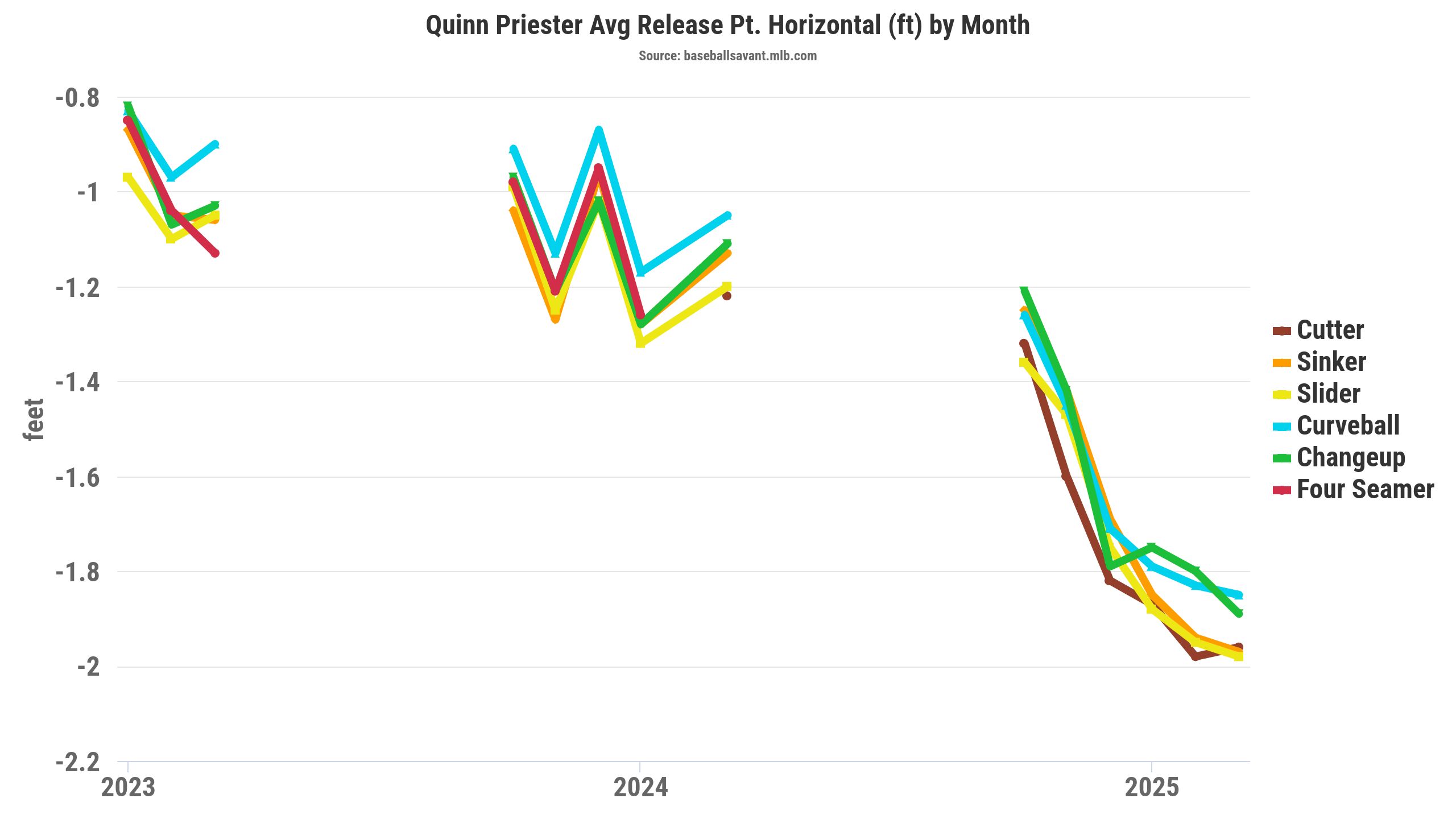
His slider added nearly four inches of downward movement while maintaining the glove-side sweep. Priester's slider movement profile change aligns with an improved swinging-strike rate at 17.1 percent (2025), compared to 12.4 percent (2024). Besides the slider, Priester's sinker lost over two inches of vertical movement, though it has been a weapon for groundballs and weak contact.
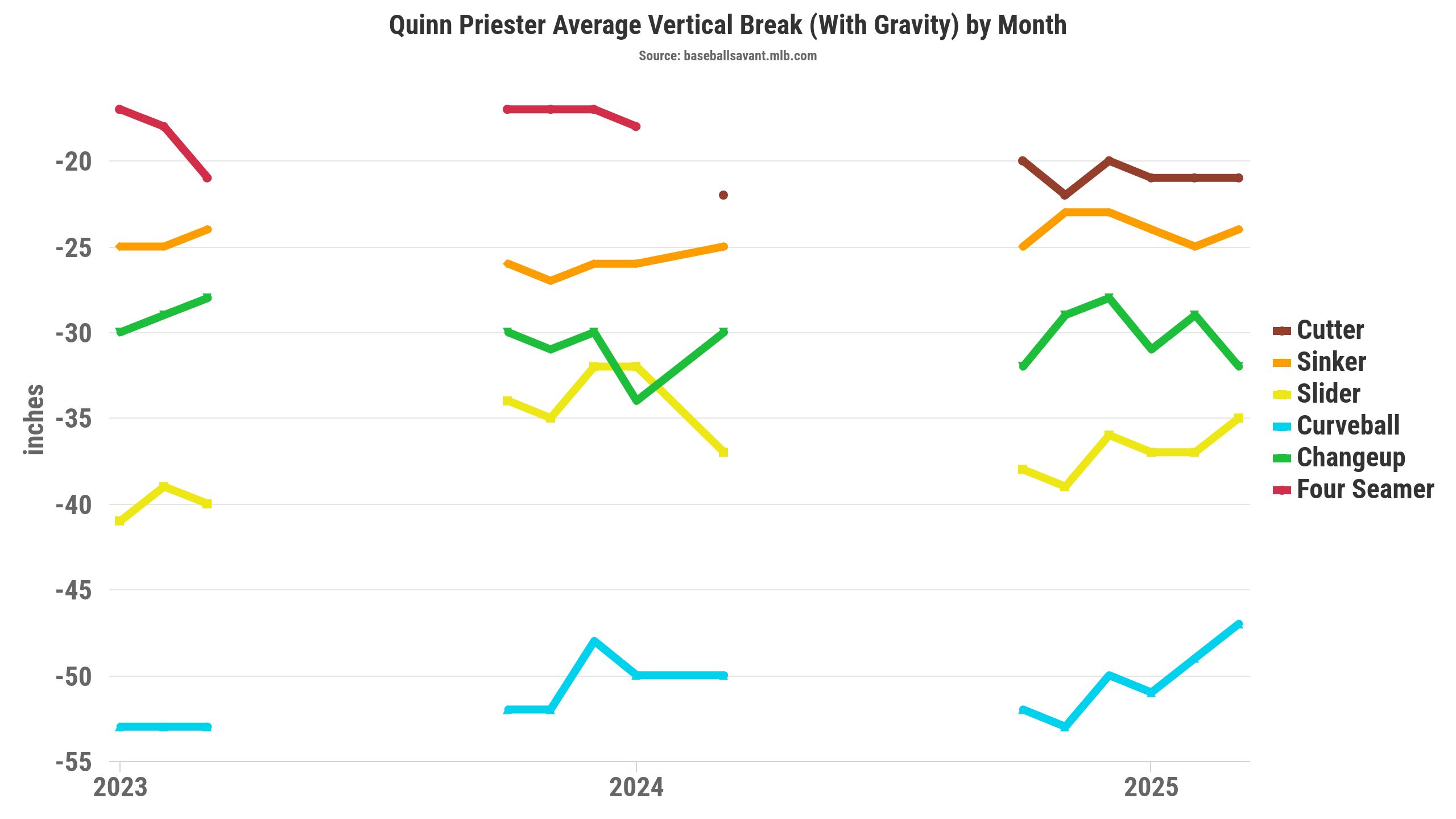
The sinker generates a 64.8 percent ground-ball rate while being slightly better against righties (.321 wOBA, .314 xwOBA) than lefties (.320 wOBA, .341 xwOBA). Interestingly, Priester's curveball led his arsenal with an 18.5 percent swinging-strike rate in 2025. Specifically, Priester's curveball has been deadly to left-handed hitters, allowing a .210 wOBA and a .230 xwOBA.

That's interesting because Priester's curveball has been successful as a backdoor pitch, eliciting a 16.9 percent swinging-strike rate against left-handed hitters. Though Priester's curveball results have been better against right-handed hitters (23 percent swinging-strike rate), we're dealing with a small sample, as his fourth-most used pitch. Regardless, Priester can locate breaking pitches effectively.
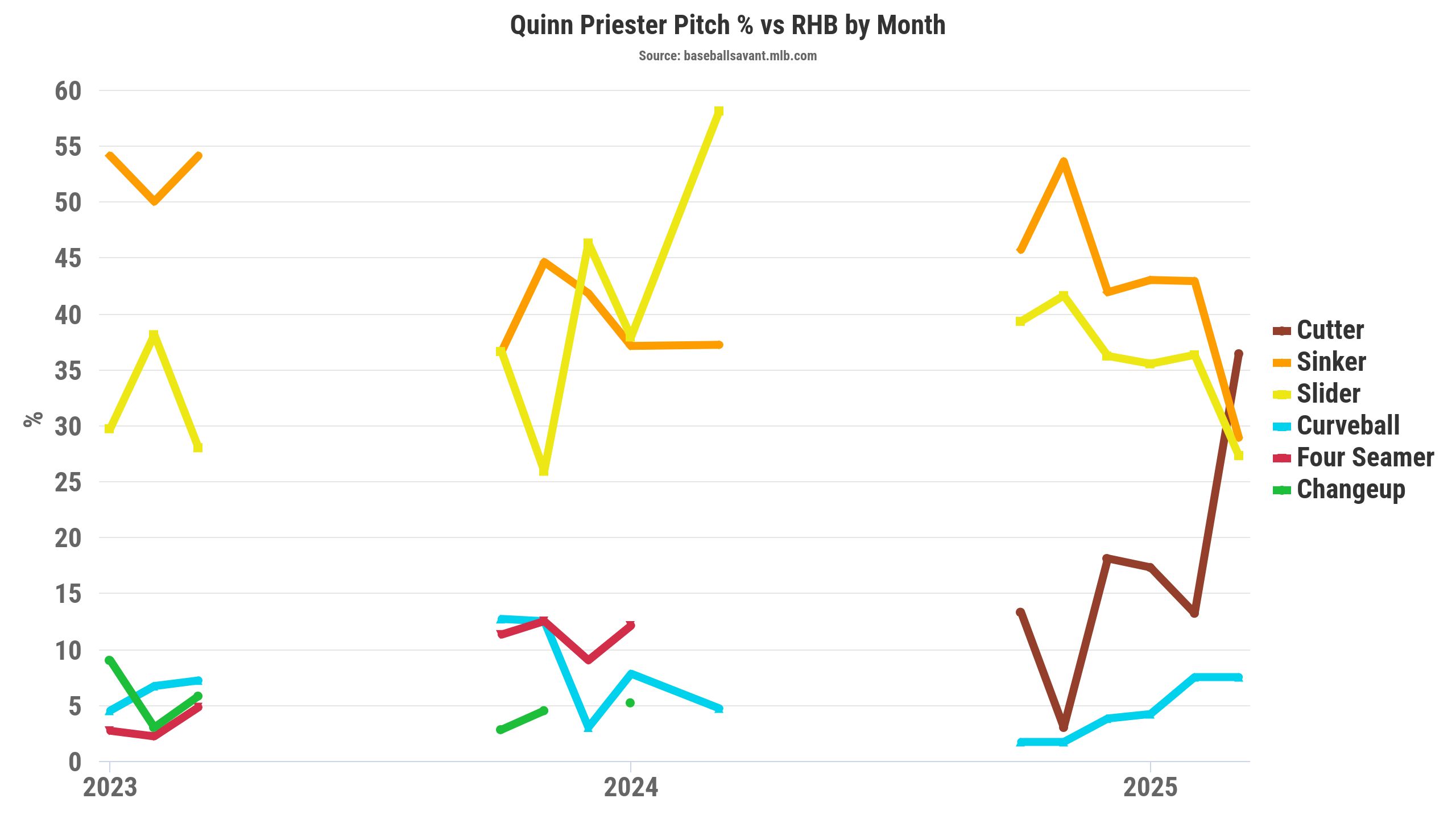
Since Priester lacks a dominant four-seamer, he added a cutter that he throws 24.1 percent of the time to left-handed hitters. Meanwhile, Priester throws the cutter 17.4 percent of the time, finding success (.241 wOBA, .234 xwOBA) against right-handed hitters. That's been a significant bump in cutter usage while locating the pitch away from righties.

Priester lacks the high-end strikeout upside, with a career 10.6 percent swinging-strike rate and a 36 percent ball rate. He may hurt your WHIP with the heavy groundball approach while struggling with control. We're buying into Priester's horizontal release point changes, breaking ball whiffs, and the new consistent cutter usage against right-handed hitters.
Cade Cavalli, SP, Washington Nationals
NFBC ADP: 356 (Since January 1)
Tommy John surgery caused Cavalli to miss over two seasons. Unsurprisingly, Cavalli struggled in 2025 after battling back from the injury. He had a slightly better xERA (3.96) than his actual ERA (4.25), yet his WHIP was awful (1.51 across 53 innings), mainly due to poor luck and mediocre control (33 percent ball rate) in 2025. It's worth noting that we're still dealing with small samples.
Cavalli's knuckle curve (17.5 percent) and changeup (20.6 percent) lead his arsenal from a swinging-strike rate standpoint. Though we prefer changeups with more downward movement, Cavalli's generates a nasty amount of arm-side fade (17.7 inches). Cavalli's changeup compares closely to Sandy Alcantara's based on velocity and its movement profile. Other similar changeup comparisons include Michael King and Edward Cabrera, seen below.

He was throwing from a higher arm angle (43.9 degrees), by over six degrees in 2025, primarily due to his horizontal release point shifting over five inches farther from his midline and adding nearly five inches (4.8) of extension. Interestingly, Cavalli's horizontal release point was almost six inches different (farther) at majors (28.3 inches) than what we saw in Triple-A (22.8 inches) in 2025.
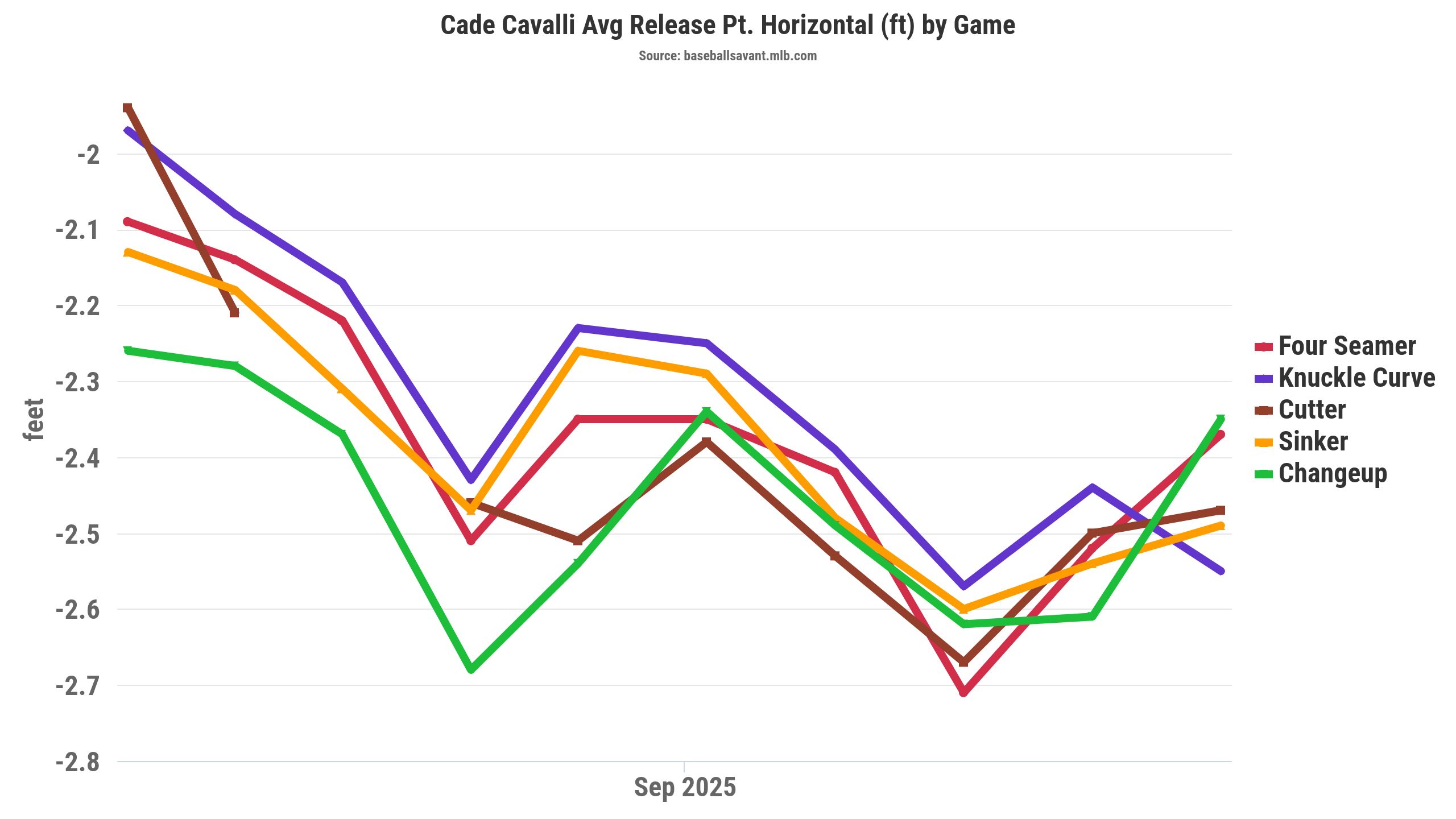
That led to a 1-2 mph increase in velocity on Cavalli's fastballs when he returned to the majors, compared to the minor-league rehab appearances at Triple-A in 2025. Cavalli's different arm angle could be due to finding an angle that's more comfortable and optimal post-shoulder surgery. That should help the four-seamer perform well as he locates in the upper third of the zone, leading to a flatter attack angle with the release point changes.

Cavalli's knuckle curve is a groundball machine, inducing a 68.4 percent groundball rate with above-average downward movement (50 inches). The additional extension helps to make his curveball a nasty offering that limits hard contact to left-handed hitters (.275 wOBA, .204 xwOBA) when he pounds it low in the zone. When Cavalli buries the knuckle curve low and below the zone, left-handed hitters chase and whiff.
Cavalli is a deep sleeper with above-average skills, considering we're leaning into the unknown for a former top prospect with a small sample. Take a shot on Cavalli because it's a medium-reward, low-risk investment with several notable changes (horizontal release, velocity, extension) and multiple offerings for whiffs in the profile.
More Fantasy Baseball Advice
Download Our Free News & Alerts Mobile App
Like what you see? Download our updated fantasy baseball app for iPhone and Android with 24x7 player news, injury alerts, sleepers, prospects & more. All free!