









Nick Mariano's potential fantasy baseball busts, avoids, overvalued early-round picks. 2026 pitchers and hitters with inflated ADPs to fade in fantasy drafts.
This premium article is part of our 2026 Fantasy Baseball Draft Kit and a free sample of the expert analysis loaded up in RotoBaller's Draft Kit. Enjoy this premium article for free for a limited time. All other Premium Tools can be accessed on the premium dashboard.
Everyone loves to celebrate the good times and mining for the next best thing, but fantasy baseball can't all be sunshine and rainbows. Nothing hits like a late sleeper becoming your MVP, but how much can that help if you've stepped on some land mines to begin your draft? Let's break out some good old-fashioned pessimism to sprinkle on all of the excitement.
In order to evaluate overvalued risks, we will dig through consensus Average Draft Position (ADP) from Yahoo, RTS, Fantrax, and NFBC. Please note that "overvalued" means the price is bad, not that they are necessarily bad players who will fall flat on their faces. You may still find a decent draft slot if they slide, but I'm very likely out on the following names.
Be sure to check all of our fantasy baseball draft tools and resources:- Fantasy baseball draft kit
- Fantasy baseball rankings
- Team Sync platform and Draft Assistant
- Fantasy baseball mock draft simulator
- Fantasy baseball draft cheat sheets
- Fantasy baseball closer depth charts
- Fantasy baseball prospects
Early-Round Overvalued Players - Hitters
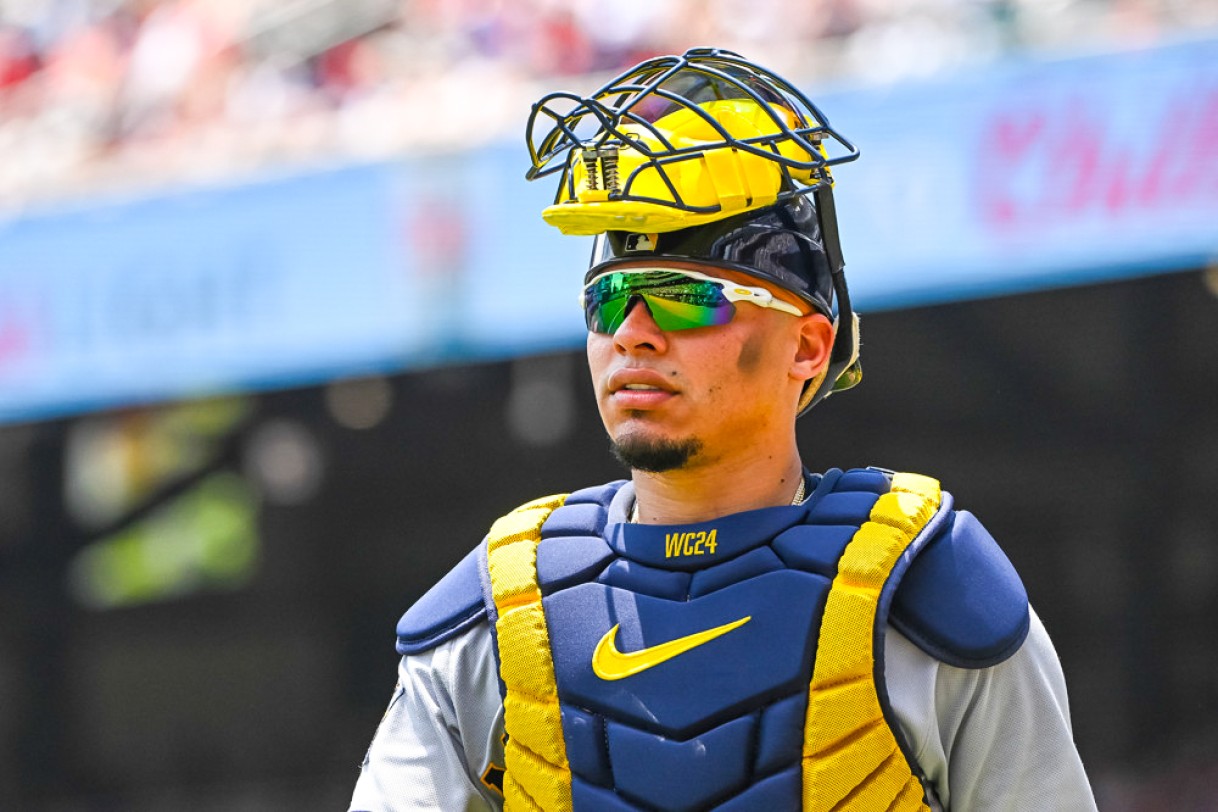
Catcher: William Contreras (55)
Milwaukee’s backstop raised the bar in 2024 with 23 home runs, 191 runs+RBI, nine steals, and a .281/.365/.466 slash line over 155 games. Despite playing in 150 contests in ‘25, his marks across all five major fantasy categories regressed toward his 2023 (17 HR, 164 R+RBI, 6 SB), except that his average slipped.
For the first time in a while, his average fell to meet his expected stats. The .260 average in ‘25 had a .253 xBA behind it, after .281 (.265 xBA) in ‘24, .289 (.251) in ‘23, and .278 (.240) in ‘22. Despite that, his xSLG was still typically robust, but last year was the first time it failed to crack .400 (.398) as his barrel rate sank from 10% to 6.4%.
I’ll acknowledge that I’m uncertain what to make of Contreras’ fractured left finger, which finally got addressed after being detected in May. However, they went on to report the injury actually dated back to his amazing 2024 season. And Contreras’ best month was August.
If you think he’s worth a look as the best fantasy catcher who isn’t named Cal Raleigh, then I won’t fight you. But this strikes me as a bad time to pay for the first player in a rather wide tier at the position. ATC projections have Raleigh boasting an .820 OPS; meanwhile, Contreras (.783) is one of seven projected between .778 and .813.
First Base: Bryce Harper (36)
Harper’s right wrist bothered him throughout 2025 and eventually required an IL stint. I’ll concede that his power returned in the second half after the break, but the 33-year-old hasn’t topped 145 games played since 2019. A similar report that he was "grinding through" elbow/wrist irritation surfaced in August 2024 as well.
I’m not paying a premium for this ledger on the wrong side of the aging curve.
He outkicked his batted-ball metrics in 2025, such as hitting seven HRs with a .316 average against offspeed pitches, despite a .265 xBA and a 105-point gap between the slugging percentage and xSLG. He was still vulnerable to breaking pitches, which opponents leaned on, throwing them to him at a 41% clip after a 33% rate in the prior two seasons.
Don’t worry, the guy still punished fastballs, but it’s not great. Per BaseballSavant, his line-drive rate also fell below 27% (25.6%) for the first time since 2020, which led to his batting average reaching .261 after four straight years of .285 or better. Perhaps this is all wrapped up in the injury, perhaps not. And trusting the injury to go away is not so simple.
Second Base: Brice Turang (45)
Remember when Turang barely hit as a rookie in 2023? While he didn’t reach the 50-steal heights seen in 2024 either, last season saw a strong balance forged with 18 HRs, 24 SBs, and a .794 OPS after .665 in ‘24. With only 13 HRs in his previous 192 games, was the surge earned?
Well, he did hit the ball harder, but there was little room for it to fall. His 8% barrel rate is fine. The 47% hard-hit rate was solid, though it only led to his xSLG rising by 83 points. The xBA was .262, up one point from the year before.
What concerns me going forward is that his approach didn’t produce more pulled fly balls. In fact, his Pull AIR rate slightly dropped, from 7.6% to 7% flat. Most of his homers went to center or right-center field, with none going down the line. In fact, he bats lefty, but continues to hit the most balls up the middle (~39%), then the opposite way (~34%), and then pulled (~27%).
THE BAT X projects Turang for only 12 HRs and a .255 average in 2026. Perhaps he establishes himself as a guy who can pop 15-20 HRs without the most power-efficient approach, and we know the elite speed is there, but this is a heavy price tag for one year without breakout-caliber metrics.
DC ADP/Aggregate Projections Comp Tweet
Brice Turang:
77 R, 14 HR, 62 RBI, 29 SB, .257 AVG, 65.63 ADP
68 R, 13 HR, 60 RBI, 23 SB, .255 AVG, 181.74 ADP
ADP includes 19 DCs from 1/18 - 2/8
— Ben Tidd (@BreakingBen_T) February 9, 2026
Third Base: Austin Riley (65)
Riley was an ironman between 2021 and 2023, missing only eight games in those three seasons. But now he’s missed 52 and 60 games in the last two years, respectively. He’s shown depressed power and lesser plate discipline as well.
Last year was torpedoed by an abdominal strain that he first felt on July 11, and then worsened on August 3 to the point of requiring season-ending surgery. Before reaching that time, he still saw his isolated power metric (ISO) drop from .184 in April to .159 in May and then to .113 in June.
The power recovered in July (.247), but it came at the expense of more liners turning into flies. We got pop (4 HR, 6 2B), but the .233 average was his worst month of the year (not surprising as the injury hit). With minimal steals, we need Riley to provide a strong batting average to stand out from later picks, such as Eugenio Suarez.
Shortstop: Geraldo Perdomo (62)
Perdomo had been labeled a defense-first guy over his first four years in the league, doing well to make pesky contact in competitive at-bats, but 14 career HRs in 401 games didn’t move any needles. His three fuller seasons were dipped in an icy blue across the Statcast profile.

Naturally, last year’s breakout came with 20 round-trippers, 27 steals, and 198 R+RBI with a .290/.389/.462 slash line over 720 PAs. The offensive explosion didn’t come with a sacrifice of his discipline either, as he actually drew far more walks (95) than strikeouts (83).
I recognize that Perdomo is great at muscling up when he squares up the ball, and he clearly has grown a talent for maximizing his average sprint speed. Being selective is great, but relying on the 90th percentile, or even the 95th percentile, of his batted balls to pay off is a thin line.

Steamer appears the most bullish on Perdomo, giving him a .270 average and .365 OBP, while ATC calls for a .262 AVG and .356 OBP. If his OBP backslides by 25-30 points, then that’s fewer SB opportunities and runs on the table. Projections cannot capture a full breakout after such a long period of hitting mediocrity, but the risk is too much.
Outfield: Pete Crow-Armstrong (30), Riley Greene (58)
If all you had was a baseball card with PCA’s advanced stats and metrics on it, you’d never guess that the defensive wizard had 31 HRs and a .768 OPS. I’d show you his second-half numbers (.216 AVG, .634 OPS, 6 HRs) and you’d go, “Yeah, that makes sense.”
But thanks to cognitive biases, that first half, where he destroyed 25 baseballs with 27 steals alongside a healthy .265 average, is anchored in our mind. For some, recency bias will overturn that, but many are hooked. I’m not here to say that one or the other is the “real” Crow-Armstrong. As always, the truth is surely more nuanced and lies in the middle.
Unless the middle has a southpaw pitching for their team, then it’s second-half PCA. He flailed to a .188 average, .594 OPS, and a 29% K rate against portsiders. The line-drive rate was practically halved compared to that against righties.
The glove will give him a lengthy runway, but he’s a fly-ball-heavy bat who made his buck on an elite 30% Pull AIR rate. It’s a neat trick, but the whiffs, worsened walk, and squared-up rate, and bottom-of-the-barrel chase rate all went down in the meantime. The wheels won’t get as many chances to run if he’s either trotting on a homer or back to the dugout.
As for Greene, he sold out for power (36 HRs) with a 35-point drop in OBP and a four-percentage-point rise in Ks. The 25-year-old saw a .284 average in the first half drop to .218 after the ASG, with over one-quarter of the liners getting laced before the break turning into easier grounders. If you’re seeking a high-power average liability, then just wait a round or five.
Riley Greene: “Nobody cares about my 200+ strikeouts.”
His boss, Scott Harris: “I care immensely about those strikeouts 😬.” #RepDetroit pic.twitter.com/qe3vJgPDi0
— Marc Ryan (@MarcRyanOnAir) October 13, 2025
Early-Round Overvalued Players - Pitchers
Starting Pitcher #1: Yoshinobu Yamamoto (25, SP4)
I’ll get ahead of this quickly: Yamamoto is a “bust” in part due to being the first of the non-elite trio to come off the board. This reflects the market jumping the gun on wanting to lock in an SP1, which I get. But it’s frightening to sit with the notion that they could manage his workload after such a long 2025 campaign, as well as face the injury risk.
After throwing 112 2/3 total innings in 2024, his 173 2/3 IP during the regular season were great. However, it was the 37 1/3 IP playoff innings of peak effort that launched his legend. This rightfully earned him the World Series MVP Award, but it also meant giving his most only to have one fewer month than much of the field to recover before doing it all over again.
We’re reckoning with reports of Blake Snell coming along slowly, but Yamamoto seems okay. And maybe he will be! But I’m not a fan of being the first to jump into the “Tier 2” of pitchers with someone who experienced such a sharp increase in work. If that makes me a fool, then so be it.
Starting Pitcher #2: Hunter Brown (34, SP6)
Brown showed off more whiffs and managed to skim a little off his walk rate as well, but it seems that his surface stats are doing more work to raise the price than his sabermetrics can back up. His 2.43 ERA and 1.03 WHIP were outstanding, but his xERA only fell by 15 points despite the actual ERA tumbling by nearly a full run.
It’s also easy to forget that he went from posting a ridiculous 30-34% strikeout rate in each of the first three months of the season, enjoying a top-10 K-BB rate in April, May, and June. But then we got a 27% K rate in July, 22% in August, and 25% in September. Now the K-BB clip was near the middle of the pack.
His velocity tailed off by about 1-2 mph on most pitches by season’s end after the torrid start. Perhaps the 27-year-old is just getting used to things over a full season, but it’s difficult to pay up here knowing that the second half could be just as real as the first.
I don’t often encounter pitchers who have their first-strike rate fall by almost five percentage points, yet enjoy a dip in walks. Mix in that his bullpen is unlikely to be as strong this year (more on that in a moment!), and Brown becomes a scary proposition as your SP1.
Relief Pitcher: Josh Hader (41, RP6)
This may start to tank with recent news that has solidified the fears we have about the star closer. Hader is behind his usual spring progress due to a biceps problem, though he believes it is not tied to his shoulder woes from last year. Color me skeptical.
Josh Hader said he’s a “few weeks behind,” but did not want to speculate about Opening Day. Hader said he thinks the biceps issue is independent of the shoulder capsule sprain that sidelined him last year. Hader said he felt his bicep grab while throwing a changeup in catch play
— Chandler Rome (@Chandler_Rome) February 11, 2026
It’ll be interesting to see if middling progress leads them to trade for a closer or high-leverage arm, because the free agent crop is down to journeymen lefties and injury question marks (Shelby Miller, Evan Phillips). Bryan Abreu would be the beneficiary if Hader misses time.
Much was made about Hader giving up eight home runs, especially since he only surrendered 12 total earned runs. But the fade in control as his August injury approached was clear, tallying nine walks in 15 IP from July 1 on. Compare that to only seven walks in 37 2/3 IP over the first three months.
Some of that may have been going from a steady pitch mix with 55% sinkers, 40% sliders, and the occasional changeup to a 53/44/3 mix in August, and 51% sliders in the four August frames. Was the slider more comfortable to throw? His average release points started to slip, but nothing major.
Regardless, if his control suffers (he also gave up three of the eight homers in that 15 IP sample) at less than 100% with this particular issue, then we’re concerned. And now that we have this poor rehab timeline bleeding into 2026 prep, that DEFCON-level concern only rises. He turns 32 in April, and this came after rising to 71 innings in 2024, his highest workload since 2019. Be careful!
(Also, Carlos Estevez would be my “1B” bust RP. He walks a tightrope with contact mitigation, and Kauffman Stadium’s new dimensions could see that 2.45 ERA look more like the 4.95 xFIP that he just recorded. If the Hader choice feels too obvious now, then here you are.)
More Fantasy Baseball Advice
Download Our Free News & Alerts Mobile App
Like what you see? Download our updated fantasy baseball app for iPhone and Android with 24x7 player news, injury alerts, sleepers, prospects & more. All free!
RADIO