



 RADIO
RADIO










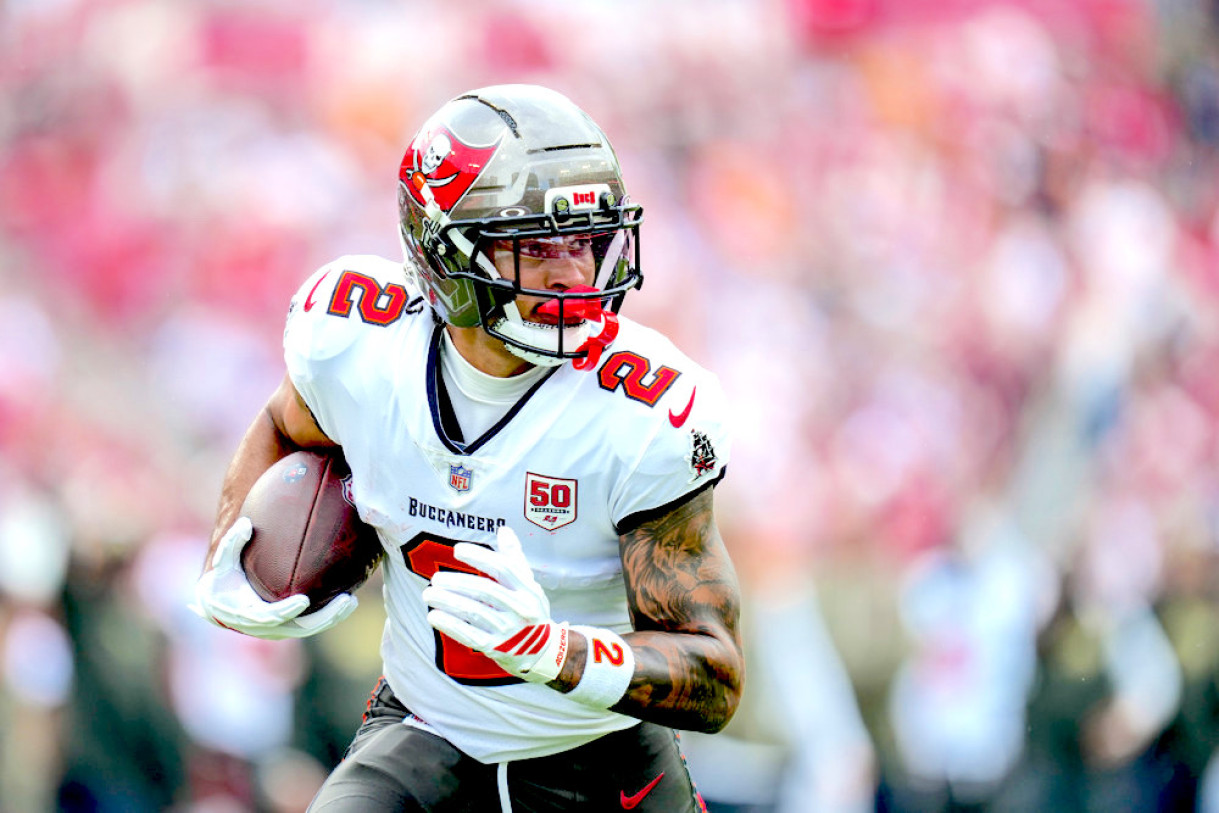
Matt's dynasty fantasy football outlooks and 2nd-year player rankings for 2026. He analyzes last year's NFL rookies and re-ranks them for fantasy football dynasty leagues.
What better way to prepare for the future than by learning from our past?
Let’s take a look at how the 2025 rookie class stacks up as they enter year two.
But first, for a deeper dive into dynasty strategy, rankings, and trade tactics, you can check out our complete Dynasty Fantasy Football Guide.
Bookmark our updated and revamped fantasy football rankings portal for all league formats!PPR rankings | Half-PPR rankings | Standard rankings | Rookie rankings | Superflex rankings | Dynasty rankings | Who To Start? | Injuries | Matchup Ratings | Strength of Schedule
Top 12 Second-Year Players
12. TreVeyon Henderson, RB, New England Patriots
If it wasn’t for Rhamondre Stevenson's heavy involvement in the offense this season and projected continued involvement next season, TreVeyon Henderson would have likely ranked much higher heading into 2026. In fact, if I were a quarterback-needy team, I might slide 2025 Pepsi Zero NFL Rookie of the Year Tyler Shough into this spot.
There will come a point eventually, in which Henderson supplants Stevenson on the Patriots depth chart, and fantasy managers can look forward to the type of production we saw during a seven-game stretch that saw the rookie churn out 733 total yards on 118 touches (6.2 yards per touch), which also included a 150 total yard, two-touchdown performance against Tampa Bay.
For Henderson, the talent is there; we have seen the same efficiency and explosiveness on Sundays as we saw during his college tenure. It’s just that his path to more touches is currently capped by his floor and his inability to move up this list.
11. Harold Fannin Jr., TE, Cleveland Browns
Harold Fannin Jr. wasted little time getting acquainted with the pro game. In his first game of the season, the Browns tight end caught seven of nine targets against the Bengals for 63 yards, foreshadowing what was yet to come. When all was said and done, Fannin’s 731 receiving yards were the eighth-most among tight ends, as were his 72 receptions.
What makes Fannin’s fantasy prospects more enticing is the fact that he produced while sharing targets with David Njoku and did so in a rather stagnant Browns offense. Njoku is set to be a free agent, and with Fannin’s emergence, the Browns could seriously consider letting Njoku walk and add to their offense in other areas.
In year one, Fannin averaged 1.68 yards per route run and 11.7 fantasy points per contest. With less competition for targets and morestability at the quarterback position, Fannin could have an even bigger second season, one that could easily rival the college production that saw him average 8.1 yards after the catch per reception and a career 0.288 missed tackles forced per reception.
SHEDEUR. FANNIN JR. TOUCHDOWN.
PITvsCLE on CBS/Paramount+https://t.co/HkKw7uXVnt pic.twitter.com/8GgifjPjEc
— NFL (@NFL) December 28, 2025
Get the ball in Fannin’s hands, and good things will happen. Shedeur Sanders started to figure that out towards the end of the 2025 campaign.
10. Quinshon Judkins, RB, Cleveland Browns
Another key component in the Cleveland Browns’ offense moving forward is running back Quinshon Judkins, who ran for 827 yards and seven touchdowns in just 14 contests and projects as a 1000-yard back for years to come.
Should the Browns invest in their offensive line this offseason, then it is reasonable to believe that Judkins could be a fixture in the top 12 for fantasy at the running back position. Judkins has one of the worst yards before contact per attempt metrics in football as a rookie, averaging 0.4 yards per attempt (11.1%). Conversely, he would average 3.2 yards after contact per attempt (88.9%), which was at the top of the running back peaking order.
If a back creates positive yardage consistently despite being put in negative situations, the upside with improved line play is a game-changer. New offensive coordinator Todd Monken will address things up front for Judkins, as he has historically leaned heavily on the run game. Look at what he has done with Derrick Henry the last couple of seasons in Baltimore. Judkins isn’t the same running back as Henry is, at least not yet.
9. Tyler Warren, TE, Indianapolis Colts
Tyler Warren finished 2025 as the TE4 in fantasy with eight of his 17 contests resulting in double-digit fantasy production. Warren likely would have been more productive if Daniel Jones’s season hadn’t been cut short. Statistically speaking, Warren's 72 receptions were the seventh-most a season ago, while his 817 receiving yards ranked fifth among tight ends.
Looking at Warren’s usage, you find a tight end who saw six-plus targets in a game in over half of the contests he played, not to mention lining up in the backfield and garnering a few additional touches as a runner.
The one area in which Warren wasn’t near the top of the leader board in terms of tight end production was his four touchdown receptions, ranking 19th. Already a top-5 option at the position, any increase in end zone targets could lend itself to Warren finishing as the overall TE1 in 2026.
8. Cam Skattebo, RB, New York Giants
John Harbaugh is going to love Cam Skattebo. Before suffering a season-ending injury, the Giants running back had rushed for 410 yards on 101 carries (4.1 yards per carry) while also factoring into the passing game with 207 receiving yards on 24 receptions (8.6 yards per reception) over eight contests.
Grown man run into the end zone 😤
📺: FOX pic.twitter.com/7FxoAolVHB
— New York Giants (@Giants) September 14, 2025
When Skattebo returns to the Giants' lineup, there’s no reason to believe that he isn’t in line for a 1000-yard rushing season and capable of adding 35 receptions and 300-400 receiving yards. Skattebo's PPR upside is somewhat deceptive given the physical nature of his running style.
Skattebo would likely come in a little higher if not for the nature of his rushing style and the addition of Matt Nagy as the Giants' offensive coordinator. The last time Nagy called plays, his teams ran man concepts a league-low 5% of the time, whereas Skattebo ranked in the 92nd percentile in man/gap concepts.
7. Colston Loveland, TE, Chicago Bears
Through the first six weeks of Colston Loveland's NFL career, there were some fantasy experts who were speculating that Loveland could be a fantasy bust. Over that period, Loveland was targeted 18 times, hauling in 11 of those targets for 116 receiving yards (19.3 per game).
Something changed from November to the Bears' playoff exit. Over the final 12 contests, Loveland was targeted on 89 occasions (7.4 per game), hauling in 59 passes for 790 yards (65.8 per game), with all six of his touchdown receptions occurring in that timeframe.
Caleb Williams clearly trusts the Michigan product, as Loveland saw 10 or more targets in each of the Bears' final four gams, playoffs included, and produced 90 or more receiving yards in three of the four contests. Considering that DJ Moore’s status moving forward is uncertain at best, and Rome Odunze hasn’t been able to remain healthy, the volume that Loveland offers fantasy managers moving forward offers a significant positional advantage.
6. Jaxson Dart, QB, New York Giants
New York has found their franchise quarterback, well, that is, as long as he can remain healthy. Much like Skattebo, Dart’s style has made him a fan favorite in New York, but it also raises some red flags concerning his durability and availability moving forward.
In 12 games in which Dart attempted a pass, he would go on to throw for 2,272 yards, completing 63.7% of his passing attempts and finishing with a 3:1 touchdown to interception ratio. As promising as that is in itself, Dart also possesses the Konami code at the quarterback position, averaging 5.7 rushing yards per attempt on his way to 487 rushing yards in his rookie season.
In Matt Nagy’s system, expect Dart to operate out of the shotgun in an offense that will heavily feature run-pass options, looking to capitalize on Dart’s strengths as a passer and a runner. It really shouldn’t surprise anyone if Dart finishes wth 3,500 yards passing and 750 rushing yards next season under Nagy’s mentorship.
5. Luther Burden III, WR, Chicago Bears
Luther Burden’s journey has been somewhat intriguing. After breaking out as a Sophomore in 2023, when the then Missouri Tigers posted 86 receptions, nine touchdowns, and 1,212 receiving yards, many had the wideout pegged as the top receiver whenever he would declare. The following season, Burden disappointed, producing a modest 676 receiving yards on 61 receptions, which led to a drop in draft stock.
Luckily, for Chicago, they saw the talent and the potential and took full advantage of the draft-day discount. After flashing in a September contest against the Dallas Cowboys, where Burden amassed 101 receiving yards on three receptions, things tapered off until he reemerged as an option in the passing game due to injuries to Bears receivers. From November through the end of the Bears' playoff run, Burden caught 40 passes, resulting in a promising 547 receiving yards.
CALEB TO LUTHER BURDEN III.
CHIvsSF on NBC
Stream on @NFLPlus + Peacock pic.twitter.com/6u5uwTe724— NFL (@NFL) December 29, 2025
Burden is paired with a young quarterback in Caleb Williams, who made significant strides from his rookie season to his second year. Thanks to Burden's skill set and Williams’s ability to make things happen, Burden averaged 2.82 yards per route run, the most for a rookie wide receiver in the modern era.
4. Omarion Hampton, RB, Los Angeles Chargers
Looking for a reason to get excited about Omarion Hampton? We know Jim Harbaugh loves to run the ball, but what’s really exciting is that Mike McDaniel will be the one tasked with getting the second-year back going.
For fantasy, in the three seasons McDanel was at the helm in Miami, De'Von Achane finished as the fantasy RB5, RB6, and RB2. Assuming McDaniel gives Hampton a healthy workload, there is a possibility that Hampton could be as productive as Achane had been.
In just seven games, Hampton totalled 431 rushing yards, 151 receiving yards, and averaged 4.6 yards per carry. In games in which Hampton had a snap rate of 65% or greater, the former Tar Heel would go on to average 15 rushing attempts per game, be targeted 5.5 times per contest, and average 20.1 fantasy points.
3. Emeka Egbuka, WR, Tampa Bay Buccaneers
Talk about a tale of two seasons. In 2025, Emeka Egbuka captured everyone in the fantasy world's attention thanks to five touchdowns and 677 receiving yards through the first nine weeks of the NFL season. Egbuka took full advantage of the vacated targets left behind by Mike Evans, Chris Godwin Jr., and Jalen McMillan, who had all missed time early on. With reinforcements returning, Egbuka was limited to 261 receiving yards and a single touchdown over the final eight contests.
EMEKA EGBUKA HAS DONE IT AGAIN!
The rookie's 5th TD of the season puts the @Buccaneers ahead
TBvsSEA on CBS/Paramount+https://t.co/HkKw7uXVnt pic.twitter.com/d5BwfXXNQi
— NFL (@NFL) October 5, 2025
Before the injuries and the return of those previously mentioned receivers, Egbuka had been averaging 18 fantasy points per game while accounting for 7.6 targets per game and an air yards share over 36%.
With Evans' career starting to wind down and Godwin coming on and off the injured reserve, there is a very good possibility that over the next season or so, Egbuka takes over as the Alpha in the Buccaneers' passing game. New offensive coordinator Zac Robinson has been gushing over Egbuka’s potential, especially when referencing his ability to run after the catch and his versatility in his route running.
2. Tetairoa McMillan, WR, Carolina Panthers
As a rookie, 70 receptions, 1.014 receiving yards, seven touchdowns, and 12.4 fantasy points per game is a pretty good start to your professional career. More impressive is that Tetairoa McMillan was able to come in and, once he was acclimated to the offense, seemed to have solidified Bryce Young as a viable quarterback.
McMillan's success should not be surprising considering the 3,400 receiving yards and 26 touchdowns he left behind in college as a member of the Arizona Wildcats, averaging back-to-back seasons of 1,300 receiving yards and a yards per route run of at least 2.80.
When the NFL production matches the production at the college level, you have yourself some fantasy sustainability.
If McMillan can avoid saying stupid things on live streams, he might be all right.
1. Ashton Jeanty, RB, Las Vegas Raiders
Las Vegas enters the offseason with the second-most projected cap space, with roughly $91M to work with. Now, if the Raiders were smart, they would take a good portion of that cap space and heavily invest in the offensive line. Last season, the Raiders surrendered 64 sacks, only the Chargers allowed more (66), and that includes a playoff game.
In Jeanty’s rookie campaign, the Boise State product finished with 1,321 yards of total offense and played an impactful role in the passing game, catching 55 of 73 targets. If you are getting 70-plus targets per season out of the backfield, that is some potentially powerful production in the fantasy streets.
ASHTON JEANTY 64-YARD TD
CHIvsLV on CBS/Paramount+https://t.co/HkKw7uXnxV pic.twitter.com/J8oxtln7IA
— NFL (@NFL) September 28, 2025
Last season, 83.6% of Jeanty’s rushing yardage came after contact. That’s right, over 1000 yards after contact. When Jeanty was allotted at least one yard before being contacted, he averaged 6.88 yards per carry, a 72% success rate, and forced 0.26 missed tackles per attempt, which was among the league leaders.
Despite some poor circumstances, Jeanty’s 245 fantasy points last season were the 11th-most among running backs, and that’s probably his floor in fantasy.
Just Missing: Tyler Shough, Kyle Monangai, Tre' Harris, Jacory Croskey-Merritt, Cam Ward, RJ Harvey, Oronde Gadsden, Jayden Higgins, Chimere Dike, Elic Ayomanor, Terrance Ferguson, Shedeur Sanders
More Fantasy Football Analysis
Download Our Free News & Alerts Mobile App
Like what you see? Download our updated fantasy football app for iPhone and Android with 24x7 player news, injury alerts, rankings, starts/sits & more. All free!

Check out all of RotoBaller's fantasy football rankings. Staff rankings are updated regularly for all positions and include standard formats, PPR scoring, tiered rankings and dynasty leagues.