



 RADIO
RADIO








Corbin's fantasy baseball draft sleepers, later-round hitters to target in draft-and-hold leagues for 2026. These batters are fantasy baseball ADP value picks.
Finding sleepers can be a low-risk, high-reward player, especially when we can identify one in the later rounds. Typically, draft-and-hold leagues are 12 to 15 rounds, so we're looking at hitters at pick 300 and beyond for this article. Below, we identify later-round hitters to target by examining skills, projections, and playing time to find potential value.
We tend to have difficulties finding later-round hitters besides outfielders and platoon bats. That suggests we must prioritize certain positions earlier in drafts. We're using the National Fantasy Baseball Championship (NFBC) Average Draft Positions (ADP) as a guide to working backward.
These five hitters look like potential value options in the later rounds. We'll highlight the pros and cons in their profile to prioritize these sleepers based on the draft and team construction needs. Let's dive in.
Featured Promo: Save 50% off the regular price with discount code SUMMER, for a limited time. Exclusive access to our Team Sync platform, DFS cheat sheets, Lineup Optimizers, betting/prop picks, and exclusive content from Nick Mariano and Eric Cross! GAIN ACCESS NOW
Andres Gimenez, 2B, TOR
NFBC ADP: 335 (Since January 15) - Need for Speed
Volume was an issue for Gimenez last season after missing two months due to lower-body injuries (strained quad, strained ankle). The previous two seasons (2023-2024) should provide us with a baseline of double-digit home runs, 25-30 stolen bases, and a .250 batting average.
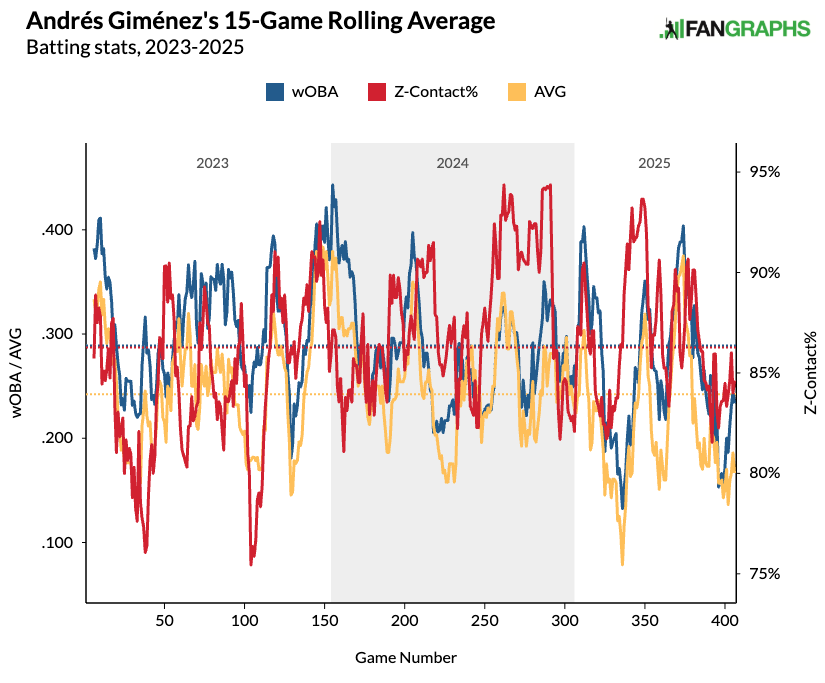
Gimenez possesses strong plate discipline with high contact rates (79-80 percent). That gives him a floor to work from, though he lacks power, almost like a light version of Steven Kwan. Gimenez will need plate appearance volume to log double-digit home runs, with a three percent barrel rate over the past two seasons, one percentage point below his career average.
With Cleveland, when Gimenez stole 30 bases, his stolen base opportunity rate was at 28 percent (2023) and 24 percent (2024). That dipped down to 18 percent in 2025, with the Blue Jays. Interestingly, the Blue Jays were second in total stolen base opportunities, behind the Brewers. However, the Blue Jays had the third-fewest stolen bases in 2025. It could be related to the team's personnel or coaching philosophy.
Regardless, that suggests Gimenez's peak season might involve 25 stolen bases in 2026 rather than 30 or more. Gimenez is an above-average defender in Outs Above Average (97th percentile) with high-end speed and athleticism to be efficient on the base paths. That's evident in Gimenez converting 86 percent of his career stolen base chances.
Gimenez doesn't have league- or week-winning potential, but there's a path for a deep-league middle infield sleeper, who could gain shortstop eligibility throughout the season. Build around Gimenez with a strong power base earlier in the draft.
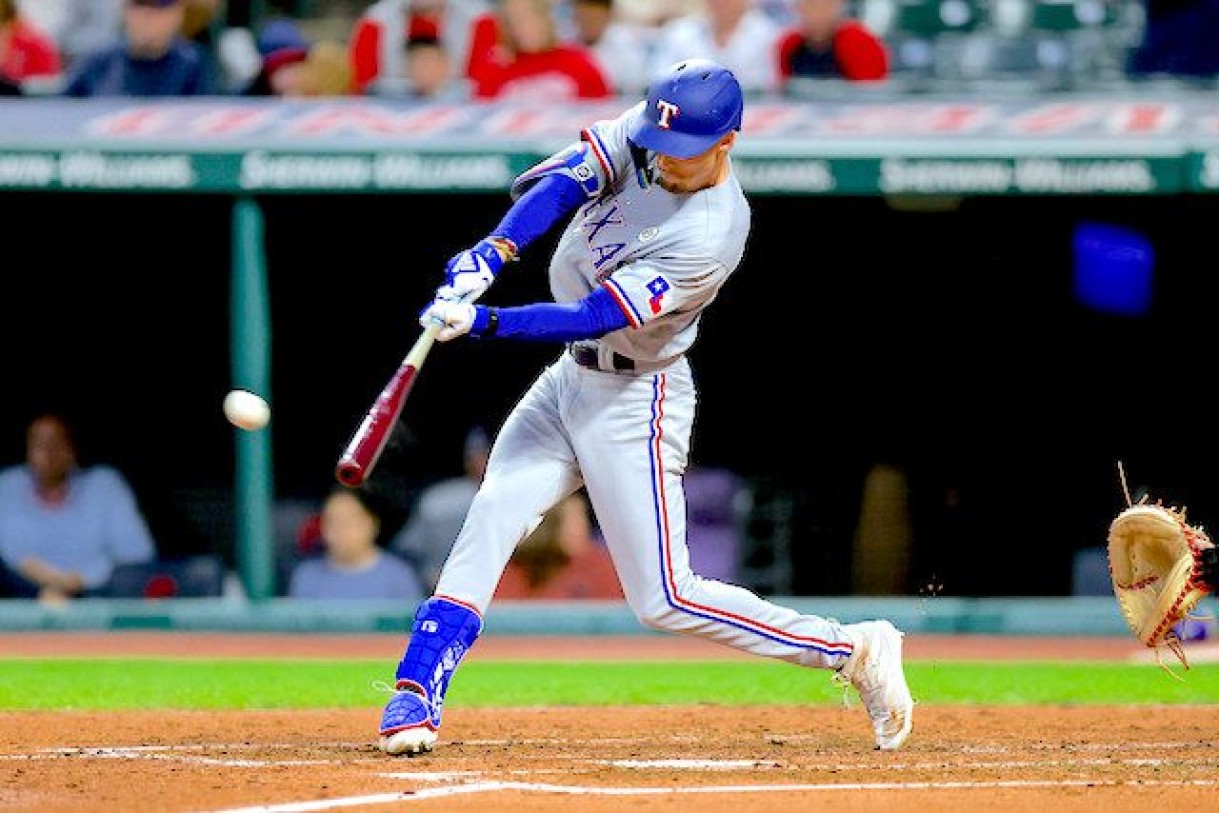
Evan Carter, OF, TEX
NFBC ADP: 343 (Since January 15) - Dreaming on Power/Speed
Injuries have been an issue for Carter, so we haven't seen the full-season upside. Carter missed nearly four months in 2024. He had a lower lumbar spine injury and dealt with multiple issues for over two months in 2025. He started the season in the minors, was recalled in early May, and suffered a Grade 2 quadriceps strain in mid-May.
Carter later dealt with back spasms in early August, missing two weeks. He, unfortunately, was hit by a pitch on his wrist in late August, turning into a fractured right wrist, which ended his season. When healthy, there's no denying his athleticism and defensive value in centerfield from both a real-life and a fantasy standpoint. Admittedly, Carter's athletic profile continues to intrigue me.
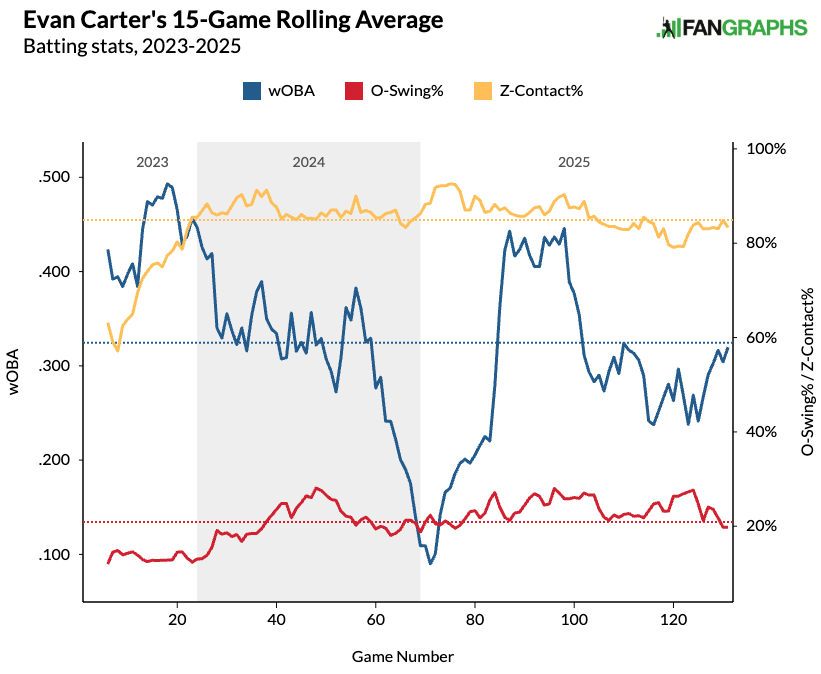
Carter possesses strong plate discipline, while using a patient approach, since he chases five to six percentage points less often than the league average. That coincides with Carter's zone swing and overall swing rates being 3-4 points below the league norm. Carter's power skills look mediocre, with a 4.1 percent barrel per plate appearance (barrel/PA) in 2025 and a career 94 Expected Power Index (100 is average).
We can dream of Carter's stolen bases with 14 across 220 plate appearances in 2025. That's mainly because Carter had a 31 percent stolen base opportunity rate while converting 87 percent of his chances. Bruce Bochy isn't the Rangers' manager anymore, and Skip Schumaker will take over. That could impact Carter's stolen base opportunities, though there have been reports that Carter wants to steal 30 in 2026.
There's a risk of Carter being platooned, with a 121 wRC+ against right-handed pitchers, yet a 15 wRC+ against lefties in 2025. Injuries and platoon risk have already been baked into Carter's cost, so it's a low-risk, medium-reward option as a late-round sleeper hitter.
Harrison Bader, OF, SF
NFBC ADP: 372 (Since January 15) - Defense, Power, and Speed
Bader is another example of the defensive-minded, athletic centerfielders with power and speed. The San Francisco Giants signed Bader in late January, leading to a new home with a mixed outlook. Bader's pulled air rate sat around 22-23 percent over the past three seasons, leading to one of his best barrel/PA rates (6.4 percent) in 2025.
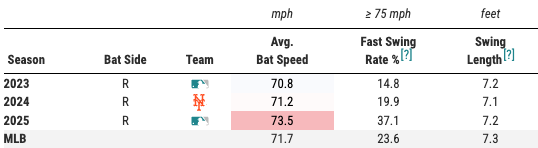
That aligns with Bader's career-best bat speed (73.5 mph) and fast-swing rate (percentage of swings at 75 mph or faster) at 37.1 percent in 2025, showing there's skill behind the power output. Unfortunately, the Giants' home park ranks third-worst in the three-year rolling home run park factors, according to Statcast. Specifically, the Giants' home park ranks third-worst in pulled home runs, where Bader thrived.
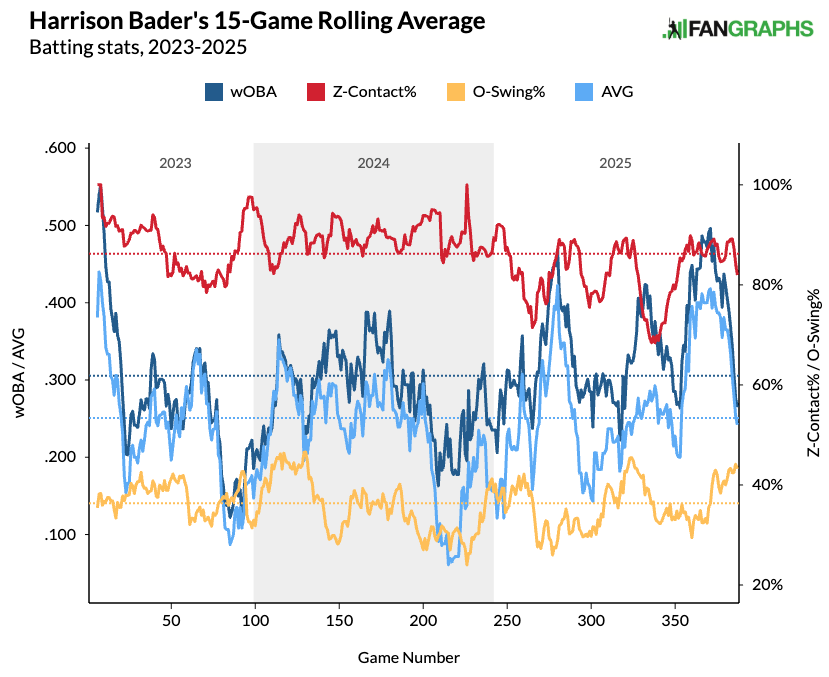
Interestingly, Bader sold out for power because his contact rate (69 percent) fell in 2025 from 76 percent in 2024 and 72 percent across his career. That's further evident in Bader's .238 expected batting average (xBA), given a .276 actual batting average, and he might've been lucky in that category.
With the Phillies in the second half of the season, Bader stole one of his 10 total bases in 2025. That might be partly due to the awful conversion rates, as he successfully stole on 68 percent of his opportunities in 2024 and 58 percent in 2025. That's significantly worse than his career stolen base conversion rate of 76 percent. Bader profiles as an athletic and strong defender, so we expect those conversion rates to bounce back in 2026.
There's 15/15 potential within Bader's range of outcomes, though it's mainly been a matter of health and playing time. Bader will be the Giants' everyday centerfield, though there's a reason we've only seen him hit over 500 plate appearances (501 in 2025) once in his career. Bader can contribute power and speed as a sleeper hitter without the platoon risk we find later in drafts.
Andrew Vaughn, 1B, MIL
NFBC ADP: 314 (Since January 15) - Safety and Power
Vaughn produced well in the second half with the Brewers, though he lost some playing time in September. It's wild to think that the Brewers mixed in Jake Bauers, causing Vaughn to lose playing time late in the season. Vaughn hit nine of his 14 home runs and had a .308 batting average in the second half with the Brewers.
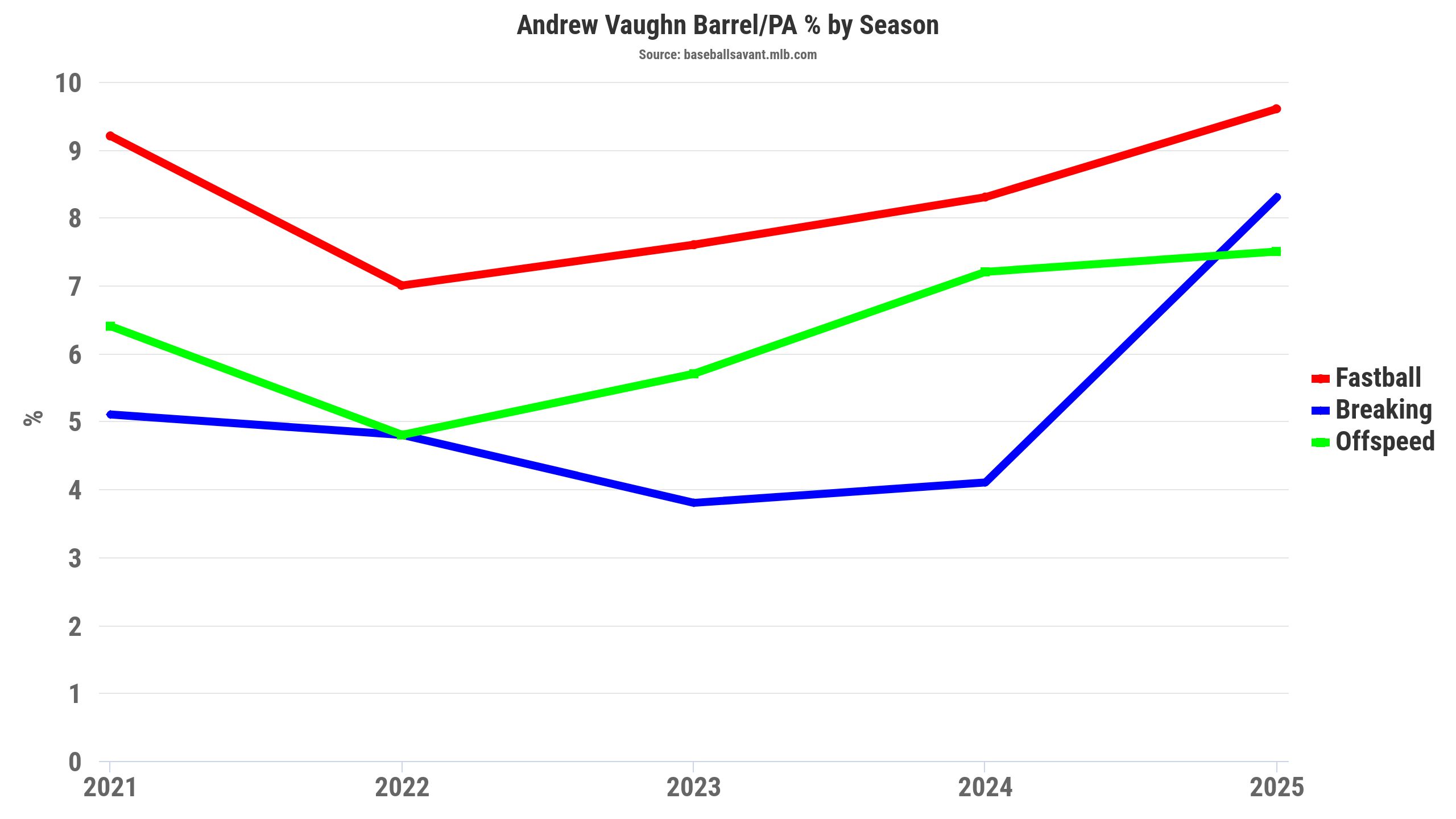
The skills supported the better production, with an 83 percent contact rate and .277 xBA with the Brewers. Vaughn's power skills hinted at better outcomes, with a career-best 8.9 percent barrel rate (barrels per PA) in 2025. That type of power should play well in the Brewers' home park for a full season, ranking 6th in home run park factors for right-handed hitters (110). That's significantly better than the White Sox home park, ranking 18th (96) in home run park factors for righties.
Vaughn projects to hit in the middle of the Brewers' lineup and should earn everyday playing time. There's a good chance that Vaughn sets a career-high in home runs, given the above-average power metrics. When we pair the strong plate discipline with power, Vaughn profiles as a sleeper hitter at the position to target late in drafts.
Cam Smith, OF, HOU
NFBC ADP: 383 (Since January 15) - Low Risk, High Reward Power/Speed
Smith feels like a classic ZeroRB player for fantasy football leagues. He doesn't have a guaranteed roster spot, with the potential start the season in Triple-A. Smith started the season on the active roster and remained on the major league team with sporadic playing time throughout the year. This is a scenario where we're dreaming of Smith's tools.
Smith used a patient approach, with league-average chase and swing rates. However, Smith's contact rates sit around that scary league-average threshold, with zone and overall contact rates three percentage points below the norm. Smith is built like a strong safety, at 6-foot-3 and 224 pounds, yet we haven't seen the power skills lining up.
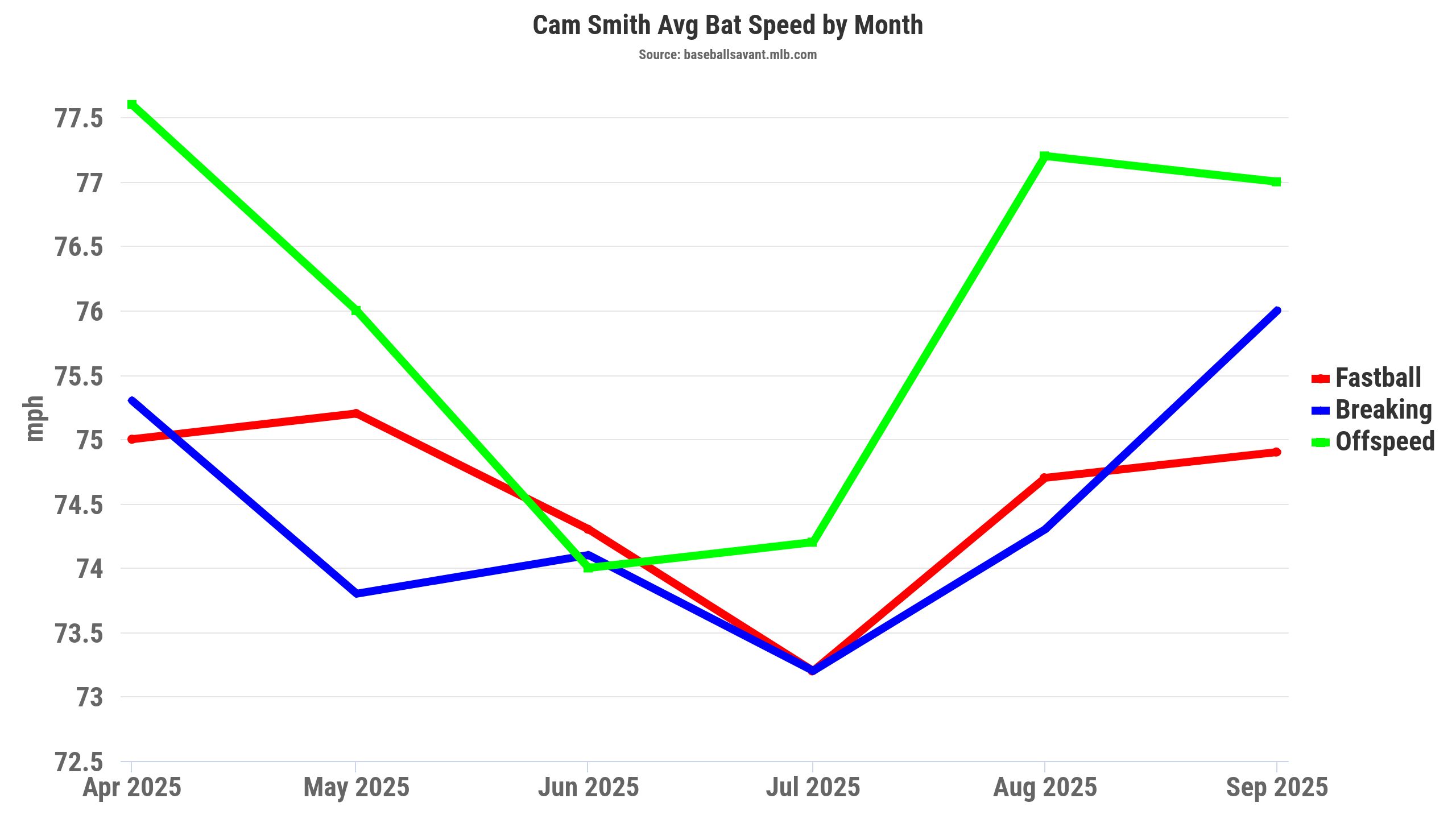
For context, Smith had plus-graded raw power as a prospect, teasing us at the potential for 25 home runs over a full season. That's somewhat evident in Smith's high-end bat speed (74.5 mph) and fast swing rate (46.9 percent). The league average bat speed hovers around 72 mph, with Smith's fast swing rate being nearly double the norm (23.6 percent). Smith especially finished the season with strong bat speed.
In the minors with the Cubs' system, Smith primarily played at third base. However, it's worth noting that Smith played throughout the infield and outfield in his collegiate career, showing positional flexibility. That's notable because Smith was a strong defender in Outs Above Average (70th percentile) with near-elite speed and athleticism.
We might be a year or two early, but Smith has the potential for 20/20 upside on an Astros team in need of youth. Smith qualifies as a deep sleeper hitter with tons of upside at a low-risk cost.
More Fantasy Baseball Advice
Download Our Free News & Alerts Mobile App
Like what you see? Download our updated fantasy baseball app for iPhone and Android with 24x7 player news, injury alerts, sleepers, prospects & more. All free!