



 RADIO
RADIO






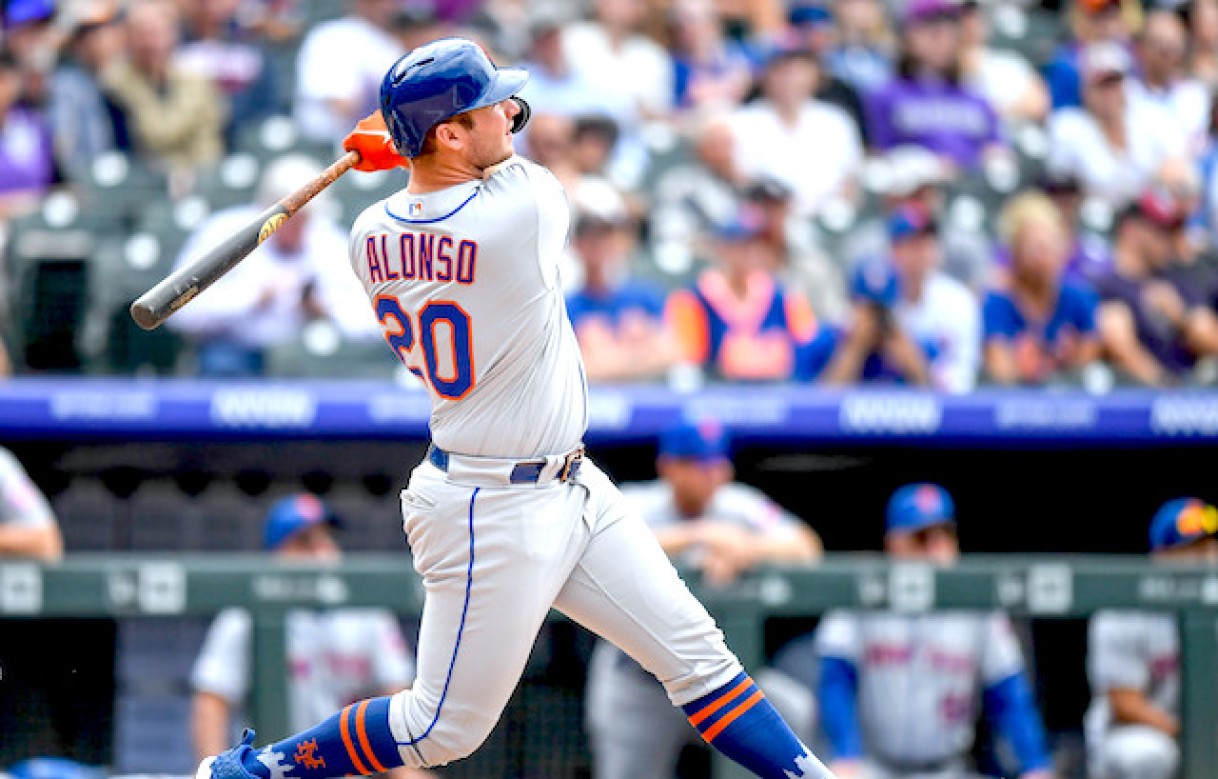
Does participating in the Home Run Derby have an effect on power and HR production over the second half of the season? Michael Grennell digs into the data from the past several years to determine if players like Pete Alonso can expect a decline.
I don't know about you all, but for as far back as I can remember, I know I've heard fans and media talk about how after a player competes in the Home Run Derby they almost always seem to "lose their swing" and have a power drop-off in the second half. I've heard that repeated plenty of times, but is this something that can statistically be proven true?
If it is true that hitters will experience a drop in power after the Home Run Derby because they've "lost their swing," then now is the time for fantasy managers to try and sell high on this year's Derby contestants. But if there is no drop off, then managers should hang onto these guys and continue to plug them into their lineups.
Obviously, there are numerous factors that can affect a player's performance outside of this alleged Home Run Derby curse. To name a couple, you could have injuries or regression to expected performance after a "lucky" first half of the season play into a second-half performance. So while we won't be able to chalk up any individual post-Derby struggles as being caused by competing in the Derby, if we have multiple players showing similar drop-offs, then that could suggest there is some merit to this claim. So let's take a look and see what we find.
Featured Promo: Save 50% off the regular price with discount code CHAMP, for a limited time. Exclusive access to our Team Sync platform, DFS cheat sheets, Lineup Optimizers, betting/prop picks, and exclusive content from Nick Mariano and Eric Cross! GAIN ACCESS NOW
What Are We Looking At?
So as we dive into this issue, we are going to look at the performances of all the Home Run Derby participants from 2015 through 2019. The Derby changed to its current format in 2015, and it goes without saying as to why there's no data for 2020. So by going with the data from this period, it will theoretically give us a more accurate picture of what to expect out of this year's participants. There are all sorts of metrics and stats that we can look at to get an idea of whether there is a noticeable change or not, but for this article we're going to keep things simple — we'll focus on batting average, slugging percentage and HR/PA.
It's possible that looking at more advanced metrics than this could paint either a more definitive or completely different picture, but having already looked at the numbers, it seems that this simplistic approach will be sufficient to provide an answer.
The Breakdown
We're just going to dump a bunch of numbers here right now going year-by-year. I'm going to just focus on three categories within this article though, and those are the differences in batting average, slugging percentage and HR/PA from a player's performance in the first half versus the second half. A negative number means the player performed worse in the second half, and a positive number means the player did better in the second half. We'll start off with the 2019 Derby:
| AVG DIFF | SLG DIFF | HR/PA DIFF | |
| Vladimir Guerrero Jr. | 0.044 | 0.039 | -5.7 |
| Joc Pederson | 0.023 | 0.039 | 1.3 |
| Pete Alonso | 0.079 | 0.057 | 1.7 |
| Ronald Acuna Jr. | -0.003 | 0.015 | 9.7 |
| Josh Bell | 0.043 | 0.023 | 11.6 |
| Alex Bregman | 0.073 | 0.138 | 0.7 |
| Matt Chapman | -0.028 | -0.101 | -0.2 |
| Carlos Santana | 0.014 | -0.016 | -0.6 |
Let me take a quick moment to explain these numbers before we continue to the other years. Let's use Guerrero as an example. The difference in his batting average from the second half to the first half was 0.044 — meaning his second-half average was 44 points higher than his average in the first half of the season. Same principle with slugging percentage. His slugging percentage in the second half of 2019 was 39 points better than his slugging percentage in the first half. And that brings us to HR/PA.
In the first half of 2019, Guerrero hit — on average — one home run every 31.6 plate appearances. In the second half, he averaged one home run every 37.3 plate appearances. So on average, in the second half of the season it took Guerrero 5.7 more plate appearances to hit a home run. So that means he saw a drop in the rate he hit home runs in the second half of 2019.
Now that we got that out of the way, let's get through the next four years of data. Here are 2018's Derby participants:
| AVG DIFF | SLG DIFF | HR/PA DIFF | |
| Kyle Schwarber | -0.028 | -0.081 | -5.8 |
| Bryce Harper | 0.086 | 0.070 | -15.9 |
| Rhys Hoskins | -0.015 | 0.090 | 11.9 |
| Max Muncy | -0.018 | -0.051 | -2.9 |
| Javier Baez | -0.003 | -0.026 | -5.7 |
| Alex Bregman | -0.005 | -0.019 | -2.9 |
| Freddie Freeman | -0.014 | -0.068 | -14.8 |
| Jesus Aguilar | 0.003 | -0.005 | 2.8 |
And 2017:
| AVG DIFF | SLG DIFF | HR/PA DIFF | |
| Aaron Judge | -0.101 | -0.143 | -2.0 |
| Miguel Sano | -0.040 | -0.107 | -3.3 |
| Gary Sanchez | 0.004 | 0.073 | 4.5 |
| Cody Bellinger | 0.013 | -0.081 | -6.6 |
| Justin Bour | 0.001 | -0.070 | -9.6 |
| Giancarlo Stanton | 0.010 | 0.130 | 4.4 |
| Charlie Blackmon | 0.034 | 0.048 | 1.5 |
| Mike Moustakas | 0.005 | -0.088 | -7.5 |
Next 2016:
| AVG DIFF | SLG DIFF | HR/PA DIFF | |
| Giancarlo Stanton | 0.021 | -0.017 | -5.2 |
| Todd Frazier | 0.027 | -0.026 | -5.3 |
| Mark Trumbo | -0.074 | -0.112 | -2.0 |
| Adam Duvall | -0.018 | -0.117 | -14.3 |
| Corey Seager | 0.024 | -0.021 | -10.2 |
| Carlos Gonzalez | -0.044 | -0.171 | -27.4 |
| Wil Myers | -0.063 | -0.141 | -13.1 |
| Robinson Cano | -0.035 | -0.050 | 1.2 |
And finally 2015:
| AVG DIFF | SLG DIFF | HR/PA DIFF | |
| Todd Frazier | -0.064 | -0.195 | -15.4 |
| Joc Pederson | -0.052 | -0.187 | -18.2 |
| Albert Pujols | -0.024 | -0.113 | -7.8 |
| Josh Donaldson | 0.009 | 0.083 | 2.9 |
| Prince Fielder | -0.075 | -0.127 | -8.2 |
| Manny Machado | -0.026 | -0.049 | -0.9 |
| Kris Bryant | 0.013 | 0.033 | 6.2 |
| Anthony Rizzo | -0.043 | -0.064 | 2.4 |
That's a lot of data to look at, but you can pick up on a few things. First off, of the 40 Derby contestants from 2015 through 2019, 26 of them posted a worse HR/PA rate after competing in the Derby. There were also 27 players that saw a decrease in their slugging percentage in the second half, and 21 players that saw a decrease in their batting average. A lot of these decreases were relatively minor in the grand scheme of things and could just be chalked up to normal noise from a full season's performance.
When you look for guys that had significant drops of 50 or more points, there were only six players with a significant drop in batting average and 19 players with a significant drop in slugging percentage. Looking at HR/PA rates, there were only eight players that saw their rate get significantly worse by averaging 10 or more plate appearances per home run.
It is so easy to get caught up in all of these numbers and find different ways to organize these stats to find patterns and results. Honestly, at this point I feel like I'm trying to figure out who Pepe Silvia is after staring at my spreadsheet for so long. So I'm going to break down these results into a couple of bullet points:
- The player that hit the most total home runs in each Derby (not necessarily the overall winner) from 2015-2019 posted a worse HR/PA rate in the second half than they had in the first half. These differences ranged from two to 18.2 more plate appearances per home run.
- Participants in the Home Run Derby in 2015 and 2016 appeared to most fit the bill of "losing their swing" because of the Derby, as 14 of the 16 participants in those years posted a worse slugging percentage in the second half. Along with that, of the eight instances from 2015-2019 in which a player averaged 10+ more plate appearances per home run in the second half than they averaged in the first half, six of those players competed in the 2015 Derby or 2016 Derby.
- 2019 is the only season in which the majority of Derby participants posted better numbers in the second half. Carlos Santana and Matt Chapman were the only two participants in that Derby to post a lower slugging percentage in the second half, and Santana, Chapman, and Vladimir Guerrero Jr. were the only participants to post a worse HR/PA rate in the second half.
- There were nine players in this time frame that hit 40 or more home runs in the Derby. Six of those nine players posted a worse HR/PA rate in the second half, with Joc Pederson, Ronald Acuna Jr. and Pete Alonso in 2019 were the only players to post an improved HR/PA rate in the second half.
- Interestingly enough, in that same group of players to hit at least 40 home runs in the Derby, six of those nine players posted a better batting average in the second half — with improvements ranging from 21 to 86 points better than their first-half marks. Acuna (2019), Aaron Judge (2017), and Kyle Schwarber (2018) were the only three to post a worse batting average in the second half than what they had recorded in the first half.
The Bottom Line
The bottom line is that it's possible participating in the Home Run Derby might not ruin a player's swing for the rest of the season. Maybe.
Yeah, this is the hard-hitting, concrete conclusion you've all been waiting for.
The truth of the matter is it's hard to tell exactly if competing in the Derby has any effect at all on a player's second-half performance. If you look at the 2015 and 2016 Home Run Derbies, then one would say that participating in it definitely causes a drop in production in the second half. However, in 2017 and 2018 it becomes less clear, and then in 2019 it almost appears as if participants did better in the second half because they competed in the Derby.
There are so many different variables that can affect a player's performance that it's hard to point to a single cause for a player's success or failure at the plate. For example, in 2016 Giancarlo Stanton posted a worse slugging percentage and worse HR/PA rate in the second half than what he recorded in the first half. Was that due to competing in the Derby? Or was it because he missed almost three weeks with a hamstring injury? Or is the answer somewhere in the middle?
Another possible variable is the juicing of baseballs. We've seen the increased rate of home runs being hit in recent years as a result of the changes to the composition of baseballs. Is it possible that the introduction of these juiced baseballs has canceled the negative impact of playing in the Derby? If you look at the timeline for the changes with the baseball and compare it to the results in the tables above, it would almost line up well enough to potentially draw that conclusion.
The list goes on and on as to why a player could perform better or worse in the second half. After crunching all the numbers, I think that there may have been a point in time where the idea that a player could lose his swing because he played in the Home Run Derby held some merit. I also think that for whatever reason, that is not as valid of a concern anymore. You can't be 100 percent certain of this, but I feel more likely than not that managers should not worry about a drop in production. That being said, it couldn't hurt to try seeing if you can convince a manager in your league about the validity of the "Home Run Derby Curse," and see if you can use that to your advantage to try and get a slightly better deal in any trade attempt for one of this year's Derby participants.
Download Our Free News & Alerts Mobile App
Like what you see? Download our updated fantasy baseball app for iPhone and Android with 24x7 player news, injury alerts, sleepers, prospects & more. All free!

More Fantasy Baseball Advice